
Reviewed · BUKHARA TOURS
Bukhara: Walking Tour with a Small Group
Bukhara is one of those places where the details do the talking, so a focused walking tour is a great way to make sense of it fast. I like that this one uses professional local guides and a small group size, so you can actually ask questions and get real explanations, not a scripted lecture. The pace is around 4 to 4.5 hours, built for seeing major monuments on foot without turning it into a marathon.
Two things I especially like: you get a structured sweep through key historic sites like the Lyabi-Khauz Ensemble and the Ismail Samani Mausoleum, and the stops include market and education architecture, not just mosques. For example, you will spend real time on the trading domes like Toki Telpakfurushon and Toki Zargaron, which helps you understand how Bukhara worked day to day. One consideration is that entry fees are not included, so a few stops may require paying on the spot.
The tour does not center on shopping, which makes it easier to enjoy the city as culture and architecture. If you are traveling in hot weather, you will still be walking, so plan for sun and water on your own.
Key highlights to look for on this Bukhara walking tour
- Small group max of 10 people, which keeps questions and pacing realistic
- English-guided by professionals (not trainees or language-course learners)
- UNESCO-style concentration of top monuments in one half day
- Trading domes and madrasas, so you see more than religious buildings
- Smart time planning: Ark Fortress is viewed from the outside to protect your schedule
A half-day route that actually makes Bukhara make sense
This tour works because it follows how Bukhara’s old city is laid out. You start near Nodir Devonbegi Madrasah, then move through the core historic area in a way that feels logical, not like random hopping. In roughly 4 hours 30 minutes, you cover a lot of ground, but the timing is broken into manageable site visits that give each place a chance to land.
A big part of the value is the balance between “big names” and the supporting cast. Yes, you get the famous pieces, like the Great Minaret of the Kalon and the Ismail Samani Mausoleum. But you also get the context buildings that make those icons feel earned, such as the trading domes and education-focused madrasas.
I also appreciate that the tour explicitly does not focus on shopping. That matters in places like Bukhara where markets are everywhere. You still get to see artisans and local life through planned workshop visits, but you are not pushed into a buying routine. If you want culture first, this is set up that way.
More Walking Tours in Bukhara
- Bukhara: Walking Tour with a Small Group
★ 4.9 · 260 reviews - All You Need To Know About Bukhara. A Walk In The Town
★ 4.9 · 31 reviews - Bukhara Walking Tour
★ 4.7 · 25 reviews
Where you start: Lyabi Khause Square and the Lyabi-Hauz Ensemble
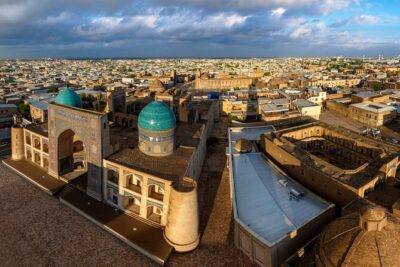
You begin at Lyabi Khause Square, visiting the Lyabi House complex made of three connected monuments: Kukeldash Madrasah, Nodir Divan Begi Madrasah, and Hanaka Nadir Devanbegi. This area is a strong “first stop” because it instantly shows you the relationship between buildings and public space.
Kukeldash Madrasah is part of the ensemble feel, while Nodir Divan Begi and Hanaka Nadir Devanbegi help explain how Bukhara mixed education, travel, and social life in one neighborhood. Even if you only catch exterior views, you can already spot the idea of Bukhara’s old-city blocks as functional systems, not isolated sightseeing stops.
This first segment is long enough to get oriented. At around 40 minutes, you do not feel rushed in the place that should help you understand the rest of the route.
Magoki-Attori Mosque and the Carpet Museum: a quieter, layered stop
From the square, you head to Magoki Attori Mosque and the carpet museum. The mosque itself is described as a 12th-century structure, and it sits within the broader Lyab-i Hauz religious complex. That gives the stop a layered vibe: a medieval religious site connected to a larger historic district.
The carpet museum connection is useful if you want a broader cultural picture. Textiles are a big part of how Central Asian craft shows up in daily life and in ceremonies. If you like details in materials, this is the kind of stop that can add depth without feeling like a detour.
One practical note: the admission for this stop is listed as not included. So if you are budgeting carefully, keep a little extra set aside for any museum or site fees that appear in the route.
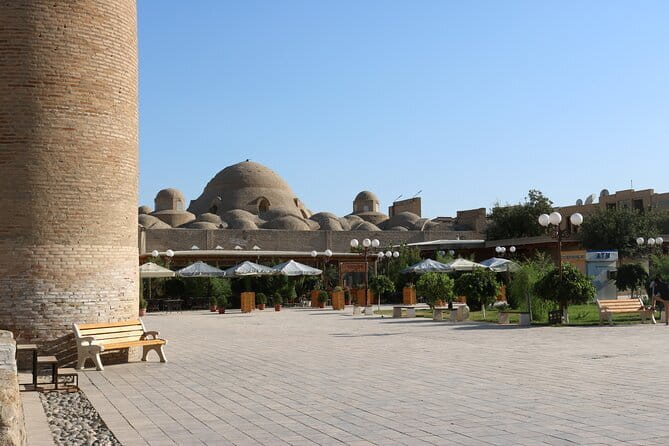
The trading domes: Toki Telpakfurushon and Toki Zargaron
If you only remember Bukhara for its mosques, you will miss half the story. This tour makes the market architecture part of the experience, and it does it with two focused dome stops.
First is Toki Telpakfurushon, the Trading Dome. Even the name points to what happened here: telpakfurushon relates to hat sellers, which makes it easy to imagine the bustle of trade when this was a working market.
Next comes Toki Zargaron, known as the Dome of Jewelers. Dating back to the 16th century, it served as a central hub for gold and jewelry trading. That one is especially rewarding if you like architecture tied to economic life. You get to see how commerce shaped the built environment, not just how rulers shaped it.
Both dome stops are listed as free admission, which is a nice way to keep your costs controlled. You still spend real time here, around 15 to 20 minutes per dome, so it is not just a photo stop.
More of Bukhara worth pencilling in
- Bukhara Historical City Highlights Guided Walking Tour
★ 4.5 · 16 reviews - Bukhara: Private Guided Walking Tour with Hotel Pickup
★ 5.0 · 11 reviews - A Group Walking Tour Of Old Town
★ 5.0 · 8 reviews - Bukhara Walking Tour
★ 5.0 · 4 reviews
Madrasas as living architecture: Abdulaziz Khan and Ulugbek

Bukhara’s madrasas are not just decorative. They show you how education and authority were connected, and they do it through tile work, courtyards, and careful design.
You visit the Abdulaziz-Khan Madrasah, built in 1652 during the reign of Abdulaziz Khan. The description highlights intricate tile work and decorative frescoes, which is exactly what you want to see if you care about craftsmanship. This stop’s admission is listed as not included, so again, budget for potential on-site fees.
Then you move to Ulugbek Madrasah. The tour notes it as one of the oldest buildings and says it was built by Ulugbek, the grandson of Amir Timur. That family link matters because it connects the architecture to a wider political and cultural story, not just a single time period.
Ulugbek’s stop is shorter, about 15 minutes, but it is still worth it because it anchors the route in “Bukhara as an education center,” which is a theme you will keep seeing.
The Kalon complex: Minaret and Mosque, built for scale
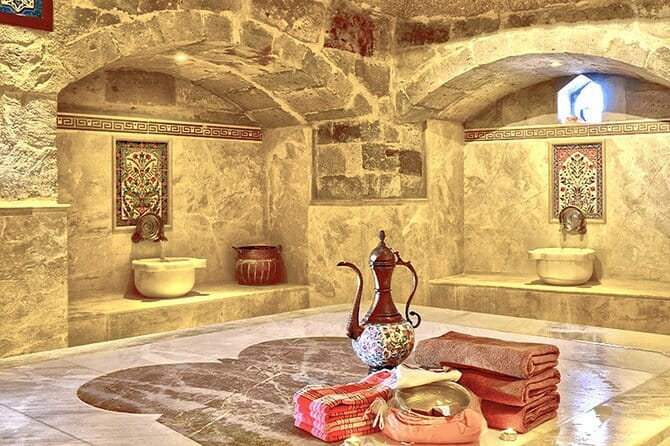
Two of the tour’s most iconic sights are connected to the Kalon complex.
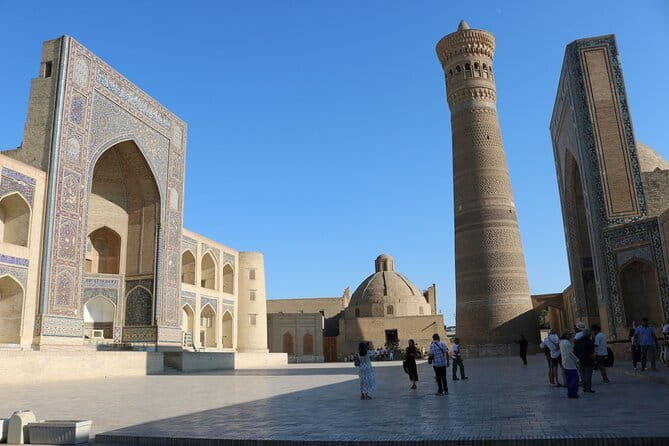
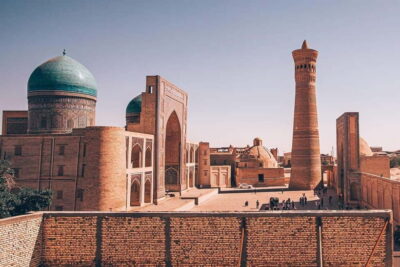
You visit the Great Minaret of the Kalon, built in 1127 by the Karakhanid ruler Arslan Khan, standing 47 meters tall. Even if you just take in the proportions from the ground, it helps you understand why minarets are more than religious markers. They were also city signals, designed to be seen and recognized from far away.
After that you see Poi Kalyan Mosque, a grand mosque from the 16th century, part of the same historic complex. Its admission is listed as not included, but the payoff is the sense of scale and alignment within the site. This area works as a “centerpiece moment” in the route, the point where the tour feels like it is leveling up to the best-known monuments.
If you are the type who likes to read architecture, the Kalon complex is where you get your strongest visual answers.
Mir-i-Arab Madrasa and Bolo Hauz Mosque: religion and education in one loop
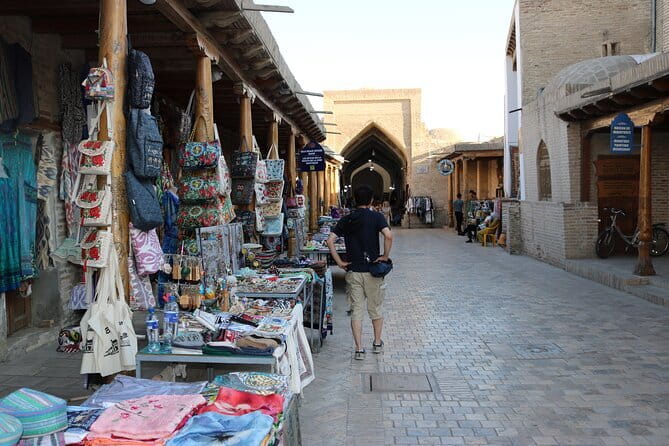
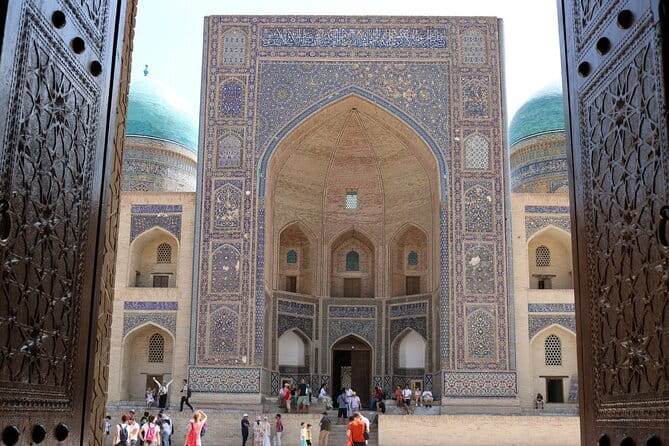
You also visit Mir-i-Arab Madrasa, built in the early 16th century by the Shaybanid ruler Ubaydullah Khan, and named after his spiritual mentor, Sheikh Ab. This stop is listed as free admission. It matters because it explains the name as an idea, not just a label. You start to see how rulers used education institutions as cultural memory.
Then there is Bolo Hauz Mosque, described as belonging to the 18th to 20th centuries and listed as free admission. This is a helpful contrast after the older education and earlier periods. Instead of feeling like you only chase the oldest dates, you get a sense that Bukhara’s religious architecture continued to evolve.
Short stop length here is fine because the point is to keep your momentum while still touching key parts of the religious landscape.
Ark Fortress: why you see it from outside

The Ark of Bukhara is one of the oldest fortress structures, dating back to the 5th century, and it served as a royal residence and military stronghold. The tour is set up to show it from the outside only, because visiting the Ark Museums would add about 1.5 hours.
I like this design for most visitors. It keeps the tour from turning into a long museum detour, especially when you have multiple big monuments already planned. From the outside, you still get a sense of power and defensibility, and you do not lose the flow that makes the half-day route work.
If you want to spend extra time inside the Ark Museums, you would need additional time beyond this standard route, but the tour gives you the key exterior context.
Chashma-Ayyub Mausoleum and the Ismail Samani Mausoleum payoff
Near the end of the walking route, you reach Chashma-Ayyub Mausoleum. This is a different style of stop than the madrasas and mosques, more focused on commemoration and funerary architecture. It is also a good breath point late in the tour because the atmosphere shifts from civic education and trade to symbolic remembrance.
Then the tour reaches Ismail Samani Mausoleum. The description calls it one of the iconic examples of early Islamic architecture and says it is the oldest funerary building of Central Asian architecture. The stop is about 30 minutes, which is the kind of time you need for a mausoleum, because you want to look slowly at proportion and detail rather than sprint through.
This is also one of the stops with admission listed as not included. Still, it is a high-value moment in the route, because this is the site that most visitors remember when the tour is over.
Depending on the season, the tour ends at Bolo Khauz Mosque in late autumn and winter. So if your trip falls in those months, expect the final rhythm to adjust.
What the guides do that makes this tour better (and more fun)
The best part of this experience is not just the buildings. It is how the guide connects them.
In the feedback you can see the same pattern: guides are praised for making the tour engaging and for being able to answer questions clearly. People highlighted guides like Sunny and Nuriddin for their flexibility and depth, including their ability to adapt when something in the group needs adjusting. That matters because a walking tour can go sideways if the guide is stuck to a rigid script.
You can also count on a real local perspective. The tour includes planned artisan workshop visits, but it frames those as part of local life and culture rather than as a shopping trap. If you want a feel for how people make things and how traditions continue, this approach fits well.
And because the group is small, you are not hidden behind the largest-speaking person. You get more back-and-forth energy, which is exactly what you want in a place where the architecture has layers.
Practical value: price, what you get, and what you should budget
At $28 per person, this is priced like an efficient, well-organized half-day. The big value drivers are the professional guide, the small group, and the fact that many key stops are listed with free admission. You are also getting a mobile ticket, which makes start time smoother.
The main cost you might add is entry fees for the sites explicitly marked as not included. Those include stops like Magoki Attori Mosque and the carpet museum, Abdulaziz-Khan Madrasah, Ulugbek Madrasah, Poi Kalyan Mosque, Ark of Bukhara, and Ismail Samani Mausoleum. Because the amounts are not listed here, I recommend you budget a little extra so you are not surprised at each site.
Also remember you are paying for a walking experience. There are no meals or drinks included, so bring water and plan to eat after. If you are the type who likes coffee breaks, you might find time during the tour for a short pause, but do not count on it. Plan food separately.
Who this tour suits best
This is a great match if you:
- Want to cover a lot of Bukhara’s core monuments in one morning or afternoon
- Prefer walking with context, not just photos and time stamps
- Like market and education architecture as much as religious buildings
- Appreciate small groups, where questions are welcome
If you dislike walking, or if you want long museum-style time inside Ark Museums, this might feel a bit tight. But if you want a smart first pass through Bukhara’s old city, this tour is built for you.
Should you book Bukhara: Walking Tour with a Small Group?
Yes, book it if you want a guided circuit that explains what you are seeing, with small-group interaction and a route that mixes mosques, madrasas, and historic trade domes. It is also a good value because many stops are free, and the price includes the key service you would otherwise pay for, a real pro guide.
Skip or think twice if you hate on-foot touring, if you are traveling only for museum interiors (since Ark is outside-only on this route), or if you know you will be annoyed by unplanned extra site fees at stops marked as not included.
If you are planning your first visit to Bukhara and you want a confident, organized way to get oriented, this is an easy choice.
FAQ
How long is the Bukhara walking tour?
The tour lasts about 4 hours 30 minutes.
What language is the tour conducted in?
The walking tour is offered in English.
How many people are in the group?
The maximum group size is 10 travelers.
Where does the tour start and end?
It starts at Nodir Devonbegi Madrasah on Bakhowuddin Nakshbandi Str. and ends at Ismail Samani Mausoleum. In late autumn and winter, it ends at Bolo Khauz Mosque.
Are entry fees included in the price?
No. Entry fees are not included. Some stops have free admission, while others are marked as not included.
Is this tour focused on shopping?
No. It does not focus on shopping. Artisan workshop visits are planned to show part of local life and culture.
Is the Ark Fortress included inside the tour?
You only view Ark Fortress from the outside. Visiting the Ark Museums would take extra time and is not part of this standard route.
Is the ticket mobile?
Yes, the tour uses a mobile ticket.
What weather issues could affect the tour?
The tour requires good weather. If canceled due to poor weather, you are offered a different date or a full refund.
How late can I cancel for a full refund?
You can cancel up to 24 hours in advance for a full refund.
Latest reviews out of Bukhara
- Uzbekistan 8 Days Private Guided Tour★ 4.6 · 3 reviews
- Bukhara: City Highlights Guided Tour with Pickup★ 5.0 · 3 reviews
- Bukhara day tour★ 4.0 · 4 reviews
- Legends of Bukhara: Exclusive Full-Day Tour★ 5.0 · 4 reviews
- Bukhara Private City Tour★ 2.5 · 4 reviews
- 2 Day Ukhum Hiking Tour from Bukhara★ 5.0 · 4 reviews
- From Bukhara: 3-Day Yurt Stay, Hiking & Lake Aydarkul★ 5.0 · 5 reviews
- Bukhara day tour. Departure from Tashkent or Samarkand.★ 5.0 · 7 reviews
Bukhara Tours, compared.
All You Need To Know About Bukhara. A Walk In The Town
Read our review →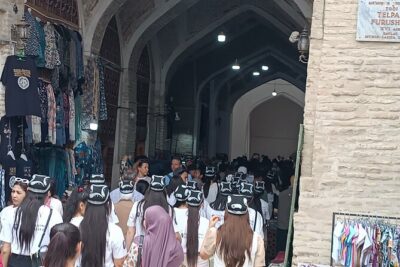
Browse the lists this tour appears in