
Reviewed · BUKHARA TOURS
Bukhara: Private Guided Walking Tour with Hotel Pickup
Bukhara is one of those cities where the streets feel like a living museum. On this private guided walking tour, you follow the historical core on foot, with a guide who helps you read what you’re seeing, instead of just pointing at tiles.
I really like that it’s private, so the route can match your pace and interests. I also love the focus on the classics in one compact walk, and the chance to meet your guide right at your hotel, like Sunny or Nuriddin, who both show up ready to explain what matters.
The main thing to consider is that this is a walking experience in the old town. If weather turns rainy or hot, you may want to plan on breaks, and your guide can adjust the day when needed.
Key highlights at a glance
- Hotel pickup on foot makes starting easy, especially when you want to maximize sightseeing time
- A focused route through madrasas, mosques, and trading domes in about 5 to 6 hours
- Part of the day is flexible, since some monuments may be under restoration and your guide can suggest alternatives
- Entry fees are not included, but a couple of key stops are listed as free
- A finishing touch at the Ismail Samani Mausoleum so you end with one of Bukhara’s most photogenic scenes
Why Bukhara makes this kind of tour work so well
Bukhara’s old town is built for slow walking. The distances are short enough that you can move between landmarks without the day turning into a taxi shuffle, and the sites are close enough that details start to make sense as you go.
This tour is interesting because it does not treat each building as a separate attraction. Instead, you connect them as you walk: madrasas tied to religious life, trading domes tied to wealth, and major mosques tied to political and community power. By the time you reach the Ark and the larger complexes like Poi Kalyan, you usually feel like you understand the city’s “why,” not just the “what.”
The tour is also practical. It’s private, it has hotel pickup, and it’s timed around a realistic walking loop. You will still be on your feet, but you’re not trapped in long bus rides or forced to keep up with a large group.
More Walking Tours in Bukhara
- Bukhara: Walking Tour with a Small Group
★ 4.9 · 260 reviews - All You Need To Know About Bukhara. A Walk In The Town
★ 4.9 · 31 reviews - Bukhara Walking Tour
★ 4.7 · 25 reviews
Starting at Nodir Devonbegi Madrasah, with pickup that feels convenient
The meeting point is Nodir Devonbegi Madrasah, on Bakhowuddin Nakshbandi Str., and the tour starts from there. In practice, the guide meets you at your hotel, and the tour begins by heading into the historical area on foot.
That “hotel meets you” approach matters more than you’d think in Bukhara. Old town streets can be lively, and getting your bearings early makes the whole day smoother. You also avoid that moment where you’re standing around trying to match a map pin to a doorway.
The tour is described as a private activity, meaning it’s just your group. That matters if you have kids, elders, or anyone who needs slower pacing. One experience shared by a family highlighted that their guide adapted for rainy weather, even arranging a taxi when needed. In other words, this is not rigid sightseeing with no wiggle room.
Lyab-i Hauz Ensemble: the square that ties together three big stories
Your first major stop is Lyab-i Hauz, the Lyabi House complex. You’ll be looking at three linked monuments, with the Kukeldash Madrasah, Nodir Divan Begi Madrasah, and Hanaka Nadir Devanbegi as part of the same visual and cultural setting.
This is a smart place to start because the area functions like a hub. You get the sense that Bukhara was organized around public life, learning, and religious community, not just individual buildings standing alone. Even if you’re not a “history person,” the layout helps your brain grab the connections fast.
Time on site is about 40 minutes. That’s enough to take photos, spot the tilework patterns, and listen for the meaning behind the buildings. Admission tickets are listed as not included for this stop, so you’ll want to be ready to pay separately if you decide you want full interior access.
Magoki-Attori Mosque and the carpet museum moment
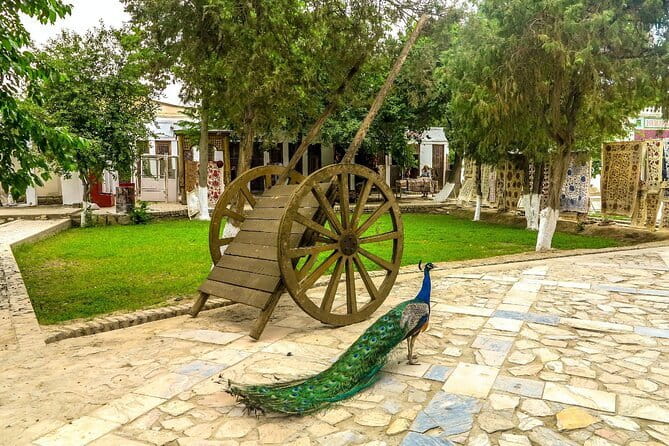
From Lyab-i Hauz, you move into the Magoki Attori Mosque and the carpet museum. The mosque itself is noted as part of the historical religious complex connected to the same central area.
You get about 20 minutes here. That’s the right amount of time for a quick orientation plus explanation, especially because you’re walking all day. Admission tickets are listed as not included, but there is usually still plenty to see even if you choose not to pay for museum time.
This stop is worth it because it adds texture. Mosques in Bukhara are not just architecture, they’re also about everyday religious life and community identity. Pairing that with a carpet-focused component helps you see how culture shows up in both sacred and practical spaces.
More of Bukhara worth pencilling in
- Bukhara Historical City Highlights Guided Walking Tour
★ 4.5 · 16 reviews - Bukhara: Walking Tour with a Small Group
★ 5.0 · 10 reviews - A Group Walking Tour Of Old Town
★ 5.0 · 8 reviews - Bukhara Walking Tour
★ 5.0 · 4 reviews
Toki Telpakfurushon trading dome: a break in pace with market energy
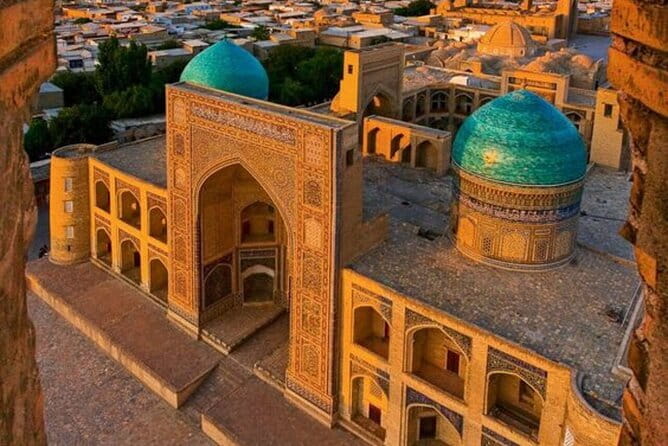
Next is Taqi Telpakfurushon Market, also described as the Toki Telpakfurushon Trading Dome. You’ll spend around 20 minutes here.
The biggest practical win: admission for this stop is listed as free. So you get a low-pressure moment where you can wander, look at the dome structure, and soak up the fact that Bukhara’s old trade routes are still part of daily life.
This is also where the day starts to feel less like a museum checklist and more like a real walk through a living city. Even when you’re not buying anything, you can watch how people move and how market spaces are designed for flow.
Ulugbek Madrasah: why an older building hits harder
Ulugbek Madrasah is one of the oldest buildings in Bukhara, built by Ulugbek, the grandson of Amir Timur. Your time is about 20 minutes, and admission tickets are listed as not included.
This stop works best when your guide points out details that are easy to miss. Old madrasas can feel similar at first glance, but the differences in tilework, proportions, and ornament patterns can tell you which era and which ruler shaped the design.
If you love architecture, you’ll probably want to slow down a bit here. If you’re more into stories, the guide can connect the madrasah to the idea of education and authority, which helps everything else click later.
Abdulaziz-Khan Madrasah: tilework and the visual language of power
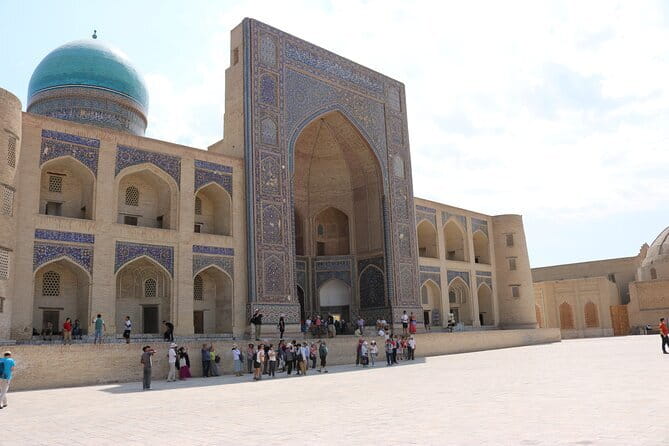
The route then includes Abdulaziz Khan Madrasah, built in 1652 during the reign of Abdulaziz Khan. The standout detail noted is its intricate tile work and decorative frescoes.
Time is about 20 minutes, and admission tickets are again listed as not included. This is a stop where paying attention to surface details is actually worth it. Bukhara’s designs are not random decoration. They’re part of how rulers displayed legitimacy and how skilled artisans left their fingerprints on the city.
A common issue in old towns is rushing. Try not to. Even a quick close look at tile patterns and panel layouts can turn a “pretty facade” into a building you can describe after the tour.
Poi Kalyan complex: Kalyan Mosque, Kalyan Minaret, and the feeling of scale
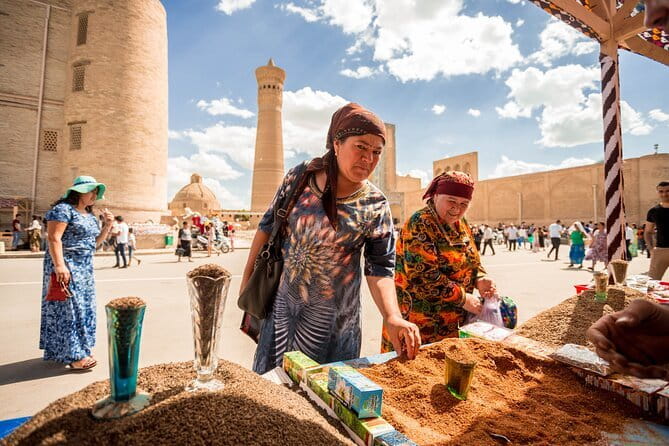
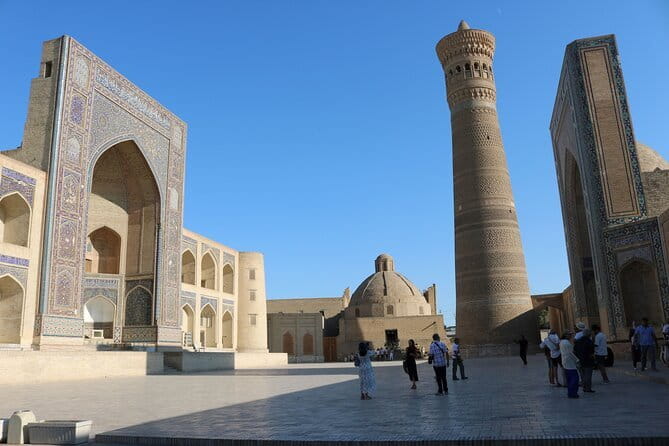
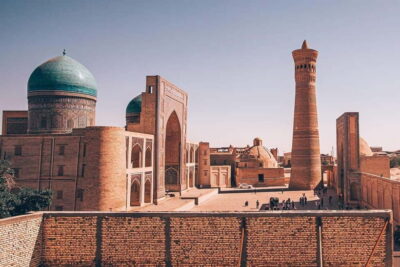
Poi Kalyan is the big cluster, including the Kalyan Mosque, the Kalyan Minaret, and the Mir-Arab Madrasah. You’ll spend about 40 minutes here.
Admission tickets are listed as not included. The good news is that this complex is so central and prominent that even if you choose to skip extra paid areas, you still get a lot from the exterior and the way the buildings dominate the surrounding space.
Poi Kalyan is a “read the city” moment. Earlier stops gave you the learning and trade connections, but Poi Kalyan shows community focus and major religious authority in a scale that’s hard to ignore. If you’re short on time in Bukhara, this is one of the places you really want your guide for, because explanation helps you see what you’re looking at.
Ark of Bukhara: a quick look at the Emir’s citadel
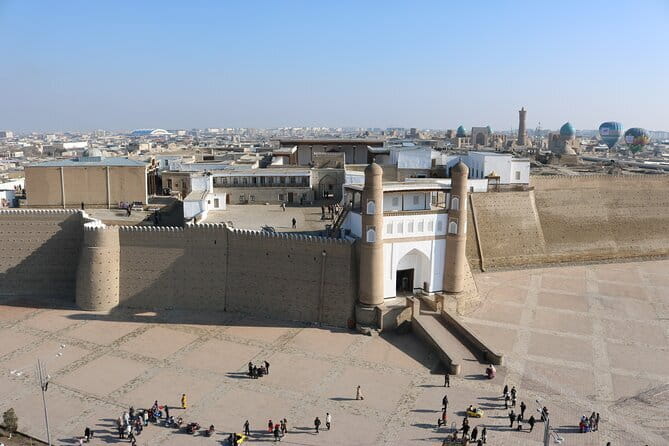
You’ll also visit the Ark of Bukhara, described as the citadel of the Emir of Bukhara, an earthen fortification in the northwestern part of contemporary Bukhara.
The allocated time is very short, about 1 minute, and admission tickets are listed as not included. That tells you this portion is more of an orientation stop than a long exploration. You’re likely to get a highlight moment, plus context so you understand why the Ark mattered.
If you want more time here, plan to ask your guide if there’s room to extend slightly. Since the tour is private, there’s usually more flexibility than on group bus tours, and your guide can sometimes adjust on the fly if the schedule allows.
Bolo Hauz Mosque, Chashma-Ayyub, and sacred water legends
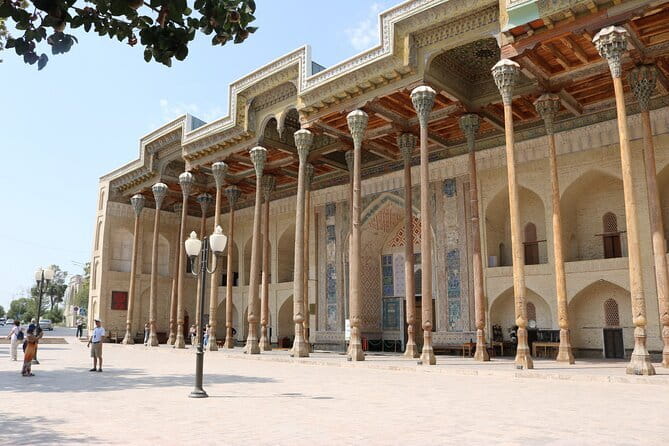
Then comes Bolo Hauz Mosque, listed as a visit to an 18th to 20th century mosque. Time is about 20 minutes, and admission is listed as free.
This free stop is a nice breather. It also gives you a change of pace from the big complexes. The guide can help you notice how later buildings fit into the older urban fabric.
After that, you go to the Chashma Ayyub Mausoleum, linked to the legend of Prophet Ayyub (Job) and a sacred spring. Time is about 10 minutes, with admission tickets not included.
This is a short stop, but it adds spiritual storytelling to the day. Sacred spring legends are the kind of cultural detail that makes a city feel human. You’re not only seeing brick and tiles, you’re learning why people cared about specific spots.
Ismail Samani Mausoleum: ending with one of Bukhara’s most iconic forms
Your final stop is the Ismail Samani Mausoleum, the tour ending at Samanids Mausoleum. Time is about 10 minutes, and admission tickets are listed as not included.
This mausoleum is described as a 10th century masterpiece of early Islamic architecture and built as a family tomb for the Samanid dynasty, with intricate brickwork and a cubic design.
Even with limited time, this is a strong closer. The architecture is distinctive, and it gives you a final anchor after a day of mosques, madrasas, trading domes, and fortifications. If your guide has done a good job connecting themes, you usually end the walk feeling like the city’s pieces form a story.
Walking comfort, timing, and how to handle restoration days
The tour runs about 5 to 6 hours and is customized if needed. You’ll spend a considerable amount of time on foot through the old town. That sounds simple, but it changes how you should plan your day.
Bring comfortable shoes. Also plan for pauses. The tour notes that breaks at local cafes can happen if you need rest and refreshments. That matters because you’re not just walking between sites, you’re walking between emotional moments, and your feet get tired before you realize it.
Weather is another real factor. This experience requires good weather, and if it’s canceled due to poor weather, you’ll be offered a different date or a full refund. If it’s borderline, your guide can sometimes adapt the plan. One family scenario included booking a taxi during rainy conditions even though it’s billed as a walking tour.
Finally, some monuments might be under restoration. The tour addresses this by saying guides will suggest alternative stops so you won’t miss out. That’s a big advantage in Bukhara, because construction happens. You’re not stuck staring at scaffolding with no plan.
What your $50 covers, and where extra money might appear
At $50 per person, this is priced like a focused, private half-day in one of the most intense historic areas in Central Asia. For that price, you get a professional guide, pickup to start at your hotel, walking tour time, and online support.
What’s not included is meals, entry fees, and drinks. Entry fees are explicitly listed as not included for many stops, with only a couple called out as free like Toki Telpakfurushon Market and Bolo Hauz Mosque.
So think of the $50 as paying for the guide and the structure of the day. You budget separately for any tickets you choose to pay at each monument. For value, the key question is simple: do you want a guide to explain what you’re looking at? If yes, this kind of route is usually worth it, because you’d otherwise spend extra time reading on your own while trying to translate architectural details.
Guides who adjust to real life, not just a script
The most praised aspects in the experiences shared are the guides themselves, especially how well they explain and how easily they adapt.
One guide named Sunny was praised for being knowledgeable about city, culture, and history, and for making the tour a great way to see Bukhara. Another guide named Nuriddin stood out for making contact before meeting to understand what you want to see, then pitching the day in a way that matched expectations. In a family case with an elderly mother and a young child, Nuriddin adjusted for bad weather by arranging a taxi while keeping the day comfortable.
That kind of flexibility is valuable. It means the tour is not only about hitting the right buildings, it’s about matching the day to your group.
Who should book this private Bukhara walking tour
I’d book this if you want an efficient, guided tour of Bukhara’s old core without losing time to confusion. It’s especially good if you like architecture and want help noticing patterns, inscriptions, and the logic behind how buildings connect.
It also makes sense for families because private means you can move at a pace that works for kids and elders. The tour description even notes breaks at local cafes if needed.
If you hate walking, or you expect to park yourself indoors for most of the day, this may not be your style. It is still a walking tour, even though it can adapt with rests and sometimes a taxi when weather is rough.
Should you book it? My practical verdict
Book it if you want a structured old-town experience in about 5 to 6 hours, with hotel pickup, a private guide, and a route that ends at the Ismail Samani Mausoleum. For $50 per person, you’re paying mainly for someone to connect the dots between madrasas, mosques, and the trade spaces that shaped the city.
Skip it or choose a different format if you want a lot of free time between stops, or if you’re not comfortable walking for a long stretch in the old town. Also keep in mind that entry fees are not included, so your total cost may rise a bit depending on how many paid interiors you choose.
If you’re deciding between doing it alone and doing it with a guide, I’d tip you toward this option. Bukhara rewards attention, and a good guide makes that attention pay off fast.
FAQ
How long is the private guided walking tour in Bukhara?
It lasts about 5 to 6 hours, and it can be customized. You’ll spend a considerable amount of time walking in the old town.
Is hotel pickup included?
Yes. The guide meets you at your hotel and the tour begins from there, with the walk starting in the historical area.
What is included in the price?
The tour includes a professional guide, hotel pickup, the walking tour, and online support.
Are entry fees included for the monuments?
No. Entry fees are not included. A couple of stops are listed as free, but most have admission tickets not included.
Are meals included during the tour?
No. Meals are not included. The tour notes there is free waiting time, and you can take breaks at local cafes if you need rest.
Where does the tour start and where does it end?
It starts at Nodir Devonbegi Madrasah (Bakhowuddin Nakshbandi Str.) and ends at the Ismail Samani Mausoleum (Samanids Mausoleum).
What happens if some monuments are under restoration or if the weather is bad?
If monuments are under restoration, your guide will suggest alternative stops so you don’t miss out. The experience requires good weather, and if it’s canceled due to poor weather you’ll be offered a different date or a full refund.
Latest reviews out of Bukhara
- Uzbekistan 8 Days Private Guided Tour★ 4.6 · 3 reviews
- Bukhara: City Highlights Guided Tour with Pickup★ 5.0 · 3 reviews
- Bukhara day tour★ 4.0 · 4 reviews
- Legends of Bukhara: Exclusive Full-Day Tour★ 5.0 · 4 reviews
- Bukhara Private City Tour★ 2.5 · 4 reviews
- 2 Day Ukhum Hiking Tour from Bukhara★ 5.0 · 4 reviews
- From Bukhara: 3-Day Yurt Stay, Hiking & Lake Aydarkul★ 5.0 · 5 reviews
- Bukhara day tour. Departure from Tashkent or Samarkand.★ 5.0 · 7 reviews
Bukhara Tours, compared.
All You Need To Know About Bukhara. A Walk In The Town
Read our review →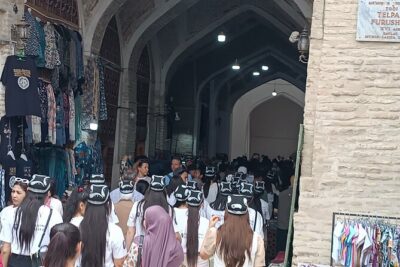
Browse the lists this tour appears in