
Bukhara is one of those places where the architecture feels like it is still arguing with time. This walking tour is a focused way to see why locals call it the Pillar of Islam, moving from domes and medreses to mausoleums that matter in Central Asian religious history. Pre-mongol architecture is a big theme here, so you are not just sightseeing, you are getting context.
Two things I really like: first, the way you get major monuments in a tight route without feeling rushed. Second, your guide brings the sites to life with clear explanations in multiple languages, and you can end up with standout guides like Lola, who does a strong job explaining as you walk, or Zara, who is noted for French that is truly easy to follow.
One thing to plan for: it is a 5 to 6 hour walk in real outdoor heat. If you start late in summer, you will feel it fast, and sites that require entry tickets will cost extra on your own.
Key highlights you will notice right away

- Lyabi Hauz start area with the Nadir Devanbegi medrese and xanaka, setting the tone immediately
- Magoki Attor Mosque with an early, pre-mongol feel that anchors the route
- Trading domes like Toqi Telpak Furushon and Toqi Zargaron where the city’s commerce history shows up in stone
- Abdulazizkhan medrese as the most luxurious medrese stop on the walk
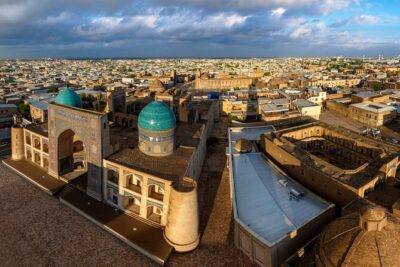
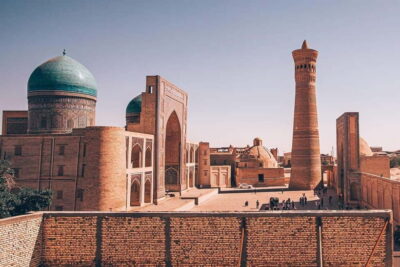
- Poi Kalan complex and Minaret Kalan for that classic Bukhara skyline moment
- Samanid Mausoleum and Chashmai Ayub for the religious centerpiece of the whole day
Bukhara’s “Pillar of Islam” vibe, and why this route works

Bukhara has a knack for making you look up. Even if you think you are a “slow museum” person, this tour pushes you through the city’s religious and educational heart in a way that feels logical, not chaotic. You start in the Old Bukhara core around Lyabi Hauz, then you work your way toward the grand complexes at Poi Kalan, and finally toward the big mausoleum stop.
The value of this route is pacing and sequence. You hit the medreses and mosques early, when light is nicer and the walk is easier. Then you get the big visual payoff around Poi Kalan. After that, you end up at the Samanid Mausoleum, which is the kind of place where a little context makes the stones feel personal rather than just pretty.
And yes, it is pretty. But the real payoff is that you are not only looking at domes and minarets. You are learning what makes them historically significant, including monuments described as among the first in Central Asia or early in the Islamic world.
More Walking Tours in Bukhara
- Bukhara: Walking Tour with a Small Group
★ 4.9 · 260 reviews - All You Need To Know About Bukhara. A Walk In The Town
★ 4.9 · 31 reviews - Bukhara Historical City Highlights Guided Walking Tour
★ 4.5 · 16 reviews
Getting started near Lyabi Hauz, and what your meeting point means

The tour is set to begin in Old Bukhara, around the Lyabi Hauz complex, near a landmark of a man sitting on a donkey. That is your anchor point for the first stretch.
Your guide meets you near the entrance of As-Salam Hotel. If you want this to go smoothly, arrive a few minutes early, and keep an eye out for your guide near that entrance. Once you link up, you get moving right into the medrese and mosque zone.
This matters because Bukhara’s center can feel like a maze at first. Starting in the right area means you spend your energy looking at the buildings, not trying to find the route.
Nadir Devanbegi Medrese and Magoki Attor Mosque, where the tour sets its theme

Your first major stop is the Nodir Devanbegi Medrasah, with time for photos plus a guided look. This is a strong opener because the medrese complex tells you a lot about how Bukhara taught knowledge and shaped religious learning long before modern tourism.
If you are into architecture, this is where the pre-mongol thread becomes easier to spot. The shapes, the way spaces sit around each other, and the sense of time layers start clicking. You also get enough time to actually see details, not just snap one quick picture and move on.
Then you shift to the Magok-i-Attor Mosque. This is one of the stops the tour calls out as an early mosque monument in Uzbekistan, from a pre-mongol period. The short stop still works because the guide’s job is to help you understand what you are looking at, especially if your eyes are still learning how to read Islamic architecture. Even with limited minutes, you can usually walk away with a clearer idea of why the site matters.
Photo stops here are not filler. They act like pauses so you can absorb what the guide just explained.
The shopping-domes segment, Toqi Telpak Furushon and Toqi Zargaron

After the mosque, you move into the trading-domes zone, including Toqi Telpak Furushon and Toqi Zargaron. These are short stops, but they are worth paying attention to because they show Bukhara’s identity beyond religious buildings.
Domes like these were part of how the city handled trade and movement. If you only picture Bukhara as a place of prayer and scholarship, these stops help you remember the city was also commerce, daily life, and human traffic. That blend is what makes the experience feel more like walking through a real historic city rather than doing a checklist of landmarks.
You may also pass through the Jewish quarter area and the Kukaldosh medrese zone as part of the broader Old Bukhara route. The tour’s strength is that it connects religious monuments with the surrounding neighborhoods that made them possible.
More of Bukhara worth pencilling in
- Bukhara: Private Guided Walking Tour with Hotel Pickup
★ 5.0 · 11 reviews - Bukhara: Walking Tour with a Small Group
★ 5.0 · 10 reviews - A Group Walking Tour Of Old Town
★ 5.0 · 8 reviews - Bukhara Walking Tour
★ 5.0 · 4 reviews
Ulughbek and Abdulazizkhan medreses, two stops with very different “feel”

As you continue, you reach Ulughbek madrasasi. This one is described as the most ancient medrese in Uzbekistan. Whether you care about dates as numbers or as meaning, the guide’s explanations help you understand why that longevity matters. When something is described as ancient, it is easy to treat it like a label. Here, you get help turning that label into a sense of continuity.
Then comes Abdulazizkhan Madrasah, described as the most luxurious medrese. This is where the day shifts from learning to experiencing. You get photo time and a guided look, and the stop tends to land differently than the earlier medrese because luxury often shows up in the way decoration and proportions feel intentional.
If you like “read the room” travel, this pair is smart. One medrese gives you foundation. The other gives you spectacle, and both together make Bukhara feel like a system, not a random set of impressive buildings.
Poi Kalan complex: Minaret Kalan and the massive mosque moment

When you reach the Poi Kalan complex, it is classic Bukhara payoff. You see Minaret Kalan first, described as a pre-mongol monument. That minaret is the kind of structure you can spot even before you are right in front of it. It helps your brain map where you are in the city.
Then you move to the Kalan Mosque, described as the biggest in this part of the city. This stop is about scale and stillness. Even if you are not an architectural expert, the sheer size helps you feel the weight of what the mosque has represented over time.
You also visit the Mir-i-Arab Madrasa, which is the current medrese for males. That word current matters. The tour is not only about ruins or history preserved in a bubble. You are seeing living parts of the city’s religious education system.
The minaret and mosque combination works especially well on a walking tour because you are approaching these buildings as a sequence. You get the skyline feel, then the ground-level details, then you finally understand why they are placed where they are.
Ark Citadel and the Bolo Haouz mosque stop, adding power and everyday flow

The Ark Citadel is next on your route. It is one of the more significant “power” stops. A citadel helps you understand the city not only as a religious center, but as a place where authority was organized.
After that, you reach Bolo Haouz Mosque, with time for photos and a guided look. This stop is important because it bridges the big monumental zone with something more approachable. You start to see how the city’s grand spaces also connect to everyday movement around courtyards and water-adjacent areas like the Hauz compounds.
This is also where your guide’s pacing matters. A good guide helps you slow down at the right moments so you can actually absorb what you are seeing.
Chashmai Ayub and Samanid Mausoleum, the day’s emotional centerpiece

Chashma-Ayub Mausoleum is one of the stops that tends to feel more reflective. You get a longer guided look and photo time here, so it is not rushed. The tour describes it as part of the spiritual landscape that shapes Bukhara.
Then you end at Samanid Mausoleum, described as the first mausoleum in Central Asia and the second in the Islamic world, in a pre-mongol period. This is the monument that often makes people pause and just look. It is not only about historical ranking. It is about how the mausoleum’s architecture communicates permanence.
If you are the type who likes taking notes in your phone, this is a good moment to do it. The guide’s explanations usually make it easier to remember what each detail means.
A quick puppet theater stop you can fit into the cultural memory

One of the more unique touches on this tour is the opportunity to see the history of Central Asian puppets and puppet theater. The tour notes that there is a special place in Uzbekistan where you can experience this, and that you might even catch a short show from the master himself.
It also mentions that if luck smiles, you may find a puppet that looks like you, though that part is not guaranteed. For me, that is the kind of bonus cultural moment that makes a walking tour feel human. It breaks the heavy stone-and-tile rhythm without derailing the religious focus of the day.
The practical point: if you like variety, keep your schedule flexible enough that you do not bolt ahead to the next photo stop. This segment is where a sense of place comes from objects and performance, not only architecture.
Price and pacing: what $90 per group gives you, and how to avoid the heat trap
The price is $90 per group for up to 2 people, which changes the math depending on how you book. If you are traveling as a pair, that is a strong value for a private tour that lasts about 5.5 hours. If you are solo, it can still be worth it if you want a personalized pace and clearer explanations without sharing with strangers.
What you get for the money is not transportation or tickets. You get a professional guide, and the guide’s job is to help you understand what you are seeing in real time. You also get the benefit of skip the ticket line, but entry tickets themselves are not included. So treat the tour fee as the interpretive experience, and keep a separate budget for any sites that require paid entry.
The single biggest comfort tip is simple: start earlier. In summer, the tour recommends starting earlier, and this matches the practical reality that Bukhara heats up fast and popular areas get crowded as the day runs on. A private guide helps here too, because if the guide knows how to steer you around the densest moments, you spend more time enjoying and less time stuck.
Languages, private guide quality, and what to do if you want a specific vibe
The guide is live and can work in English, Russian, French, German, or Japanese. That matters because religious architecture gets a lot easier to understand when the explanation lands in your comfort language.
You also get a private group setup, which means your pace is yours. If you prefer photo-heavy stops, you can usually ask for a little more time. If you want fewer photos and more context, you can keep it moving.
On guide quality, I have seen examples like Lola, praised for strong city storytelling, Zara, noted for excellent French, and Guljan, who is described as good at navigating crowds and keeping the route smooth. You cannot choose the guide from this information alone, but it does suggest the provider takes guide performance seriously.
Who this walking tour is best for
This is ideal if you want:
- A structured way to see Bukhara’s biggest religious and educational landmarks in one half day
- Guided context for monuments like the Minaret Kalan area, Samanid Mausoleum, and the medreses
- A private format for flexibility, especially if you dislike big group crowd flow
It is also a smart pick if you are short on time. A 5 to 6 hour walk can be the perfect “first real day” anchor in Bukhara, because it gives you a map in your head for the rest of your stay.
Should you book this Bukhara Walking Tour?
Book it if you want a well-paced introduction to Bukhara that mixes the big monuments with quieter meaning. The private format and multilingual guiding are the core reasons it feels worth it, and the Samanid Mausoleum plus Poi Kalan stops are exactly the kind of combo that makes a half-day feel complete.
Skip or rethink it if you are not comfortable walking for roughly 5 to 6 hours in sun, or if you hate planning around heat and want a slower, more stop-and-shop style day. Also remember, entry tickets are not included, so you will still need to budget for those once you arrive.
If you can start early and bring good walking shoes, you will likely come away with Bukhara’s “Pillar of Islam” label feeling specific, not generic.
Latest reviews out of Bukhara
- Uzbekistan 8 Days Private Guided Tour★ 4.6 · 3 reviews
- Bukhara: City Highlights Guided Tour with Pickup★ 5.0 · 3 reviews
- Bukhara day tour★ 4.0 · 4 reviews
- Bukhara Private City Tour★ 2.5 · 4 reviews
- Legends of Bukhara: Exclusive Full-Day Tour★ 5.0 · 4 reviews
- 2 Day Ukhum Hiking Tour from Bukhara★ 5.0 · 4 reviews
- From Bukhara: 3-Day Yurt Stay, Hiking & Lake Aydarkul★ 5.0 · 5 reviews
- Bukhara day tour. Departure from Tashkent or Samarkand.★ 5.0 · 7 reviews
Bukhara Tours, compared.
All You Need To Know About Bukhara. A Walk In The Town
Read our review →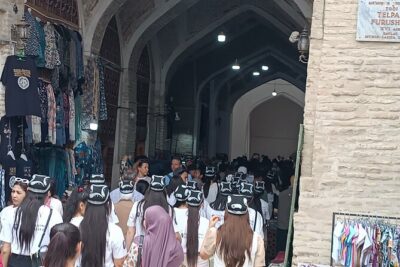
Browse the lists this tour appears in