
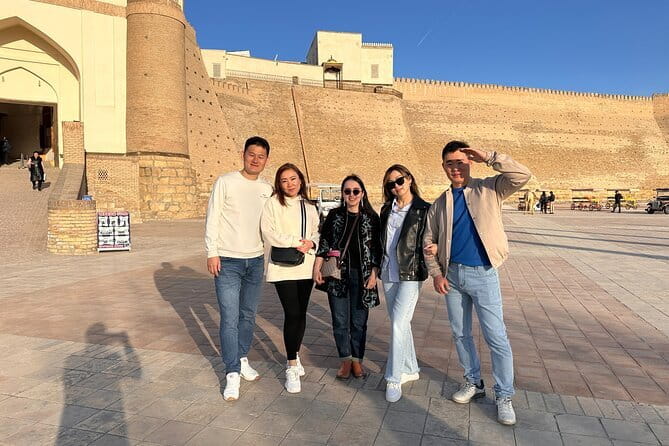
Reviewed · BUKHARA TOURS
City Tour Around Bukhara
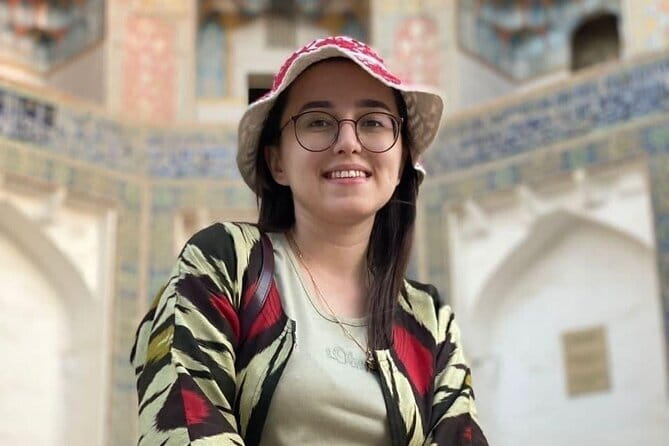
Bukhara can feel like a maze of domes and courtyards, but this tour keeps it fun and clear by turning the day into a story, with handmade messages from the past you carry from stop to stop. Guide Kamilla Yu Tour Guide Bukhara also points out the kinds of small details that make monuments feel human, not just postcard scenery.
I especially like the mix of major sights and working craft moments, so you see architecture and how people actually make things here. I also like the pace, with short stops, photo time, and small breaks for coffee or tea along the way.
The one possible drawback is that some sites require you to pay admission on your own, so you should budget a little extra on the day for tickets not included.
Key things to know before you go
Handmade messages from the past: You get an old-letter style element that gives the walk a plot, not just a checklist.
Craft process focus: You’ll see how crafts are made, including puppets, blacksmith work, gold embroidery, fabric making, and wood carving.
Culture plus folk shows: Local music and traditions are part of the experience, not an add-on.
Major monuments in one circuit: You cover the core old-city stops in about 4 to 6 hours.
Flexible with your interests: Kamilla can adjust timing and may add a lunch stop if you want.
Some admissions are extra: Several key buildings are listed as free, but others are not included.
Why this Bukhara walk feels like a story, not a sightseeing chore
This is a city tour built around narration and atmosphere. You do visit the big names, but the point is how they connect, how they were used, and what people believed and traded right here in the old city. The handmade messages from the past add a light, memorable thread, like you’re uncovering clues while you walk.
I also like how Kamilla’s style keeps it simple and practical. The tour isn’t packed with long dates thrown at you. Instead, you get just enough context to understand what you’re looking at, plus human details about life in Uzbekistan today.
One more thing I appreciate: you’re not rushed. There’s time to pause, look closely, and take photos without turning the day into a sprint.
More of Bukhara worth pencilling in
- Bukhara: Walking Tour with a Small Group
★ 4.9 · 260 reviews - Best of Bukhara: All Day Private Old Town Tour
★ 5.0 · 66 reviews - Best of Bukhara: All Day Private Old Town Tour
★ 4.9 · 62 reviews
Price and time: $66 per group for a 4 to 6 hour old-city loop

The price is $66 per group, up to 6 people, which is a strong deal if you’re traveling with family or friends. You’re buying a guided walk with real added value, not just someone pointing down a street.
The tour runs about 4 to 6 hours. That’s long enough to cover the core Bukhara sights and still feel relaxed, especially with short breaks included. It’s also short enough that you’re not stuck in a full-day plan if your schedule is tight.
Two practical notes. First, it’s private, so your group sets the rhythm. Second, while the guide and handmade message element are included, you may still pay admission for certain stops, which can add a bit to your daily budget.
Pickup, mobile tickets, and where the day starts and ends
Pickup is offered, which can save you time if you don’t want to navigate the old city right at the start. You’ll begin at the Ismail Samani Mausoleum area, and the tour ends around Lyabi Khauz Square, close to the pond in the old part of town.
You’ll also receive a mobile ticket. That matters because it cuts down on paperwork and waiting. In a city like Bukhara, anything that reduces hassle at meeting points is a win.
Timing-wise, this is designed to run during daylight hours, and the operator also offers evening tours during summer. If you like night lighting and cooler walking temperatures, that option can be a great fit.
Ismail Samani Mausoleum: brickwork you notice once someone shows you how
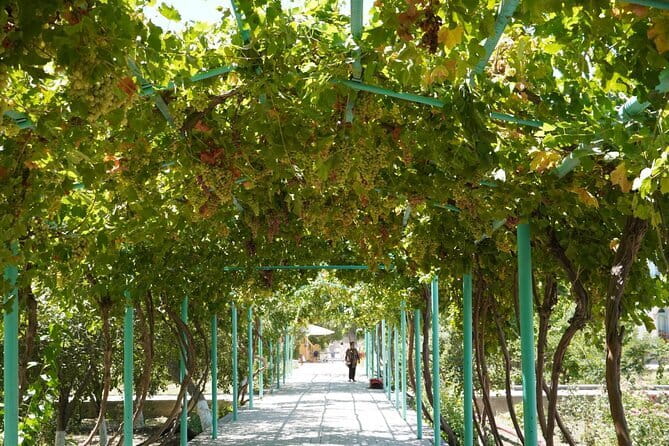
Your first stop is the Ismail Samani Mausoleum. What grabs your attention is not bright decoration, it’s the brickwork itself. This building dates to the 9th to 10th centuries, and the design uses more than 20 styles of laying bricks.
The practical value here is that you learn how to look. If you only glance from a distance, a brick building can feel plain. With guidance, you start spotting patterns and workmanship, and the monument becomes readable.
Admission is not listed as included here, so plan for possible ticket costs. Still, the stop is short (about 30 minutes), so even with a quick entry process, you won’t lose much time.
An easier afternoon once Bukhara is done:
- From Bukhara: 2-Day Desert Yurt Camp Tour
★ 4.5 · 57 reviews - Bukhara Full Day Old City Private Tour
★ 5.0 · 46 reviews - Bukhara: Historic Center Guided Sightseeing Tour
★ 4.8 · 44 reviews - Yurt Camp Tour with Night from Bukhara
★ 3.8 · 35 reviews
Chashmai Ayub: a shared sacred site with healing water stories
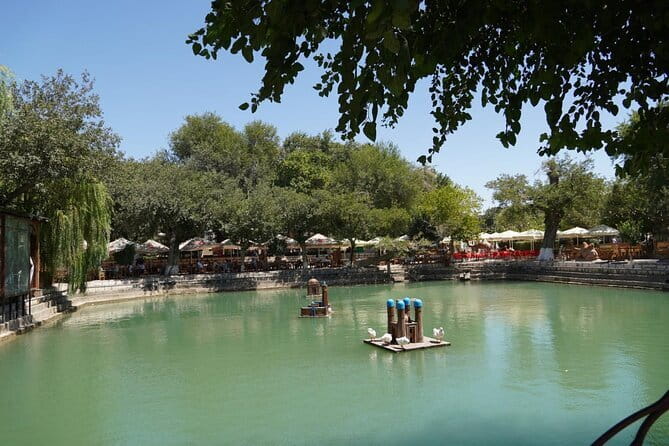
Next comes Chashmai Ayub Mausoleum, described as a holy place for three religions. You’ll visit the grave associated with the Prophet Job, and you’ll also see a natural well with healing water said to help people with skin diseases.
Even if you’re not looking for religious symbolism, this stop teaches you something about how people used water as meaning and medicine. In Bukhara, the sacred is often practical, and this is a clear example.
This stop is about 20 minutes. Admission is not included, so expect to pay on site if tickets are required.
Bolo Hauz Mosque: wood carved pillars and the story behind the 40 pillars claim
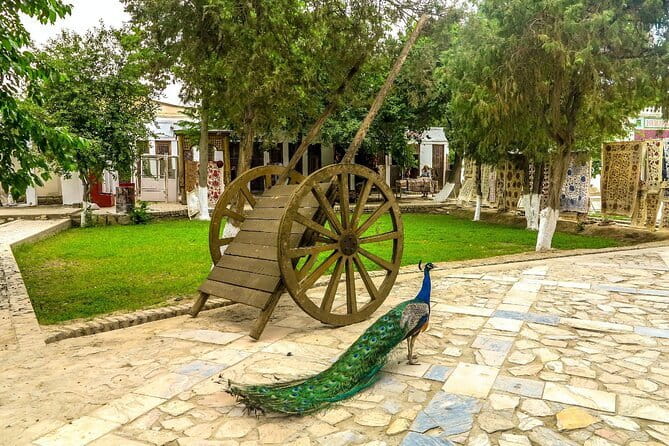
Then you move to the Bolo Hauz Mosque, sometimes called the mosque with 40 pillars even though the wood carved pillars are described as 20. The guide explains why people say 40, and how the space was used to announce news about a new king.
This is one of those stops where the architecture becomes functional history. You’re not just seeing columns. You’re learning how buildings communicated power, news, and community life.
The Bolo Hauz Mosque stop is listed with free admission and is about 30 minutes. It’s a good length, long enough to understand the pillars story without turning into a classroom.
Ark of Bukhara fortress: rulers, ruins, and a view from the top

After that, you reach the Ark of Bukhara. Think of it as the fortress where rulers lived from the 4th century BC until 1920. You’ll see ruins in the citadel area and then get a city view from the top.
This is a strong stop for two reasons. First, you get scale, the way fortresses shape how cities are laid out. Second, you get a sense of time, long enough that the walls feel like layers of different eras.
Admission is not included at this stop, and the time is about 40 minutes. That extra time is useful here because the view and ruins work best when you can linger.
Great Minaret of the Kalon: solidity you can read, plus night lighting in summer
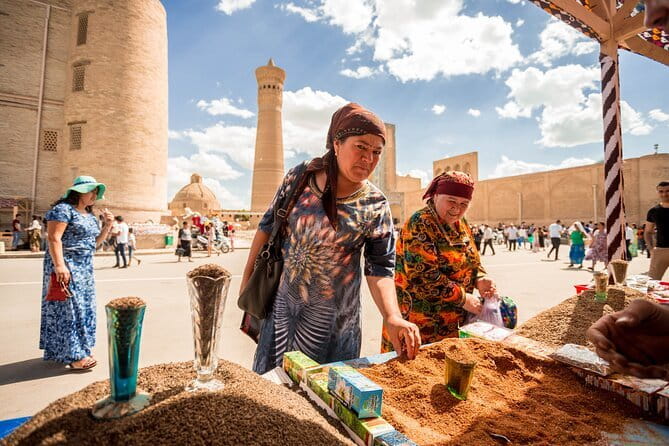
The Great Minaret of the Kalon is next, and the headline detail is that it has never fallen since the 12th century. You’ll hear why it was built to be so solid, and you’ll also get a mention of the illuminated version if you go in the right conditions.
This is one of those monuments where “tall” isn’t the full story. The guide helps you understand why the minaret’s construction mattered. It turns the minaret into engineering you can appreciate, not just a tall tower.
Admission is listed as free, and the stop is about 25 minutes. If you’re booking a summer evening tour, ask the guide what lighting and timing look like that day.
Poi Kalyan Mosque and Mir-i-Arab Madrasa: active religious spaces you can feel
You’ll then see Poi Kalyan Mosque, famous for having 288 domes. It’s still active and dates to the 16th century, and the description stresses that each corner is worth photos.
After that, you visit Mir-i-Arab Madrasa, a religious college that has been functioning since the 16th century. You’ll learn about the steps and system of getting religious education, plus typical construction methods for a madrassah. You also get a chance to go inside.
Poi Kalyan is listed as not including admission, while Mir-i-Arab is listed as free. Plan for a ticket line at Poi Kalyan if required.
These two stops are ideal if you like seeing living tradition. They’re not just dead monuments behind fences. You’re walking through spaces that still serve people.
Trading Domes, Kosh Madrasah: where commerce met teaching
Bukhara is not only mosques and tombs. It’s also a city of trade, and the Trading Domes show that. You’ll explore three trading domes, each served for a specific purpose. You’ll even be able to cross them, which makes the architecture feel like a functional passageway, not a museum hall.
Then comes Kosh Madrasah, where two madrassahs with two different styles share the same square. The stop highlights an original classroom from the 17th century, and it also mentions a mosque in a cave style.
Admission at Trading Domes is listed as free. Kosh Madrasah is listed with admission not included, so it may cost extra.
If you want context, these stops connect well with the craft part of the tour later. You see how Bukhara organized movement of goods, learning, and belief in the same urban area.
Magoki Attori Mosque and the Carpet Museum: a mosque under the ground
Magoki Attori Mosque is described as the oldest mosque you’ll see here, dating to the 12th century, and it’s hidden underneath. The tour also points out that the site was a place of worship of two different beliefs, Judaism and Islam, in the past.
There’s also a Carpet Museum element here. Even if you’re not a carpet expert, it helps you connect Bukhara’s architecture to everyday objects. Textiles are part of what made home and trade work, and this stop naturally supports that theme.
This stop is about 20 minutes and admission is listed as not included.
Lyab-i-Hauz: ending at the old city heart with a caravanserai feel
Your tour closes at Lyab-i-Hauz Square, described as the heart of the old city. You’ll see a mosque and two unique madrassahs, and there’s also a caravanserai, described as a hotel of the old days that still functions.
This is a smart ending point. You’ve spent the day moving through monuments, crafts, and sacred sites. At Lyab-i-Hauz you get a calmer, social finish near the pond, where the city feels lived-in.
Admission here is listed as free, and the stop is about 30 minutes. Even if you’re tired by then, it’s a good place to pause, take a few final photos, and decide whether you want to wander on your own.
The crafts, folk shows, and food angle that make it more than architecture
The monuments are only half the story in this tour. The other half is what people make and how they celebrate.
You can expect stops tied to the working process of crafts, including puppets, blacksmith work, gold embroidery, fabric making, and wood carving. This matters because it grounds the day. When you see how things are produced, the city’s symbolism becomes clearer. You start understanding why certain buildings, markets, and traditions existed.
Culture diving is also included: local music and traditions, plus folk shows that are available. Timing can affect which show you catch, but it’s built into the experience rather than thrown in as a random extra.
Food can enter too. The tour notes that if you wish, Kamilla can organize a masterclass of preparation of a traditional meal or even bread. One review also mentions a lunch stop for plov can be added if that’s what you want. If you’re the kind of person who likes to eat what locals eat, this option can turn a good tour into a memorable one.
What to expect from Kamilla’s guiding style
A big reason this tour earns strong recommendations is Kamilla’s approach. Her English is described as strong and conversational, and she explains details without making things heavy. She also adapts timing to your interests, including making room for photos and shopping for souvenirs.
That adaptation is useful in real life. In Bukhara, the old city streets can pull you toward side shops, small views, and unexpected photo angles. Having a guide who doesn’t fight your pace makes the whole experience feel easier.
Should you book this Bukhara city tour with Kamilla?
Book it if you want a half-day plan that feels story-driven, not just a checklist. The handmade messages from the past plus craft process stops plus culture moments make it worth it even if you’ve seen plenty of monuments before.
Skip it or consider another option if you hate walking, because this is a route through multiple sites over 4 to 6 hours. Also budget for possible admission fees at several stops, since not all entry tickets are included.
If your group is up to 6 and you want a guide who can explain, adjust, and keep things moving with time for photos, this is a very solid value way to experience Bukhara’s old city.
FAQ
How much is the Bukhara City Tour Around Bukhara?
The price is $66.00 per group, for up to 6 people.
How long does the tour take?
The duration is about 4 to 6 hours.
Is this a private tour or a group tour?
It is a private tour/activity, meaning only your group will participate.
Does the tour include pickup?
Yes, pickup is offered.
Where does the tour start and where does it end?
It starts at the Ismail Samani Mausoleum area and ends at Lyabi Khauz Square in the center of the old city near the pond.
What is included in the tour price?
Included features are an in-person guide and handmade messages from the past.
Is admission included for every stop?
No. Some stops are listed as free, but several stops note that admission tickets are not included. You may need to pay on site at certain monuments.
Are coffee or tea included?
Coffee and/or tea are not listed as included. The tour does include small breaks for coffee and tea, so you’ll likely pay for drinks yourself.
What happens if weather is bad?
This experience requires good weather. If it’s canceled due to poor weather, you’ll be offered a different date or a full refund.
Is the tour suitable for most people?
The information says most travelers can participate. Confirmation is received at booking time.
Latest reviews out of Bukhara
- Uzbekistan 8 Days Private Guided Tour★ 4.6 · 3 reviews
- Bukhara: City Highlights Guided Tour with Pickup★ 5.0 · 3 reviews
- Bukhara day tour★ 4.0 · 4 reviews
- Bukhara Private City Tour★ 2.5 · 4 reviews
- Legends of Bukhara: Exclusive Full-Day Tour★ 5.0 · 4 reviews
- 2 Day Ukhum Hiking Tour from Bukhara★ 5.0 · 4 reviews
- From Bukhara: 3-Day Yurt Stay, Hiking & Lake Aydarkul★ 5.0 · 5 reviews
- Bukhara day tour. Departure from Tashkent or Samarkand.★ 5.0 · 7 reviews
Bukhara Tours, compared.
All You Need To Know About Bukhara. A Walk In The Town
Read our review →
Bukhara Historical City Highlights Guided Walking Tour
Read our review →Browse the lists this tour appears in