
Khiva is one of those rare cities where the old fabric still feels close, not staged. This private walking tour strings together the biggest icons in Khiva’s walled core, starting at Ata Darvaza, the western gate, then moving from madrasas to mosques to palaces like chapters you can actually walk through.
I especially like two things here: the chance to stand near the Djuma Mosque and its huge run of carved columns, and the way the tour treats Tosh Hovli Palace as more than decoration, with the harem, receptions, and even a secret corridor story in the mix. You’ll get a lot of “what you’re seeing and why it mattered” without feeling rushed.
One thing to consider: ticketed entry and minaret upstairs access are not included, so plan a little extra for entrances and know you won’t be climbing up the minarets during this tour.
Key highlights you will feel on your feet

- Ata Darvaza start: you begin at the main western gate, then walk inward through Khiva’s historical center.
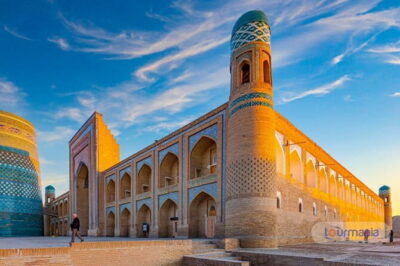
- Muhammad Aminkhan medrese and Kalta Minor: big architectural names early on, so the city sets the scale fast.
- Kunya Ark fortress views: panoramic viewpoints plus the coinage yard and Khan reception spaces.
- Djuma Mosque columns: more than 120 carved columns, a visual detail that locks in the tour.
- Tosh Hovli Palace harem and secret corridor: palace life explained through spaces, not just facades.
- Islamkhudja complex and the tallest minaret in this region: the signature skyline moment, tied to art and education.
Entering Khiva’s walled center at Ata Darvaza

Your tour starts at the main gate of the city, the western entrance called Ata Darvaza. That matters more than you might think. Gates in Khiva are not just entrances, they shape your first impression of the city’s scale and defenses, and they give you a clean “before and after” moment once you pass through.
You’ll walk for about 4.5 hours. It’s private, so the pace can flex if you move slowly, want extra photo time, or need a short break. In summer, I’d start earlier if you have the option, because Khiva can feel hot fast once the sun is up.
A practical tip: wear comfortable shoes and plan for dust or uneven stone. Khiva’s center is walkable, but “walkable” does not mean “smooth.” Also, the tour is designed so you’re not zigzagging randomly. It’s built as a logical route from grand buildings to the places where leaders lived, prayed, studied, and managed the city.
More Walking Tours in Khiva
- Khiva: Historical City Highlights Guided Walking Tour
★ 4.8 · 156 reviews - Khiva Historical City Highlights Guided Walking Tour
★ 5.0 · 30 reviews - Khiva Walking Tour
★ 4.5 · 15 reviews
Muhammad Aminkhan to Kalta Minor: the architecture tour you actually remember

The first big stop is Muhammad Aminkhan medrese, described as the largest in this territory. Medreses are the education buildings of the Islamic world, but in Khiva they also act like statement monuments. A large one can tell you who sponsored learning, who held power, and what kinds of public life the city expected.
From there, the route moves toward Kalta Minor minaret. Even if you only see it from ground level, it anchors the skyline. The way minarets work in Khiva is visual, not just spiritual. They help you understand direction and distance, and they make the city feel designed, not accidental.
What I like about this opening stretch is that it gives you structure before the more complex spaces. By the time you reach the fortress and palaces, you’ll already be able to spot patterns: where education sits, where ceremony happens, and where the city’s power was displayed.
One caution: there’s no minaret upstairs access on this tour. You’ll see these icons from the ground and viewpoints provided, but if climbing up minarets is a must for you, you’ll need a separate plan.
Kunya Ark fortress: the panoramic view and the power behind it

Next comes Kunya Ark, the ancient citadel, and yes, this is one of the most important parts of the whole experience. The fortress is where Khiva’s rulers worked and received visitors, so it’s the place that turns “pretty buildings” into “how the city functioned.”
You’ll get a panoramic view tower style moment, plus key areas connected to rule and administration. The coinage yard is especially interesting because it connects art and architecture to everyday authority. If a place minted coins, it wasn’t just a ceremonial center. It was part of the working system.
You’ll also hear about the summer and winter Khan receptions. That detail is practical as well as historical. It reminds you that climate mattered. Leaders managed comfort, crowds, and schedules, not just ideology.
This is the stop where I’d slow down. Look at how buildings line up around the citadel and how the city opens and tightens again as you move. Khiva’s design becomes easier to understand once you’re looking at it from a vantage tied to power.
Djuma Mosque and its 120+ carved columns

At Djuma Mosque, the highlight is the columned hall with more than 120 carved columns. Columns can sound like a generic architectural note, but in Khiva they work like a visual language. They create rhythm, they guide your eye, and they make the interior feel both orderly and detailed.
A guide makes a big difference here. You’ll get explanations that help you read the carvings and understand why this kind of sacred space could be more than a worship room. It’s also a community statement.
Practical advice: spend real time looking down the rows. If you only take one or two quick photos, you’ll miss the repetition that gives the hall its impact. Try standing in one spot first, then walk slightly to catch how the columns align from different angles.
If you care about craftsmanship, this is one of the best places on the route to slow your pace and let details sink in.
More of Khiva worth pencilling in
- Excellent Private Walking Tour in Khiva!
★ 5.0 · 14 reviews - Guided walking tour in Khiva
★ 4.8 · 12 reviews - Khiva: City Highlights Guided Walking Tour
★ 4.6 · 3 reviews - Samarkand: Historical Monuments Guided Walking Tour
★ 4.8 · 446 reviews
Tosh Hovli Palace: harem, receptions, and a secret corridor story

Then you reach Tosh Hovli Palace, the second Khan palace, and this stop has the most “how rulers lived” energy. You’ll focus on the palace’s harem, the summer and winter receptions, and connections to a special reception involving Tsar Alexander III.
One of the most compelling pieces is the mention of a secret corridor. Even if you only get the idea of where it fits in palace flow, it changes how you imagine the space. It suggests control, privacy, and movement inside walls that still feel intimate today.
This is also where the tour earns its nickname style of storytelling. You’re not just walking past walls. You’re learning that palaces were built for timing, audiences, and political theater. A harem is not a random room type here. It’s tied to who had access, how privacy worked, and how domestic space and authority overlapped.
If you are prone to “photo sprinting,” try a different tactic: pick one room category, like the reception spaces, and let the guide’s explanation guide where you look. You’ll end up with fewer photos that actually make sense later.
Medreses after the palace: Kutlug Murad, Allakulikhan, and more texture

After Tosh Hovli, you shift from royal spaces to education and culture buildings again. Kutlug Murad medrese includes a museum of surrealist paintings, which is a curveball in the best way. It reminds you that Khiva is not stuck in one time period. People keep interpreting the world, even through modern art forms, inside a historic shell.
Then you’ll pass Allakulikhan medrese. The value of these stops is not just seeing another pretty facade. It’s the pattern: Khiva puts learning next to power and next to worship. Education is part of the city’s identity, not an add-on.
If you love architecture, you’ll enjoy how the medreses bring you back to design details after palace complexity. If you prefer human-scale impressions, these medreses help you understand what a city like this expected from its citizens.
If you’re tired from the fortress and palace sections, this is also where a good guide can pace you out, with the explanations staying clear while you still get to see meaningful buildings.
East Gates toward Islamkhudja: the tallest minaret moment

You’ll continue toward the East Gates, then make time for Said Niyaz mosque and medrese. These religious and education stops round out the walk by showing the city’s everyday cultural engine. The East side buildings balance the earlier west side start, so the route feels like a walk through the city’s internal geography, not just a checklist.
The big signature finish is Islamkhudja complex, which includes the medrese-applied art museum and a minaret that’s the tallest in this region. This is one of those moments where you’ll feel why Khiva earned famous descriptors in travel writing. The minaret is a skyline marker, but it also becomes a “here’s what shaped the city” reference point.
The complex also connects art and teaching. You’ll also see the Islamkhudja school, noted as the first modern and secular school. That detail is important. It shows a change in thinking, education style, and the way leaders wanted the next generation to learn.
Spend a moment looking at how the complex sits in relation to the rest of the old city. Even at street level, you can feel the hierarchy: where the city wanted your eye to go, and where it wanted you to understand learning and art as power.
Pahlavan Makhmud and the bread oven that depends on luck

For your closing “cherry on the cake,” you reach the Pahlavan Makhmud complex. This is a fitting end because it brings you to a spot that feels more than architectural. It’s tied to identity and local respect, and it gives the tour a human landing after big palace and fortress moments.
Along the way, there’s also an opportunity to see how local bread is prepared in a clay oven. The key word is opportunity. It’s not guaranteed, depending on luck. Still, if it happens, it’s one of the most memorable parts of Central Asia travel because it’s sensory and real. You’ll smell heat, see hands working, and get a short window into daily life that most monuments can’t provide.
When it works, treat it like a mini cultural reset. Don’t rush it while you’re thinking about the next building. Bread from a clay oven is fast, hot, and a little chaotic in a good way.
Price and value of a $90 private walk for up to 2

This tour is $90 per group up to 2 people for about 4.5 hours. For Khiva, that’s often good value because you’re paying for focused guide time plus a route that hits the major anchors without you needing to plan the order yourself.
Two practical value points make the price make sense:
- You get a professional live guide in English, Russian, French, or German.
- You get skip the ticket line, which saves time inside a city where you don’t want to burn your walking tour waiting at entrances.
The main cost caveat is what’s not included: entrance tickets to multiple objects, plus you’re not going upstairs to minarets. So the true all-in cost depends on which sites charge entry fees on the day you go.
My advice for budgeting: set aside a bit of extra money for entrance tickets, and if you’re a minaret climber, plan that separately. Otherwise, you’ll feel like the $90 buys you a smooth, guided route through Khiva’s key spaces.
What to bring, what to wear, and how to stay comfortable
This is a walking tour, so pack for feet, not for scenery. Bring comfortable shoes and comfortable clothes. Khiva can be warm, and you’ll spend hours moving between buildings and courtyards.
Also note the simple rules: no smoking indoors. That’s easy, but it matters for where you’ll be allowed to pause during the tour.
If you want better photos, wear layers you can adjust. And keep your phone or camera ready before you reach the big skyline moment, especially near the areas tied to the minaret complex.
Who this Khiva walking tour suits best
I think this fits best if you want a structured way to see Khiva’s core without getting lost in the details. It’s especially good for:
- Couples or small groups who want private pacing
- Anyone who appreciates architectural storytelling, not just photo stops
- People who prefer a guide to explain what medreses, mosques, citadels, and palaces meant in daily life
If you’re the kind of traveler who hates timing, this can still work because it’s a 4.5-hour format with a clear route. Just remember that your experience will be limited by what’s included, especially no minaret upstairs access.
If mobility is a concern, it’s wheelchair accessible, which helps. Still, you’ll be inside historic areas, so expect some uneven surfaces and plan for slower turns.
Should you book this Khiva walking tour?
Book it if you want the most efficient way to connect Khiva’s main monuments into a coherent story. The route hits the biggest “anchors” in a tight window: Muhammad Aminkhan medrese, Kunya Ark, Djuma Mosque, Tosh Hovli Palace, Islamkhudja’s complex and tallest minaret in this region, and then Pahlavan Makhmud to close strong.
Skip it only if you specifically want to climb minarets upstairs, or if you hate the idea of paying extra entrance fees for multiple sites. If that’s you, you can still see Khiva on your own, but you’ll spend more time figuring out the order and which places charge.
If you book, aim for earlier start times in summer, bring comfy shoes, and lean on the guide. This is the kind of tour where the best photos often come after you understand what you’re looking at.
FAQ
Where does the Khiva walking tour start?
You meet at the main gate of the city, the western gate called Ata Darvaza, at the ticket office.
How long is the tour?
The duration is about 4.5 hours, with a range of 4 to 5 hours depending on the route and timing.
What is included in the price?
A professional live guide is included, and you also get skip-the-ticket-line access.
What is not included?
Entrance tickets to the specified objects are not included, and the tour does not include going upstairs to the minarets.
Is the tour private?
Yes, it is a private group.
What languages are available for the guide?
The live guide is available in English, Russian, French, and German.
Is there a chance to see bread baked in a clay oven?
There is an opportunity along the way to see local bread prepared in a clay oven, but it is not guaranteed and depends on luck.
Is the tour wheelchair accessible?
Yes, wheelchair accessible is listed.
Can I cancel, and can I pay later?
Free cancellation is available up to 24 hours in advance for a full refund, and you can reserve now and pay later.
Latest reviews out of Khiva
- Khiva: classic Half-Day Tour★ 3.7 · 3 reviews
- Khiva: City Highlights Guided Walking Tour★ 4.6 · 3 reviews
- Master Class – Uzbek Bread (Khiva)★ 3.5 · 4 reviews
- Traditional Khiva Cooking Class with Market Visit & Lunch★ 5.0 · 4 reviews
- Old Khiva Stories with Your Local Guide★ 5.0 · 5 reviews
- A Night In The Kyzylkum Desert [2] From Khiva★ 4.5 · 3 reviews
- Khorezm Fortress and KyzylKum Desert Private Tour★ 5.0 · 3 reviews
- Kunya Urgench Day Tour from Uzbekistan★ 1.3 · 3 reviews
Khiva Tours, compared.
Transfer: Bukhara – Khiva via Ancient Fortresses
Read our review →
Khiva Historical City Highlights Guided Walking Tour
Read our review →
Private Daytrip to 7 Ancient Fortresses of Khorezm
Read our review →
From Khiva To Aral Sea 2-Days One Night In Yurt Stay
Read our review →Browse the lists this tour appears in