
Khiva’s old walled core, Itchan Kala, is the kind of place where the streets feel like they were built for walking, not driving. This classic half-day tour strings together the city’s big-name monuments in a way that helps you understand who held power, who studied religion, and how that shows up in blue tile and brick.
I like two things a lot. First, you get a proper guided tour through key sites, not just a self-guided checklist. Second, you see the Kalta Minaret up close, including the story behind its striking, unfinished look.
One thing to consider: admission tickets are not included, and some buildings restrict flash photography. Also, it is a walking tour, so comfortable shoes matter, and it is not set up for wheelchair users or major mobility limits.
Key highlights worth your time
- Itchan Kala walking route through the walled inner city, with photo stops and guided time inside major sites
- Kunya Ark Citadel (Kuhna Ark), the administrative and royal center tied to Khiva’s rulers
- Muhammad Rakhim Khan Madrasah from the late 1800s, part of the UNESCO World Heritage complex
- Kalta Minaret, famous for its distinctive design and unfinished construction
- Tosh-Khovli Palace (Stone House), built mostly of brick in the early 1800s
- English, Russian, or Uzbek live guiding, with a pace that avoids rushing at the stops
Entering Itchan Kala, Khiva’s walled inner city
If you want a fast, meaningful introduction to Khiva, this tour is built for you. It starts right inside Itchan Kala, the historical center of the city, where the walls, narrow lanes, and monument walls make it easier to picture how Khiva worked in earlier centuries.
A big reason I like this approach is that Itchan Kala is not just a backdrop. It is a working layout of old power and religious life, all packed into a compact area. So even in a short window, the sites connect in your mind instead of feeling like separate photo targets.
You will do some walking between stops, and there is time for photos and a guided explanation at each major point. If the sun is strong, plan to slow down your pace slightly, because you are moving across open courtyard areas and under direct light.
More of Khiva worth pencilling in
- Half-day excursion around Tashkent
★ 5.0 · 3 reviews
From royal power to Islamic learning, your main route
This half-day tour follows a clear logic: governance first, education next, then iconic religious architecture, and finally a palace. That structure matters. When you understand what each place was for, the architecture reads differently.
Itchan Kala: get your bearings fast
The first stop is Itchan Kala itself. You start with a short photo pause and guided sightseeing, then you move onward through the compound zones. This is a helpful start because the city’s layout can feel confusing if you arrive with no orientation.
What you will notice here:
- The close spacing of monuments, so you are never far from the next story
- Courtyard and gate rhythms that Central Asian cities use to control movement
- The way tilework and brick patterns show up around doorways and corners, not just on the biggest facades
Kunya Ark (Kuhna Ark) Citadel: where the rulers ran things
Next comes Kunya Ark Citadel, tied to Khiva’s royal and administrative world. The citadel was originally constructed around 1647 by Arang Khan. On this stop, you get guided time that helps you understand how the citadel functioned as the seat of power for the khans of Khiva and the wider Khorezm region.
Practical note: the citadel area is the kind of place where it helps to have a guide to connect what you see, like fortifications and building purposes, to what you hear. Otherwise, it can turn into “lots of old walls” instead of a clear picture of governance.
An easier afternoon once Khiva is done:
- Khiva: Historical City Highlights Guided Walking Tour
★ 4.8 · 156 reviews - Transfer: Bukhara – Khiva via Ancient Fortresses
★ 4.5 · 101 reviews - Daytrip From Khiva To Ancient Fortresses
★ 4.6 · 60 reviews - Ayazkala, Toprakkala & Kizilkala Fortress Tour From Khiva
★ 4.3 · 33 reviews
Muhammad Rakhim Khan Madrasah: late 19th-century Islamic education
After the citadel, you move to the Mohammed (Muhammad) Rakhim Khan Madrasah, built around 1876 during the reign of Khan Muhammad Rakhim Khan II. Madrasahs are more than pretty buildings. They were part of a system for religious study and community education, so your visit is really about how Islam shaped daily life and learning.
This site is also part of the wider UNESCO World Heritage ensemble. That matters because it means the monument is preserved as part of a larger historical whole, not as an isolated stop.
What to watch for during your time there:
- Brick and decorative details that signal the building’s ceremonial importance
- The way the madrasah fits into the city’s monument cluster, so it feels connected to the rest of Itchan Kala
Kalta Minaret: the iconic tower with an unfinished twist
Now you reach the star of the skyline, the Kalta Minaret. This is one of Khiva’s best-known landmarks, and it has an extra layer of interest because it is known for its unfinished construction.
That unfinished element is not a flaw. It is part of the story, and it gives the minaret personality. When you look at it with your guide’s context, you start noticing design choices and proportions more clearly, instead of just admiring the shape.
Expect a photo stop plus guided time and walking on-site. You will likely take your camera out early here because the minaret becomes the visual anchor for your mental map of the day.
Tosh-Khovli Palace: the Stone House on the inside
The final major monument is Tosh-Khovli Palace, built between 1830 and 1838 under Allakulikhan. Its name translates to Stone House, reflecting the palace’s solid, brick-focused construction.
You get another photo stop and guided time here, and this is often where people slow down a bit, because palaces feel different from forts and schools. The mood shifts from public power and learning into a more residential, ceremonial sense of architecture.
If you like details, this stop rewards you. You can compare how brickwork and ornament show up across different building types. That contrast is a quick way to understand how function influenced design.
Timing and walking pace, what 4 to 5 hours really means
The duration is listed as 4 to 5 hours, and in practice that is a good amount of time for Itchan Kala if you keep your pace sensible. This is not a sprint tour, but it is also not a slow wander. You have guided visits at each stop, plus time to take photos and move between sites.
A key thing to plan for is the weather. You will want comfortable shoes, and you will want water and sunscreen if the day is warm. Even in cooler months, courtyard sunlight can be intense.
One additional practical tip: if you are the type who stops to read every sign, build in extra time and skip one or two deep photo moments. The tour is balanced for movement and explanation, and that balance is the point.
Also, note the restrictions. Flash photography is not allowed inside buildings, and smoking is not allowed during the tour. Food and drinks are also not permitted while you are on the walk with the group.
Price and tickets, how to judge value in Khiva
The tour price is $45 per person, lasting 4 to 5 hours. That looks like a straightforward deal until you remember that admission tickets are not included.
So here is my practical way to judge value: paying for a guide is about getting the stories you would miss if you walked alone. In a compact place like Itchan Kala, those stories can dramatically raise your enjoyment. You are paying for meaning, not just access.
Also, keep your eyes open on price differences across bookings. One past booking raised a fairness issue about paying far more than another person for a similar-sounding Khiva classic walking tour. That does not mean every booking will be uneven, but it is a reminder to double-check what is included in your specific confirmation, especially ticket responsibilities and the exact route.
If you want the best value:
- Budget extra for admission tickets
- Prioritize the sites that match your interests, since the tour covers the major anchors of Itchan Kala
- Come prepared with water and sun gear so you do not feel rushed when you need a break
Guide quality, language, and the way the day stays relaxed
This experience is led by a professional live guide and is offered in English, Russian, or Uzbek. Language access matters here. The monuments are visually striking, but the real payoff comes from understanding why they were built and what they meant socially.
In one praised case, the guide named Sarvar was described as professional and flexible, with lots of explanations and a pace that did not feel rushed. Even if you do not get the same guide, the lesson you can use is simple: ask questions during the tour when something sparks your curiosity.
One more practical point from how these tours tend to run: the driving time from pickup can be longer than you expect depending on your starting point. In one example, the ride to the fortresses was described as taking about two hours with history explanations along the way. If you are short on time, plan your half-day buffer with that in mind.
Who should book, and who should skip this walking tour
This is a walking tour, and it is not suitable for people with mobility impairments or wheelchair users. If you have walking limitations, you may find it stressful rather than enjoyable.
This tour is a strong match if you:
- Want a guided first look at Itchan Kala
- Like architecture with context, not just scenery
- Prefer seeing several top monuments in a short time window
It may be less ideal if you:
- Want a full day of unhurried wandering with no schedule at all
- Need frequent breaks or step-free access
- Hate group logistics and would rather go at your own pace with a map
Should you book the Khiva classic half-day walking tour?
I think it is a good booking for most first-timers to Khiva, as long as you go in prepared. You get the main sequence that makes the city make sense: Itchan Kala, Kunya Ark, Muhammad Rakhim Khan Madrasah, Kalta Minaret, and Tosh-Khovli Palace. That ordering gives you a story arc from rule, to learning, to landmark religious architecture, to palace life.
Book it if you want a smart introduction and you like having a guide handle the connections. Skip or look for an alternative if you need wheelchair access or if you know you cannot handle a few hours of walking in changing weather.
If you do book, come with a plan: wear comfy shoes, bring water and sunscreen, and remember flash is off inside buildings. That small prep turns the tour from fine into genuinely satisfying.
FAQ
How long is the Khiva classic half-day tour?
It runs for about 4 to 5 hours.
Where is the tour pickup?
Pickup is included in Khiva. The exact pickup information is provided the day before your tour.
What stops does the tour include?
It includes Itchan Kala, Kunya (Kuhna) Ark Citadel, Mohammed (Muhammad) Rakhim Khan Madrasah, Kalta Minaret, and Tosh-Khovli Palace.
Are admission tickets included?
No. Admission tickets are not included.
What languages does the guide speak?
The live guide speaks English, Russian, and Uzbek.
What should I bring?
Bring comfortable shoes, a hat, a camera, sunscreen, and water.
Is flash photography allowed?
No. Flash photography is not permitted inside the buildings.
Is smoking or food allowed during the tour?
Smoking is not allowed, and consuming food and drinks is not allowed during the tour.
Is the tour suitable for wheelchair users?
No. It is not suitable for people with mobility impairments or wheelchair users.
Latest reviews out of Khiva
- Khiva: City Highlights Guided Walking Tour★ 4.6 · 3 reviews
- Master Class – Uzbek Bread (Khiva)★ 3.5 · 4 reviews
- Traditional Khiva Cooking Class with Market Visit & Lunch★ 5.0 · 4 reviews
- Old Khiva Stories with Your Local Guide★ 5.0 · 5 reviews
- A Night In The Kyzylkum Desert [2] From Khiva★ 4.5 · 3 reviews
- Khorezm Fortress and KyzylKum Desert Private Tour★ 5.0 · 3 reviews
- Kunya Urgench Day Tour from Uzbekistan★ 1.3 · 3 reviews
- Kunya Urgench-Darvaz-Ashgabat Tour from Uzb 2 Days/ 2 Nights★ 2.9 · 5 reviews
Khiva Tours, compared.
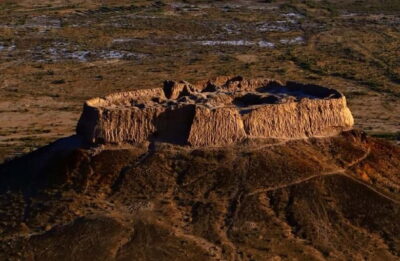
Transfer: Bukhara – Khiva via Ancient Fortresses
Read our review →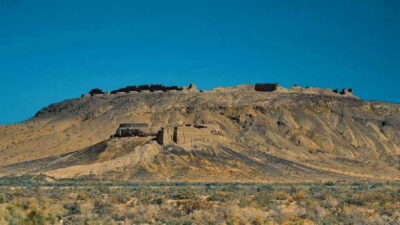
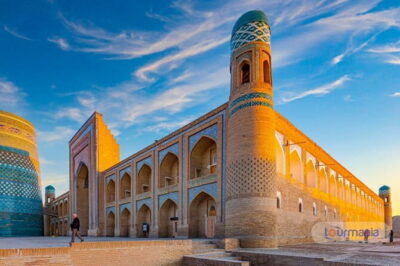
Khiva Historical City Highlights Guided Walking Tour
Read our review →
Private Daytrip to 7 Ancient Fortresses of Khorezm
Read our review →
From Khiva To Aral Sea 2-Days One Night In Yurt Stay
Read our review →Browse the lists this tour appears in