
Reviewed · KHIVA TOURS
Private Daytrip to 7 Ancient Fortresses of Khorezm
This daytrip is interesting because it turns Khiva into a launch point for a very different kind of history: the ancient “kala” fortress world of Khorezm, shaped by centuries of building, abandonment, and rebuilding. You do not just stop for photos, you move through the fortresses in a planned route that helps the whole region make sense as one story.
I like that it is private and paced for real walking and looking, not a rushed relay. I also like that you get audio-guide materials plus a mobile ticket, so you can keep up even if the day is moving fast.
One consideration: the day can feel time-tight because it is a full 9 hours with multiple sites. And in one real-world example shared with the operator, parts of the time were lost when the group ended up in a separate car for a stretch, even with the same guide.
Key highlights before you go
- 7 fortresses in one route: Toprak Kala, Guldursun Kala, Janbas Kala, Ayaz Kala, Qizil Kala, Duman Kala, and Aqchako‘l
- A longer Ayaz Kala stop: about 1 hour, which is rare on this kind of tight schedule
- Free entries at several stops: Guldursun Kala, Janbas Kala, Ayaz Kala, Duman Kala, and Aqchako‘l list as free
- You may pay for 2 admissions: Toprak Kala and Qizil Kala list admission as not included
- Solo-traveler comfort: the guide, Sarvar, has been described as making solo travelers feel safe
- Food potential at Aqchako‘l: the Akchakul lake complex local fish is specifically mentioned as a memorable taste
Road trip fuel: what this day shows you about Ancient Khorezm
This trip is built around the “kala” idea, fortress sites that mark power, defense, and control of water and trade in the Khorezm region. The fortresses are not evenly spaced or uniformly exciting. Some are dramatic and towering, others are more about walls, layouts, and location. That is exactly why a route like this works well, because you start to see patterns: how rulers picked ground, how walls were reinforced, and how later periods re-used or rebuilt places after abandonment.
If you care about the practical human side of history, you will appreciate the framing of the experience. The tour is aimed at helping you realize the lifestyle of the BC period and beyond, and it also includes references to Karakalpak traditions. That matters because Khorezm is not only archaeology. It is people, food, and regional identity that still exists today.
The tone is also “adventure,” in the sense that you are doing a long drive and seeing sites that feel remote compared to city monuments. You are not shopping your way through the day. You are road-tripping through fortification remains, with stops that let your brain catch up to the scale.
Other desert fortresses on the same road:
- Transfer: Bukhara – Khiva via Ancient Fortresses
★ 4.5 · 101 reviews - Daytrip From Khiva To Ancient Fortresses
★ 4.6 · 60 reviews - Ayazkala, Toprakkala & Kizilkala Fortress Tour From Khiva
★ 4.3 · 33 reviews
Price and group value for 7 forts in 9 hours
The price is $199 per group, up to 3 people, for about 9 hours. On paper, that can look like a lot for one day. In practice, it often lands as good value because it is private transportation with hotel pickup and drop-off, plus audio-guide materials.
Here is how I think about the value:
- If you travel solo or as a couple, you get a car that is yours for the day, which usually means fewer delays and less waiting around.
- The route covers seven separate fortress stops. Without private transport, chaining those visits with reliable timing would be harder.
- You also get audio materials, which helps you make sense of what you are looking at. Fortresses can be confusing if you only have labels.
One thing to consider: because it is priced per group, the best value is with at least one companion. If you are traveling with two people, this can turn into a bargain compared with paying separate transport costs, plus it keeps the day flexible.
Booking timing can also matter. The tour averages around 44 days booked in advance, so if your dates are fixed, I would not leave it too late.
Pickup from Khiva or Urgench, and why that matters for your day
The tour can start from either Khiva or Urgench, and pickup is offered. That is more than a convenience line. It can affect your whole pacing and stress level, especially if you are staying near one city and want to avoid transfers.
Start time is 9:00 am, and the day is planned to keep you moving between sites. The private sedan is air-conditioned, which is a real deal in warm weather. It also means you can take a breath between stops without turning the day into a heat marathon.
Also, the tour uses a mobile ticket. That matters when entry lines or paper tickets are a mess. You have a straightforward way to handle arrivals at the places where tickets are relevant.
The stop-by-stop route, with what to expect and what to watch for
The tour runs through seven main stops, with time per site that ranges from about 30 minutes to roughly 1 hour. Most stops are short, so your best strategy is mental, not physical: pick what you will look for at each fortress, then move on.
More of Khiva worth pencilling in
- Khiva: Historical City Highlights Guided Walking Tour
★ 4.8 · 156 reviews - Aral Sea Adventures (2 day)
★ 5.0 · 30 reviews - Khiva Historical City Highlights Guided Walking Tour
★ 5.0 · 30 reviews - Master Class – Shivit Osh Traditional Food Of Khiva
★ 4.2 · 27 reviews
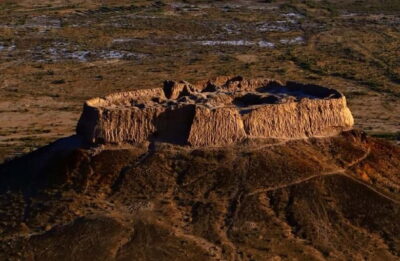
Stop 1: Toprak Kala, a Kushan-era royal residence (30 min, admission not included)
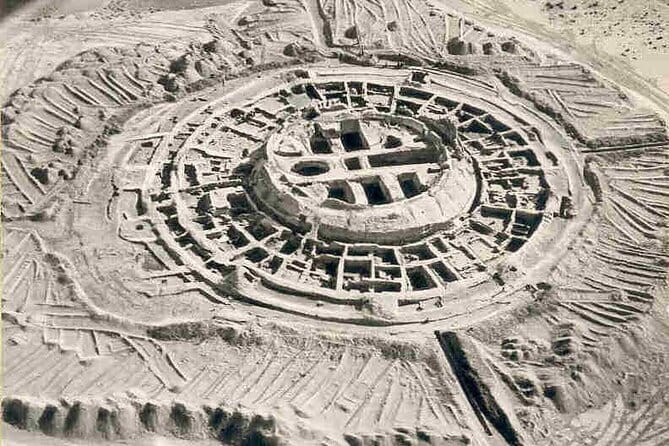
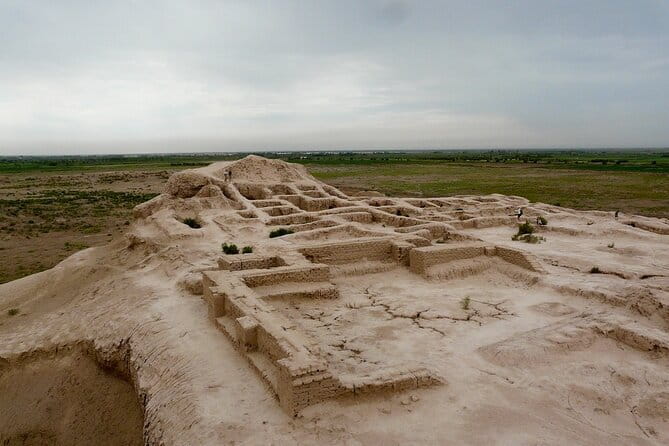
Toprak Kala is dated to the Kushan period, around the 2nd and 3rd centuries CE, and it served as a royal residence of kings of Khorezm. The site has a note that it first served as a royal sanctuary, then was briefly abandoned, and later re-used.
Why it is worth the stop: Kushan-era sites often feel “organized” compared to later frontier rebuilding. Even with limited time, you can focus on the idea of residence and status, not only defense.
Practical drawback: admission is not included for this stop. So you will want to budget a little extra cash for entry, and you will also want to arrive ready to start quickly so you do not lose time at the ticket stage.
Stop 2: Guldursun Kala, fortified town walls and finds (30 min, free)
Guldursun Kala is described as a fortified town. Its exterior walls and towers date to the 12th century CE. Archaeological finds from the site include ancient and medieval pottery, plus bronze items and coins.
Why you should care: pottery, bronzes, and coins are the kind of finds that help you link the site to daily life and trade, not just military structures. Even if you only see the remains, the mention of what archaeologists found helps you imagine what moved through the place.
This stop is free, which gives you flexibility. With only 30 minutes, aim for the big visual cues: wall lines, tower shapes, and where the site likely controlled movement.
Stop 3: Janbas Kala, early fortification with walls up to 20 meters (30 min, free)
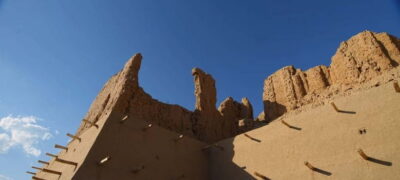
Janbas Kala is known for one of the most archaic fortification systems from the early antique period. The flanking walls are in relatively good condition in places, reaching up to 20 meters high.
This is the “wow” stop on paper, because it is not just a foundation story. You get real wall height to work with. If you like structure and engineering, you will enjoy focusing on the flanking walls and how they frame the site.
A practical tip: because the stop is short, do not try to do “everything.” Look at wall thickness, how walls step or curve, and how a defensive system can also function like a gatekeeping perimeter.
Stop 4: Ayaz Kala, three clustered fortresses on a hill (1 hour, free)
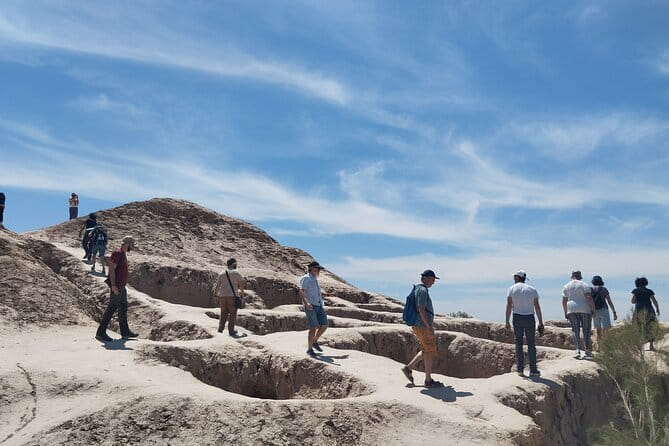
Ayaz Kala is one of the most spectacular fortresses in the area, and it is not just one site. It is three fortresses clustered on and around a prominent hill, at the eastern end of the Sultan-Uiz-dahg range.
This is your best window of time. One hour gives you a chance to take your brain off fast-forward and actually compare the fortress clusters. You can also spot how terrain choices create natural defense, and how the same hill supports multiple defensive positions.
Because it is free, you can spend time without worrying about running into extra costs. Just plan for sun and uneven ground.
Stop 5: Qizil Qala (Kyzyl Kala), rebuilt on the eve of Mongol invasions (30 min, admission not included)
Qizil Qala was originally constructed in the late antique period, the 1st to 4th centuries CE. It was abandoned, then rebuilt in the 12th to 13th centuries on the eve of the Mongol invasions.
This is a stop that benefits from context. The same general location can tell multiple chapters, and the language here suggests a cycle: build, abandon, rebuild under new threats.
Drawback: admission is not included for this site. So again, you will want to plan on extra entry costs and be ready for a quicker ticket moment.
Stop 6: Duman Kala, three adjacent sections (30 min, free)
Duman Kala is made of three adjacent sections: a square-shaped western enclosure with corner towers, a smaller square-shaped citadel, and an irregular four-sided northern enclosure, with remains of its walls.
Why it is interesting: the description itself reads like a map. When you see fortresses with multiple sections, it often means you are looking at layers of control: outward defense, inner power center, and a structured layout for movement and protection.
Because the stop is free, I recommend using it for “layout spotting.” You will get more out of 30 minutes if you try to match what you see to these sections rather than just wandering.
Stop 7: Aqchako‘l, Akcha and Suvyorgan river story plus fish potential (30 min, free)
At Aqchako‘l, you get the water angle. In BC times, the Amudarya, also called the Ox, flowed in two directions. One branch was the Akcha River and the other was the Suvyorgan River. The reason for calling this part Akcha is tied to the Akchakhan Fortress, named after the area.
Then there is the food note. The tour specifically mentions local fish at the Akchakul lake complex as an unforgettable taste.
This is a good final stop if you want a sense of continuity. Even when you are looking at ruins, a river story reminds you why settlements and fortresses mattered. And the fish note gives you a practical payoff at the end of the drive.
A practical reality check: lunch is not included, so if you want fish to be part of your day, keep your expectations flexible. You might find something to eat around the lake complex, but you should not count on a full meal being included in the tour price.
Guide experience and language reality with Sarvar
A private daytrip lives or dies by the guide. In this case, the guide name that has come up is Sarvar. One review highlights that Sarvar made a solo female traveler feel safe, which is a big deal on a long remote-feeling day.
At the same time, there is also a note that Sarvar was still learning English, so conversation could be limited. The good part is that the experience includes audio-guide materials, and you may receive audio files before you go. That is the practical fix. You can lean on the audio when live conversation is shorter than you hoped.
If you want the best experience, I suggest you treat the day like a guided soundtrack plus visual interpretation. Ask a few clear questions early, then let the audio fill in the rest.
What walking is like and what to bring for a full-fortress day
The tour asks for moderate physical fitness. That usually means you should expect some uneven terrain and walking between viewpoints at each site. With most stops at 30 minutes, you will not need to be a marathon runner, but you do need to be comfortable stepping around rubble and uneven ground.
What I would bring:
- Water, since the day is long and outdoors between stops
- Sun protection and a hat, especially with the 9:00 am start and midday Fort work
- Comfortable shoes with good grip
- A light layer if mornings are cool, then you can shed it as the day warms up
Because lunch is not included, I also suggest you plan a snack strategy. Even if you end up finding food near the lake area, having backup snacks keeps the day from turning into a hangry puzzle.
Timing, comfort, and how to avoid the most common frustration
This is a 9-hour day with seven sites, so it is not slow. That is fine if you know what you want: structure, walls, layouts, and the “why” behind fort building and rebuilding.
The biggest risk is not the walking. It is the schedule. In one example tied to the tour experience, the group ended up in another car alongside a separate group for part of the day, and that reduced how much time the booking intended to allow.
You can reduce that risk by being proactive. If being strictly together in one vehicle matters to you, confirm upfront that your group will stay in the same sedan for the entire route. It is also smart to communicate your priorities early, for example, whether Ayaz Kala is your favorite so you want to protect that longer stop time.
Should you book a private daytrip to 7 Ancient Fortresses of Khorezm?
Book it if:
- You want a private, air-conditioned, hotel-to-hotel day that covers multiple fortress sites efficiently.
- You like archaeological context, especially details like wall heights at Janbas Kala and the Kushan-era framing at Toprak Kala.
- You travel in a way that benefits from a calm, controlled pace, and you want to feel safe and looked after on a longer day. Sarvar has been mentioned in that safety context.
- You want a day that ends with a chance to connect history to food, with local fish at the Akchakul lake area.
Consider passing or modifying your expectations if:
- You need lots of time at each site. Most stops are 30 minutes, except Ayaz Kala at about 1 hour.
- You do not want any potential extra entry costs. Toprak Kala and Qizil Qala list admission as not included.
- You hate schedule slip-ups. This route is structured, so treat it as a plan, not a flexible museum crawl.
If your idea of a great day in Uzbekistan is “see the place and understand it,” this private fortress route is a strong match. You get the drive, the audio support, the order of stops, and the payoff of water and food at Aqchako‘l, all in one long but manageable day.
FAQ
How long is the Private Daytrip to 7 Ancient Fortresses of Khorezm?
It runs for about 9 hours.
How much does it cost and how many people are included?
The price is $199 per group for up to 3 people.
Where does the tour start?
The trip can start from either Khiva or Urgench, with pickup offered.
What time does the day trip begin?
The start time is 9:00 am.
Is lunch included?
No, lunch is not included.
Are entrance tickets included for all the fortress stops?
Entrance ticket inclusion varies. Admission is not included for Toprak Kala and Qizil Qala (Kyzyl Kala). Admission is listed as free for Guldursun Kala, Janbas Kala, Ayaz Kala, Duman Kala, and Aqchako‘l.
What is the cancellation window?
You can cancel for a full refund up to 24 hours before the experience’s start time. If you cancel less than 24 hours before, the amount paid is not refunded.
Latest reviews out of Khiva
- Khiva: classic Half-Day Tour★ 3.7 · 3 reviews
- Khiva: City Highlights Guided Walking Tour★ 4.6 · 3 reviews
- Master Class – Uzbek Bread (Khiva)★ 3.5 · 4 reviews
- Traditional Khiva Cooking Class with Market Visit & Lunch★ 5.0 · 4 reviews
- Old Khiva Stories with Your Local Guide★ 5.0 · 5 reviews
- A Night In The Kyzylkum Desert [2] From Khiva★ 4.5 · 3 reviews
- Khorezm Fortress and KyzylKum Desert Private Tour★ 5.0 · 3 reviews
- Kunya Urgench Day Tour from Uzbekistan★ 1.3 · 3 reviews
Khiva Tours, compared.
Transfer: Bukhara – Khiva via Ancient Fortresses
Read our review →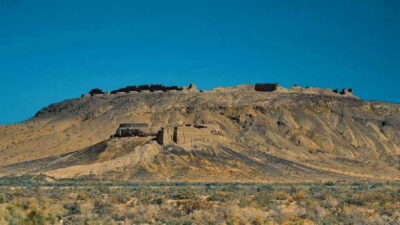
Khiva Historical City Highlights Guided Walking Tour
Read our review →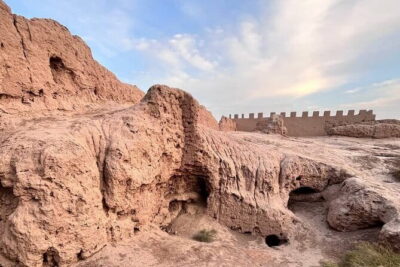
From Khiva To Aral Sea 2-Days One Night In Yurt Stay
Read our review →
Daytrip From Khiva to Aral Sea Cemetery Of Ships . All In One
Read our review →Browse the lists this tour appears in