
Reviewed · KHIVA TOURS
A Night In The Kyzylkum Desert [2] From Khiva
What makes this experience so interesting is the contrast: you move from Nukus museums and the Aral Sea story at Muynak to an overnight in the middle of the Kyzylkum, with nights that feel wide open and quiet. I love how the route balances big ideas with concrete places, and how the desert part is not just a photo stop. You also get a private setup, which makes the schedule feel more relaxed and personal.
I love two things most. First, the chance to see the Aral Sea tragedy up close at Ships Cemetery and in the ecological museum at Muynak. Second, the desert night by Ayaz-Kala, where you can observe traditional desert living, including the presence of camels and the small, everyday routines of the families who host.
One possible drawback to plan for: the trip has several optional or paid extras, like museum and fortress tickets, plus the yurt overnight is an additional cost if you want that night in the desert.
Key highlights you will actually care about
- Aral Sea context in Muynak: the ecological museum plus the unforgettable visual of Ships Cemetery
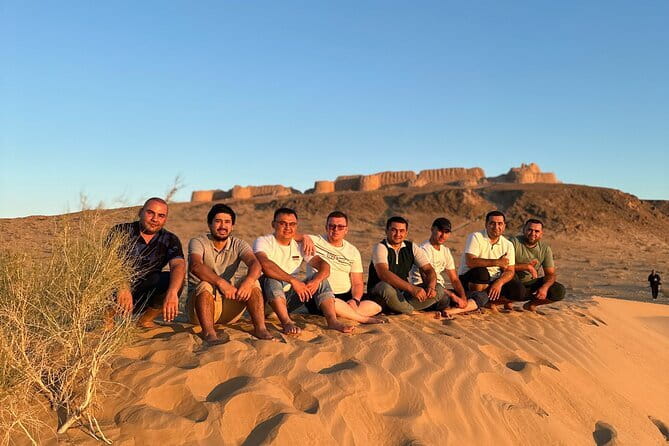
- A rare desert overnight by the Ayaz-Kala area, with big sky views after sunset
- Fortress-hopping on Day 2 across major sites tied to ancient Khorezm
- Nukus, not just a transit stop: time inside the I.V. Savitsky State Art Museum
- Private logistics: hotel pickup and a driver who takes you between far-apart locations
From Khiva at 8:00 am: why a private format matters here
This is a 2-day, private tour for groups up to 3 people. The meeting time is 8:00 am, with hotel pickup offered from Khiva or Nukus, and you are dropped back in Khiva or Urgench. You travel in an air-conditioned vehicle, which matters on this kind of route where the distances can feel long in a way that is hard to predict.
The private format is also practical for a night in the desert. You are not trying to fit yourself into a crowded bus schedule that was designed for someone else’s priorities. Instead, you get an audio-guide and a driver who takes you from stop to stop, so you can spend your mental energy on what you are seeing, not on figuring out transport.
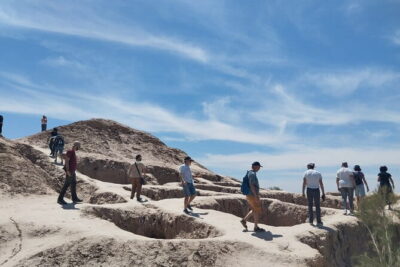
You should go in with moderate physical fitness. The sites are archaeological and spread out, and you may walk around uneven ground while taking in fortresses that are ancient but not always “tourist-bus smooth.”
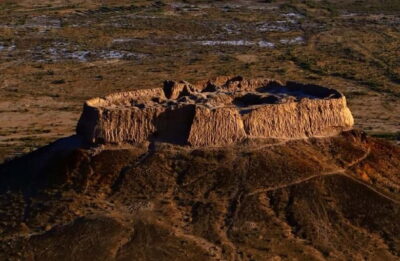
Other desert fortresses on the same road:
- Transfer: Bukhara – Khiva via Ancient Fortresses
★ 4.5 · 101 reviews - Daytrip From Khiva To Ancient Fortresses
★ 4.6 · 60 reviews - Ayazkala, Toprakkala & Kizilkala Fortress Tour From Khiva
★ 4.3 · 33 reviews
Day 1 in Karakalpakstan: Chilpiq and Nukus before the Aral Sea hits
Day 1 is about setting context fast. You start with a very old monument, then pivot to museums in Nukus and Muynak, before ending with the most visual reminder of the Aral Sea’s disappearance.
Chilpiq (Shilpiq) Qala: a 2,200-plus-year-old Zoroastrian monument
Your first historical stop is Chilpiq (Shilpiq) qala, also known as Chilpyk and Shylpyk in some references. This round roofless tower is about 15 meters high and roughly 65 meters in diameter, and it is described as being more than 2,200 years old.
What I like about this stop is the scale and the emptiness. You are not looking at a restored building meant to impress. You are standing near something that still feels like it belongs to a different way of living, with time stripped down to the shape of the structure. It is also an easy mental warm-up for the rest of the tour, because later you will see fortified sites and ruins that are easier to interpret once you have that first “ancient form” perspective.
Note the practical part: admission is not included for this stop.
Savitsky Art Museum in Nukus: art where you do not expect it
Next comes the State Museum of Art named after I.V. Savitsky in Nukus. This is one of those places that surprises you because the setting is so unexpected compared to what you might assume about major art museums. The museum’s story is tied to the region of Karakalpakstan, and that link matters, because this is not art displayed in a vacuum. It is art in a specific cultural and geographic context.
You will have about 1 hour here. Admission is not included, so budget for the USD 10 museum ticket.
If you only did the Aral Sea sites and ignored Nukus culture, you would miss a key point: this area is not just a tragedy landscape. It is a living region with institutions, identities, and creative energy. The museum helps you feel that before the Muynak sites make you feel heavy.
More of Khiva worth pencilling in
- From Khiva To Aral Sea 2-Days One Night In Yurt Stay
★ 4.6 · 20 reviews - Tashkent : Classic City Tour. (Day & Night Shift)
★ 4.8 · 52 reviews - Fergana – Golden Valley From Tashkent 1 night / 2 days
★ 4.5 · 41 reviews - Life As Nomads – Yurt Camp Tour with Night from Samarkand
★ 3.6 · 36 reviews
Muynak Regional History and Aral Sea Museum: the story behind what you see
After Nukus, you head to Muynak for the Regional History and Aral Sea Museum, also known as the Ecological Museum of Muynak. This stop is short, about 30 minutes, but it’s designed to give you the why behind the visuals.
The Aral Sea is often discussed in broad terms, but this is where you can connect the global story to a specific local outcome. The museum is described as modest by metropolitan standards, which is exactly what you want. You are there for information and clarity, not for a huge entertainment experience.
Admission is not included, and the museum ticket is listed at USD 7.
Ships Cemetery: when the Aral Sea becomes undeniable
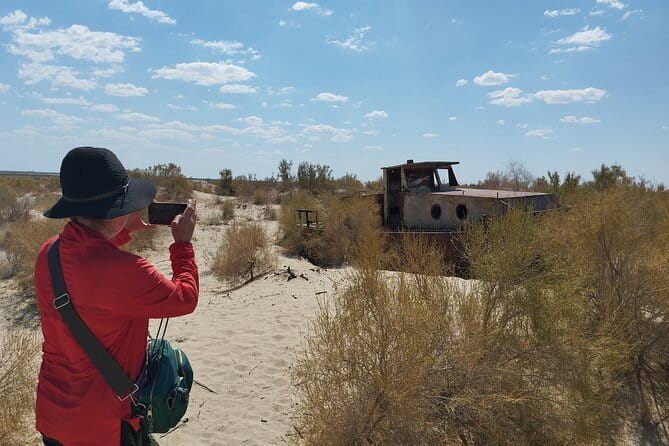
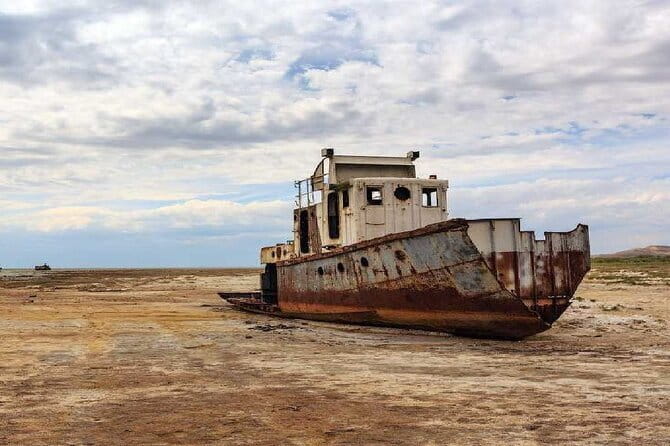
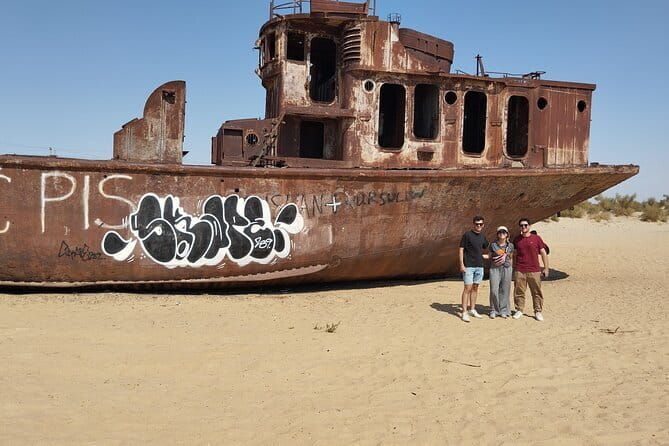
Then you get to the Ships Cemetery. It’s about 30 minutes, and admission is free. Even without a long explanation, this is the kind of place that makes the message stick. The disappearance of the Aral Sea in a single lifetime is described as one of the darkest secrets of the former Soviet era, and standing here gives you a physical sense of scale.
This is also where the idea from the reviews makes sense in real life: for people who come specifically to see the Aral Sea, this is often the moment that turns it from a news story into a personal memory. The view is stark. The symbolism is heavy. And that is the point.
Overnight by Ayaz-Kala: stars, desert routines, and that wide quiet
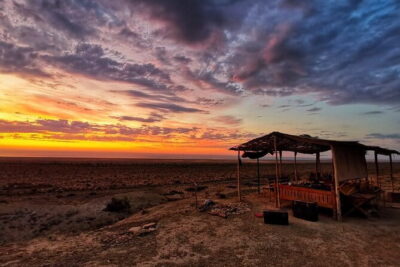
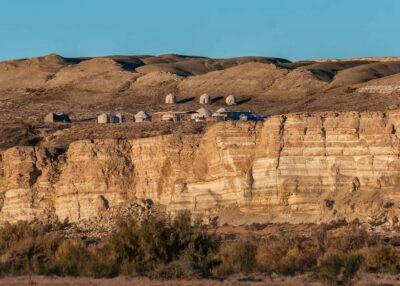
The core reason you book this is the overnight in the middle of the Kyzylkum Desert, located by the Ayaz Kala fortress area.
You are not sleeping in a standard hotel. You are staying in a yurt, and the tour description is clear that the yurt overnight accommodation is USD 50 per day, offering dinner and breakfast. So if you want that full experience, plan for that extra cost. It is not built into the base tour price.
What you get for that money is not just a bed in a different setting. You get a night where the sky becomes part of the program. The description highlights that you can observe the stars on the sky, and that alone can feel magical because the desert reduces light pollution and fills the night with contrast.
You also get a chance to see traditional life in Karakalpakstan and the way of living in a desert zone. The experience description mentions camels walking around, and even the chance to drink milk from local families. I would treat that as a cultural exchange moment rather than a guaranteed “food tour,” but it is a meaningful detail because it shows that the desert stay is meant to reflect everyday routines, not just perform a staged activity.
Practical note: the tour says the overnight is located by Ayaz Kala fortress. Since this is an archaeological region, conditions can feel rugged. Bring layers you can rely on. Nights in deserts can shift fast from warm to cool.
Day 2: the Khorezm fortresses and the joy of slow ruins
Day 2 is where the tour becomes more archaeological and less museum-focused. You will move through multiple fortress sites tied to the ancient Khanate of Khorezm, with short stops at several locations. Many are listed as free admission, though some have tickets not included.
This is a good day for patient sightseeing. You are not racing through a single landmark with photo ops every minute. Instead, you are building an understanding of how these fortified towns were used and how their walls and positions connect across the region.
Ayaz-Kala: the hilltop start that frames the desert
You begin Day 2 at Ayaz-Kala, an archaeological site in Ellikqala District in northern Uzbekistan. It is dated from the 4th century BCE to the 7th century CE and sits on a hilltop overlooking the Kyzylkum Desert.
Admission here is free, and you get about 1 hour. This is an important start because it gives you a “positioning” moment. You can see why a settlement would choose a hilltop. When you learned something at Chilpiq the day before, you now get a second piece of the puzzle: not just religious architecture, but defensive and administrative space.
Toprak Kala: a Kushan-period royal residence
Next is Fortress Toprak Kala. It dates to the Kushan period, roughly the 2nd and 3rd centuries CE, and is described as a royal residence of the kings of Khorezm. The site is described as having first served as a royal sanctuary, then briefly abandoned, then rebuilt later.
This stop is about 30 minutes. Admission is not included, so budget small extra fees for fortress access. The data suggests fortress tickets are around USD 2.
Guldursun Qala and Kyzyl Kala: fortified towns and rebuilt sites
You continue to Guldursun Qala, a fortified town with exterior walls and towers dated to the 12th century CE. The description notes that archaeologists found ancient and medieval pottery and bronze items and coins within the site.
Admission is listed as free, and the time is about 30 minutes.
After that comes Kyzyl Kala. It is originally constructed in the Late Antique period (1st to 4th centuries CE), then abandoned, and later rebuilt in the 12th to 13th centuries around the era before Mongol invasions, with some debate mentioned about details.
Admission is not included for this one, and the stop is about 30 minutes.
I like this pairing because you see two different kinds of “ancient life cycles.” One site shows a medieval wall-and-tower look. The other shows how settlements can be layered, abandoned, and returned to when power shifts.
Koi Krylgan Kala, Angka Kala, and Itchan Kala: the long thread of ruins
Then the tour keeps moving through smaller yet important fortresses:
- Koi Krylgan Kala, described as an archaeological site outside the village of Taza-Kel’ tim inar in Ellikqal’a District. Admission is free, about 30 minutes.
- Angka Kala, a settlement dated from I to III centuries and again X to XII centuries CE, located 22 kilometres north of Turtkul. Admission is free, about 30 minutes.
- Itchan Kala, listed with a description of Duman Kala as three adjacent sections, with remains of enclosures and corner towers. Time here is around 20 minutes, admission is free.
For me, the best part of these shorter stops is that they create a sense of scale across the region. Instead of treating ruins like isolated monuments, you start to feel the pattern: fortified nodes across a desert zone where distance, water access, and visibility all mattered.
Price and value: what you really spend
The base price is listed as USD 499 per group for up to 3 people. That means you are paying for private transport, pickup, a driver, and an audio-guide. For a route this far-reaching, that can be good value if you are traveling with someone and you want the desert night, not just city museums.
But the true cost has add-ons:
Yurt overnight
The biggest extra is the yurt accommodation at USD 50 per day, including dinner and breakfast. Since this is a 2-day trip with one desert night, plan on that as your major on-top payment if you choose to stay in the yurt as part of the experience.
Tickets for museums and some fortresses
Admission is not included for multiple stops:
- Savitsky Museum in Nukus: USD 10
- Muynak Museum in Muynak: USD 7
- Some fortresses have around USD 2 tickets
The practical tip is to carry a realistic mix of cash or cards you can use locally. The tour data does not specify payment methods, so I’d rather be prepared than surprised.
If you compare it to a cheaper group bus tour, the value logic is simple: you are paying for privacy, time efficiency between distant sites, and the overnight setting that most day trips cannot offer.
What to bring, and how to pace yourself
The tour description calls for moderate physical fitness. That means you do not need to be an athlete, but you should be ready for walking around ruins and uneven terrain.
Bring:
- Sun protection for daytime fortress and cemetery stops
- A warm layer for evenings, since desert nights can cool down fast
- Comfortable shoes for archaeological sites
- A small flashlight if you will be moving around near the yurt at night
Pace-wise, Day 1 is museum-heavy plus the Aral Sea sites. By evening, you will probably welcome the simple, human-scale rhythms of yurt life. Day 2 is faster in terms of time per site, but the context makes it feel richer. If you go with a calm pace, the ruins start to tell a story.
Who this tour fits best
This is a great fit if you:
- Want a real desert night, not just a quick stop
- Care about the Aral Sea beyond photos, and you want the story to make sense where it happened
- Like archaeology and historical sites that are not staged into one “big show”
- Prefer private travel so the day doesn’t feel rushed
It may be less ideal if you:
- Want a fully comfortable, hotel-style overnight with no cultural exchange element
- Have little patience for ruins and short site walks, since Day 2 is many stops with brief visits
- Are not comfortable with extra ticket costs and the separate yurt fee
Should you book this Kyzylkum Desert night tour from Khiva?
Book it if you want the rare combo of museums, the Aral Sea tragedy at Muynak, and a meaningful night under the stars near Ayaz-Kala. The private transport plus audio-guide helps you turn a long day of travel into a focused route, and the desert overnight is the kind of experience that stays in your memory longer than standard checklists.
Skip or reconsider if you are strictly budget-first, because the base tour price is only part of the total. You will also pay for museum entries and some fortress access, plus the USD 50 yurt overnight if you want the desert night as described.
If you are the kind of traveler who likes to understand a place, not just photograph it, this tour has the right shape.
FAQ
What is the start time?
The tour meeting time is 8:00 am.
Is hotel pickup included?
Yes. Pickup is included from Khiva or Nukus, and drop-off is in Khiva (or Urgench).
Is this tour private?
Yes. It is a private tour/activity, and only your group participates.
What is included in the price?
The tour includes an audio-guide, private transportation in an air-conditioned vehicle, and hotel pickup and drop-off.
Do I need to pay for museum tickets?
Yes. Museum admissions are listed as not included, including the Savitsky Museum (USD 10) and the Muynak museum (USD 7).
Do I need to pay for fortress access too?
Some fortresses are listed as not included, with tickets noted as around USD 2. Several other stops are free.
How much does the yurt overnight cost?
The yurt overnight accommodation is listed at USD 50 per day and includes dinner and breakfast.
Where do you spend the night?
Overnight is in the middle of the Kyzylkum desert located by Ayaz Kala fortress.
What is the minimum age for the tour?
The youngest age you can accommodate is 7 years old.
Can I cancel for a full refund?
Yes, you can cancel for free. To get a full refund, you must cancel at least 24 hours before the experience starts.
Latest reviews out of Khiva
- Khiva: classic Half-Day Tour★ 3.7 · 3 reviews
- Khiva: City Highlights Guided Walking Tour★ 4.6 · 3 reviews
- Master Class – Uzbek Bread (Khiva)★ 3.5 · 4 reviews
- Traditional Khiva Cooking Class with Market Visit & Lunch★ 5.0 · 4 reviews
- Old Khiva Stories with Your Local Guide★ 5.0 · 5 reviews
- Khorezm Fortress and KyzylKum Desert Private Tour★ 5.0 · 3 reviews
- Kunya Urgench Day Tour from Uzbekistan★ 1.3 · 3 reviews
- Kunya Urgench-Darvaz-Ashgabat Tour from Uzb 2 Days/ 2 Nights★ 2.9 · 5 reviews
Khiva Tours, compared.
Transfer: Bukhara – Khiva via Ancient Fortresses
Read our review →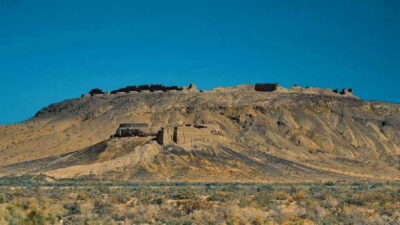
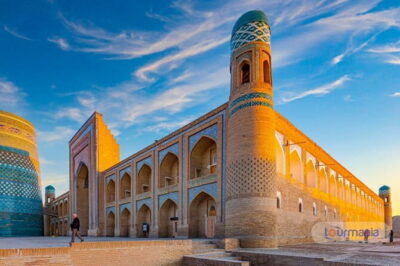
Khiva Historical City Highlights Guided Walking Tour
Read our review →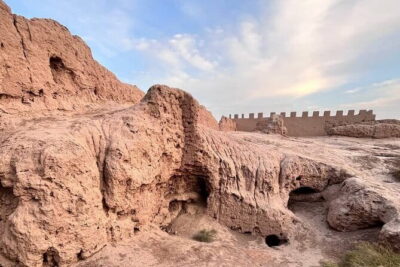
Private Daytrip to 7 Ancient Fortresses of Khorezm
Read our review →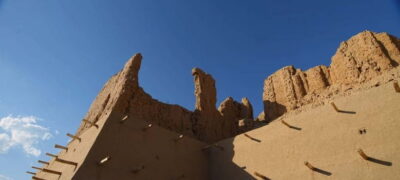
From Khiva To Aral Sea 2-Days One Night In Yurt Stay
Read our review →Browse the lists this tour appears in