
Khiva’s old city, Itchan Kala, feels like a living open-air museum, and this private walk with local guide Sarvarbek is a smart way to understand what you’re actually looking at. You move through iconic monuments at a human pace, with explanations that turn tile patterns and courtyards into stories you can remember.
What I like most: you get a hands-on moment trying wood carving, not just watching from the sidelines, and you also get help finding the best photo angles while you’re there. The tour also leans personal, like walking with a friendly local who answers questions without turning it into a lecture.
One possible drawback: museum and palace entry tickets aren’t included, so you should expect a bit of extra spending once you arrive at specific sites.
Key tour takeaways
- Local-led route through Itchan Kala with a guide born and raised in Khiva
- Hands-on wood carving stop at a traditional workshop
- Best-photo timing with photographing included during the tour
- Big monuments in 2.5 hours including Kalta Minor, Kuhna Ark, and Juma Mosque
- Clear focus on what you see, from madrasahs to wooden-column architecture
Why Itchan Kala feels different on a private walk with Sarvarbek

Khiva’s old walled city, Itchan Kala, is one of those places where first impressions are all color, arches, minarets, and blue tile work. The difference here is that you’re not just taking photos. You’re learning what each building was for and why the details matter.
Sarvarbek is a local guide, born and raised in Khiva, and that local perspective changes the tone. The walk doesn’t feel like a script. It feels like you’re asking questions and getting thoughtful answers, including questions about society and Islamic culture, not only dates and dynasties.
It’s also private or small group, which matters in a place like Khiva. You can move at a comfortable tempo, pause for photos when the light is right, and ask follow-up questions when something catches your eye. One of the best perks is the human rhythm, not rushing from one stop to the next like you’re collecting stamps.
More Walking Tours in Khiva
- Khiva: Historical City Highlights Guided Walking Tour
★ 4.8 · 156 reviews - Khiva Historical City Highlights Guided Walking Tour
★ 5.0 · 30 reviews - Khiva Walking Tour
★ 4.7 · 22 reviews
Meeting at Ata Darvaza: start at the West Gate, not your hotel door

The meeting point is simple and easy to find: Ata Darvaza, the West Gate, in front of the old city, near the ticket office. If you pick the optional pickup, it’s also around the main gate area next to that ticket office, so you’re not trying to coordinate a vague street corner.
This matters because Khiva’s old town is compact, but the entrances can be where you lose time. Starting at Ata Darvaza helps you get your bearings fast, and it keeps the first part of the tour grounded in the real geography of the walled city.
Wear comfortable shoes. Even with a 2.5-hour plan, you’re walking stone streets and moving between slightly different elevations as you go through the fortress and mosque areas. If you’re the type who takes breaks often, tell your guide early, because the best tours adjust to your pace.
Kalta Minor Minaret: the unfinished tower that grabs your attention

The route typically begins with a visit to Kalta Minor Minaret, the striking unfinished tower known for its turquoise tile decoration. It’s the kind of monument you’d notice even if you walked by on your own, but a guide helps you see beyond the visual impact.
The unfinished tower is part of what makes it memorable. It invites questions, and Sarvarbek is the kind of guide who can explain why the building looks the way it does, and how this kind of architectural ambition fit into the city’s world.
This is also one of those moments where you’ll want photo stops. The tour includes photographing during the walk, and the guide helps you stand where your pictures will actually look like Khiva, not like a hurried snapshot. If you like skyline shots with minarets framing your view, you’ll appreciate this section.
Mohammed Amin Khan Madrasah: learning spaces that still impress

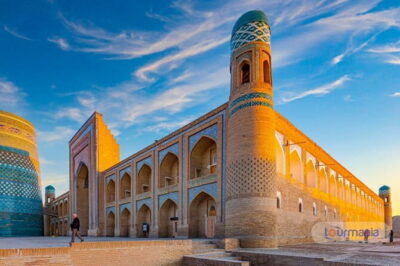
Next on the plan is Mohammed Amin Khan Madrasah. You’ll get a guided look, about 20 minutes, focused on what the school represented and what the architecture communicates.
Madrasahs in Khiva are not just pretty buildings. They were institutions built to train people, shape community life, and display power through design. When you know what to look for, you can spot the logic behind the courtyards, entrances, and decorative choices.
A common travel mistake in places like this is treating everything like a photo backdrop. Here, you’ll understand the site as a working social and educational space from earlier centuries, not simply a backdrop for your camera.
More of Khiva worth pencilling in
- Khiva Walking Tour
★ 4.5 · 15 reviews - Guided walking tour in Khiva
★ 4.8 · 12 reviews - Khiva: City Highlights Guided Walking Tour
★ 4.6 · 3 reviews - Samarkand: Historical Monuments Guided Walking Tour
★ 4.8 · 446 reviews
Kuhna Ark Fortress: royal residence views and the “city within a city” feeling

The tour moves to Kuhna Ark, with a longer guided time, about 40 minutes. This is the former royal residence and one of the most important stops for getting the big-picture view of Khiva’s layout.
What you’ll feel here is the scale of the fortress and how the city organized authority within walls. Even if you’ve seen other fortresses in Central Asia, Kuhna Ark has a Khiva-specific atmosphere, because it’s tied directly to how Itchan Kala grew and functioned.
The practical upside is time and viewpoint. Fortress areas often give you spots where you can look out over the rooftops and domes. That’s not just scenic. It’s useful for understanding the city’s geometry as you keep walking.
Wooden shoe factory and wood carving practice: the best hands-on moment

One of the tour highlights is the stop at a traditional wood workshop, described on the route as a wooden shoe factory. Don’t let the name fool you. The point is the craft, and you’ll have a chance to try wood carving yourself.
This is the hands-on piece that makes the tour feel different from a standard “see and hear” walking route. You watch how craftsmen work, then you actually sit with the tools and try the motions. Even if your first attempt looks nothing like the professionals’ output, it’s a great way to understand the patience and precision behind the carving style.
It’s also a natural moment to meet and talk with local people. Craft workshops are often where you get more than facts. You get small exchanges, the kind that make a place feel human.
If you’re traveling with kids, this stop can be a hit, as long as they’re comfortable sitting for short stretches. For adults, it’s often the most memorable part because you’re doing something with your hands instead of only looking.
Allakuli Khan Madrasah: the long stop where details start to click

Then you’ll spend about an hour at Allakuli Khan Madrasah. That longer time is meaningful. It gives you room to notice patterns you might otherwise miss: how the space is organized, how decoration guides your eye, and how the building connects to the surrounding monuments.
This is also where a good guide earns their keep. After a few stops, you start recognizing recurring themes, like the importance of entrances, courtyards, and tilework placement. When Sarvarbek explains those connections, the madrasah stops feeling like isolated buildings and starts feeling like part of one coherent city plan.
If you like architecture, this is the section where your attention will sharpen. If you get tired easily, tell your guide early so they can pace the hour in a way that works for you.
Tosh Hovli Palace and Juma Mosque: courtyards to 213 wooden columns

Near the end, the tour focuses on two architectural highlights that define Khiva’s worship and royal life.
First is Tosh Hovli Palace, a 19th-century masterpiece known for decorated courtyards, tiled halls, and a preserved royal harem. This stop helps you understand how wealth and power were expressed through space. The layout matters as much as the tiles, because courtyards and interior corridors shaped daily movement and social roles.
Then comes Juma Mosque, guided at about 25 minutes, and known for 213 carved wooden columns, with some dating back to the 10th century. That detail is one of the reasons this mosque is such a standout. When you see the columns and learn what makes them special, it turns a prayer space into a living architectural story.
Practical tip: mosques can have areas where photography is restricted. The tour includes photographing during the walk, but you should still expect you may need to follow on-site rules. When in doubt, ask your guide before you lift your camera.
Pahlavan Mahmoud Mausoleum: a respectful closer with more symbolism

The itinerary also includes Pahlavan Mahmoud Mausoleum for about 20 minutes. This stop adds another layer to your understanding of Khiva, because it shifts the focus from education and royal residence to remembrance and spiritual significance.
Mausoleums tend to feel quieter than madrasahs and fortresses, even on active days. In a short, structured tour, this kind of calm stop is useful. It gives your brain a reset before you finish inside the old town area.
Price and value: $30 for a private 2.5-hour lesson, minus entry tickets

At $30 per person for a 2.5-hour private walking tour, this is a solid value for Khiva, especially if you want real context rather than a checklist of sites.
Here’s the value math that matters:
- You get a local English-speaking guide, Sarvarbek, who explains history and cultural meaning.
- You get help with photography during the tour, so your effort turns into usable photos, not only nice memories.
- You get a route through major landmarks inside Itchan Kala without needing to self-navigate between entrances and buildings.
The one cost caveat: entry tickets for museums and palaces are not included. That doesn’t make the tour overpriced, but it does mean your total day cost depends on which sites require paid admission during your visit. If you’re trying to keep spending tight, ask your guide early which stops are likely to need tickets on the day you go.
Who should book this Khiva tour, and who might want a different plan
This is a great fit if you:
- want private or small-group attention in a compact but busy UNESCO site
- like hands-on experiences, especially the chance to try wood carving
- care about understanding what architecture signaled in earlier centuries, not only what it looks like today
- appreciate a guide who adjusts pacing and builds in photo pauses
It might be less ideal if you:
- hate walking and want minimal time on your feet, since the route covers multiple major areas inside the old city
- want a fully ticketed package with no extra payments, since entries are not included
If you’re a first-time visitor to Khiva, this tour works well because it hits the architectural anchors and gives you a mental map. If you’ve been before, the wood carving practice and mosque-column detail can still make it worth doing again, since you’ll catch different meanings the second time.
Practical tips to get the best photos and best pace
A few simple moves will help you enjoy the tour even more:
- Bring comfortable clothes and shoes so you can focus on the stops, not your feet.
- Ask for extra photo time when you see a spot you like. The tour is set up with photography in mind.
- Come with a couple questions ready, even basic ones. If you ask about how madrasahs functioned, or why the mosque columns are important, Sarvarbek can connect the dots.
- If you can, plan your tour earlier in the day. It makes walking more comfortable and helps you catch better light for the minarets and courtyards.
Should you book Sarvarbek’s private walking tour of Itchan Kala?
Book it if you want Khiva to make sense as you walk, not just as you look. The combination of major landmarks, the wood carving try-it-yourself workshop, and a guide who explains Islamic culture and city life in plain language is a winning mix for most visitors.
Skip it only if you prefer a fully self-guided day, or if you need everything included with no entry ticket add-ons. Otherwise, this is one of the best ways to see Itchan Kala with context, photos, and a hands-on craft moment, all in a manageable 2.5-hour window.
FAQ
How long is the Khiva private walking tour?
The tour lasts about 2.5 hours.
How much does the tour cost?
It costs $30 per person.
Where do I meet the guide?
You meet at Ata Darvaza, the West Gate, in front of the old city, near the ticket office.
Is pickup available?
Pickup at the main gate area next to the ticket office is optional.
Is the tour private or small group?
It’s offered as a private or small group experience.
What’s included in the price?
An English speaking guide, assistance during your travel around Uzbekistan, and photographing during the tour.
Are museum and palace entry tickets included?
No. Entry tickets for museums and palaces are not included.
Will I get a chance to try wood carving?
Yes. The tour includes a chance to try yourself on wood carving at the traditional workshop stop.
What should I bring or wear?
Bring comfortable shoes and wear comfortable clothes.
What is the cancellation policy?
You can cancel up to 24 hours in advance for a full refund.
Latest reviews out of Khiva
- Khiva: classic Half-Day Tour★ 3.7 · 3 reviews
- Khiva: City Highlights Guided Walking Tour★ 4.6 · 3 reviews
- Master Class – Uzbek Bread (Khiva)★ 3.5 · 4 reviews
- Traditional Khiva Cooking Class with Market Visit & Lunch★ 5.0 · 4 reviews
- Old Khiva Stories with Your Local Guide★ 5.0 · 5 reviews
- Khorezm Fortress and KyzylKum Desert Private Tour★ 5.0 · 3 reviews
- A Night In The Kyzylkum Desert [2] From Khiva★ 4.5 · 3 reviews
- Kunya Urgench Day Tour from Uzbekistan★ 1.3 · 3 reviews
Khiva Tours, compared.
Transfer: Bukhara – Khiva via Ancient Fortresses
Read our review →
Khiva Historical City Highlights Guided Walking Tour
Read our review →
Private Daytrip to 7 Ancient Fortresses of Khorezm
Read our review →
From Khiva To Aral Sea 2-Days One Night In Yurt Stay
Read our review →Browse the lists this tour appears in