
Reviewed · BUKHARA TOURS
Full-Day Private Guided Tour to Islamic 7 Saints of Bukhara
A day focused on Bukhara’s Seven Saints is a smart way to see more than just monuments. You’re following a Sufi teaching chain across several historic burial places tied to the Naqshbandi and Hadzhagan traditions, all in one full-day loop.
I like that the tour includes private transportation and entrance tickets, so you spend the day watching, listening, and asking questions instead of hunting for prices and directions. I also like the pacing, with about 40 minutes at each stop so you get time to read, look, and absorb.
One thing to consider: photo and video rules can mean extra costs. The tour data flags $1 to $2 per site for photo or video fees paid at the entrance, so plan for that if you shoot a lot.
Key highlights you’ll feel on the ground
- A Hadzhagan-centered Sufi route linking the “Seven Saints” across multiple towns around Bukhara
- Pickup and private ride that keeps your day efficient, with the tour ending back at your start point
- A guide named Hamza who shared Islamic culture context and kept the story flowing with passion
- Time to actually look at each burial place, not just a quick curb stop
- The Naqshbandi mausoleum as the final anchor in the day’s spiritual lineup
Seven Saints of Bukhara, and why the Hadzhagan thread is the point
Bukhara gets called star of the Islamic world and a holy city, and the labels make sense once you see how tightly the city’s identity connects to faith and scholarship. What makes the Seven Saints tour different from a standard “see-the-tombs” day is the focus on a specific spiritual lineage.
The day tracks the great Sufi figures linked to the Naqshbandi brotherhood and the Hadzhagan school. Hadzhagan gets described as a path of teachers, and you feel that idea when your guide connects one name to the next. Instead of a random list of famous people, the stops work like chapters.
You also get an intimate scale. Each site is a burial place, so you’re not touring a huge museum floor plan. You’re standing in places tied to devotion and memory, with time to read what’s there and listen to why it matters.
More of Bukhara worth pencilling in
- Best of Bukhara: All Day Private Old Town Tour
★ 5.0 · 66 reviews - Best of Bukhara: All Day Private Old Town Tour
★ 4.9 · 62 reviews - Bukhara Full Day Old City Private Tour
★ 5.0 · 46 reviews
Price and logistics, what $160 really covers
At $160 per person, this is not the cheapest option in Bukhara. But it’s priced like a true private day: licensed guide, private transportation, and entrance tickets to all monuments.
That package matters because the Seven Saints route stretches beyond just central Bukhara landmarks. A private car keeps the day from turning into transit frustration. It’s also easier to keep a smooth pace when the guide can adjust the order if you’re stuck in traffic or if a site needs a little extra time.
A couple more practical notes from the tour details:
- It’s a mobile ticket experience.
- There’s pickup offered, starting at Hotel Malika-Bukhara on Gavkushon Road 25.
- It’s a private tour, meaning only your group participates.
- There’s mention of group discounts, so if you’re booking with friends or family, that can help.
If you’re the type who wants structure, this kind of tour is worth considering. If you prefer freewheeling and walking solo, you might find it less flexible.
The route you’ll follow in one full day
This tour is built as a chain. You start at Gijduvon, then move through Safirkon, Vobkent, Ramitan (twice in different stops), Kogon, and finish at the Bahauddin Naqshband mausoleum.
Each stop is timed at about 40 minutes, with the total day running roughly 7 to 8 hours. That schedule is a big part of the value. You get a full day of context without feeling like you’re sprinting between buildings.
The itinerary also includes entrance costs:
- Several sites are listed with admission ticket free.
- The Naqshbandi mausoleum lists admission included.
- Overall, the tour states entrance tickets to all monuments are included.
In plain terms: the tour setup is meant to keep you from paying ticket-by-ticket while you’re on the clock.
Stop 1 in Gijduvon: Abdalhalika Gijduvani’s birthplace
Your day starts in Gijduvon, tied to Abdalhalika Gijduvani (1103 to 1179). He’s described as the first saint of the seven and the founder of an independent school of mysticism in Maverannahr called Hadzhagan, or the Path of Teachers.
This opening stop sets the theme for everything else. When your guide anchors the story here, you start hearing the names as a chain of teaching and spiritual authority, not just famous burials.
What I’d do during your time here:
- Look for context cues on site, then ask your guide how the Hadzhagan approach influenced later figures.
- Pay attention to any phrasing around teachers and transmission, because the rest of the tour keeps returning to that idea.
A practical drawback: the “40 minutes” is real time, so don’t plan on lingering for long photo sessions right away if you’re aiming to hit every stop comfortably.
An easier afternoon once Bukhara is done:
- Bukhara: Walking Tour with a Small Group
★ 4.9 · 260 reviews - From Bukhara: 2-Day Desert Yurt Camp Tour
★ 4.5 · 57 reviews - City Tour Around Bukhara
★ 5.0 · 55 reviews - Bukhara: Historic Center Guided Sightseeing Tour
★ 4.8 · 44 reviews
Stop 2 in Safirkon: Khoja Arif Rivgariya, Mohi Tobon
Next comes Safirkon, the burial place connected with Khoja Arif Rivgariya, also named Saint Khoja Arif Mohi Tobon. He’s presented as one of the best-known Sufis of Central Asia and as part of the Hadzhagan tradition.
If you’re wondering how to get value from a small burial site, here’s the key. The guide uses this stop to connect the spiritual lineage to a broader Islamic world story. Even if you have limited background, the explanations can help you understand why the Seven Saints are repeatedly linked to spiritual authority.
What you can expect:
- A respectful, quiet setting.
- A guided focus on the role this figure played in continuing the Hadzhagan tradition.
If you’re short on time for reading, this is a place where listening matters most. Your guide’s job is to make the connection clear.
Stop 3 in Vobkent: Khoja Mahmud Angirey Fagnaviya
In Vobkent, you visit the burial place of Khoja Mahmud Angirey Fagnaviya. This stop frames him as a famous Sufi of his time and recognized as a spiritual authority in Maverannahr. The tour description also points to him as an early introducer of what’s mentioned as part of the tradition, keeping the teaching chain alive.
This is one of those stops where the setting is simple, but the story can become detailed. If your guide is good, you’ll leave with a clearer mental map of how these figures relate across generations.
A quick tip: keep your questions ready for this stage of the day. By now you’ve heard several names, so you can ask, for example, how each figure influenced later schools or how the brotherhood traditions developed over time.
Stop 4 in Ramitan: Ali Khoja Romitaniya, called Khoja Ali Ramitani
Then you move to Ramitan for Ali Khoja Romitaniya, also known as Khoja Ali Ramitani. He’s described as a spiritual authority within the Hadzhagan school, with a reputation for wisdom and charisma.
Ramitan is likely where you start to notice a pattern. The tour keeps emphasizing “spiritual authority” and “wisdom.” That doesn’t mean every stop is identical, but the messaging is consistent. The guide is helping you understand how Sufi influence worked beyond politics, through teaching, learning, and spiritual guidance.
What you should aim to do here:
- Slow down for a minute and let the guide’s story land.
- Focus on how the tradition is described, not only on the person’s name.
The risk at this point is fatigue. The tour stays on schedule, so if you’re tired, bring water and keep your attention on one thing at a time.
Stop 5 in Ramitan again: Khoja Muhammad Babai Sammasi
Still in Ramitan, the tour continues to Khoja Muhammad Babai Sammasi, identified as the fifth saint of the Seven Saints of Bukhara. He’s described as a Sufi mystic and an adherent and student within the Hadzhagan tradition, connected as a follower of Khoja Ali Ramitani.
This stop is valuable because it shows the learning chain in action. The “Path of Teachers” idea becomes more concrete when one figure is framed as a follower and student.
If you want a good experience here, ask your guide how studenthood and teaching are portrayed in this tradition. The tour data is clear about tradition and succession, and a guide can connect the dots quickly.
Also, being at the same town twice can help you mentally anchor the route. You’re not jumping randomly from place to place. You’re tracking a line.
Stop 6 in Kogon: Saint Mir Kulal, the potter connection
Your next stop is Kogon for Saint Mir Kulal. The tour description lists Kulal as also known as Hanchar, or potter. That nickname matters because it signals how Sufi figures could be connected to everyday crafts and respected roles in society, not only religious titles.
Mir Kulal is described as:
- A spiritual authority and Sheikh of the Sufi Hadzhagan school
- Part of a line of spiritual succession known as silsila
- Linked to Sheikh Sayyid Amir in the description
This is where the day shifts slightly from pure biography into a sense of spiritual structure. The term silsila is a big deal in Sufi contexts, and the guide can make it easier to understand without drowning you in jargon.
If you’re someone who likes meaning, this is a strong stop. You’ll likely come away with an image of a spiritual lineage that’s transmitted through roles, teachers, and followers.
Final stop in Bukhara: Bahauddin Naqshband mausoleum
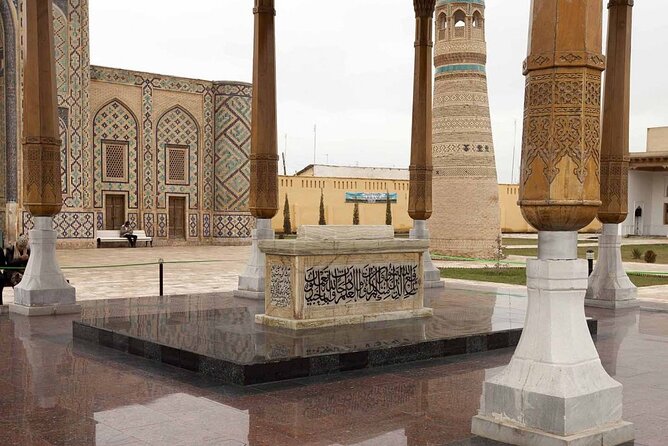
The last stop is Bakhautdin (Bahauddin) Naqshband Mausoleum, the burial place of Saint Bahaaddina Naqshbandi. He’s described as the largest representative of Central Asian Sufism in the 14th century.
The tour also connects the Naqshband name to his craft: Naqshband is explained using the meaning “chaser.” In other words, the story ties identity and practice into a name you’ll remember long after the tour ends.
This end point is important for a simple reason. After visiting earlier saints tied to Hadzhagan, you finish with the figure most associated with the Naqshbandi tradition. It’s like closing a circle.
What to do at the mausoleum:
- Give yourself the full time, even if you’re tempted to rush.
- Focus on the guide’s framing of why he’s treated as a key representative in the region.
Admission here is listed as included, which means you can concentrate on the site instead of worrying about extra ticket steps.
The human factor: Hamza and a driver who keeps the day calm
One of the best parts of this tour, based on a strong example from experience feedback, is the guide approach. A guide named Hamza was praised for being insightful and passionate, with clear, friendly explanations about Uzbekistan, Sufism, and the Xojas.
That last bit matters. If the guide can explain who the Xojas are and how the terms connect to spiritual authority, the sites feel less abstract. You’re not just looking at names on stones. You’re hearing a coherent story about Islamic culture and historical context.
The driver also gets credit for being friendly and well mannered. That sounds minor until you’re on a day with multiple sites outside the city core. A smooth, respectful ride makes it easier to stay focused, and it reduces friction when you’re moving between towns.
If you care about comfort and clarity, the guide-plus-driver setup is a major selling point.
Time, photos, lunch, and the small costs that add up
The tour runs 7 to 8 hours, with multiple stops at about 40 minutes each. That timing works well for a day that’s spiritual and historical, not a sprint through city highlights.
Still, there are small costs to plan for:
- Photo and video fees: listed as $1 to $2 per site, paid directly at museum entrances
- Lunch: not included, listed as $10 per person if you add it
I’d treat that like budgeting for a “real day out.” If you’re bringing a phone camera only, you might keep it minimal. If you use a bigger camera or plan to film, assume those fees will crop up more than once.
Also keep in mind the tour data says good weather is important. If conditions are poor, you might be offered a different date or a full refund.
If you’re sensitive to long days, bring water, wear comfortable shoes, and be ready to be outdoors part of the time.
Is this tour good value for your time in Bukhara?
For $160 per person, value depends on what you’re trying to do in Bukhara.
It’s strong value if:
- You want a guided story that connects the saints into a single spiritual line
- You prefer private transport over figuring out inter-town travel
- You like structured pacing with enough time to look at each site
It’s less ideal if:
- You’re traveling on a tight budget and are comfortable booking your own transport between sites
- You hate guided explanations and would rather read everything on your own
- You plan to take lots of photos and don’t want extra fees
Booking well ahead can help. The tour data notes an average booking time of 25 days in advance, so if you’re traveling during peak times, plan early.
Who should book this Seven Saints private tour?
This tour is a great fit if you:
- Want to focus on Sufi heritage and the Naqshbandi and Hadzhagan traditions
- Like day trips with context, not just sight-seeing checklists
- Appreciate a guide who can explain names, roles, and meaning in simple terms
It’s also a good option for couples or families who want a calm day with minimal logistics stress. The private format keeps the group smaller and the experience more adjustable to your pace.
If you’re in Bukhara for just a short window, this can also work because it compresses multiple spiritual sites into one day.
Should you book the Full-Day Private Guided Tour to the Seven Saints of Bukhara?
I’d book it if you want a single day that feels purposeful. The Seven Saints route is built around spiritual lineage, and the private setup removes the usual headaches of getting between towns. With a guide like Hamza leading the story, you’re more likely to walk away with meaning, not just photos of tombs.
I’d skip or rethink it if you only want casual monument time, or if you know you will resent extra charges for photo or video fees. Also, if the idea of sitting with guided explanations sounds tiring, you might prefer a lighter self-guided plan.
FAQ
How long is the Full-Day Private Guided Tour to the Islamic 7 Saints of Bukhara?
The tour lasts about 7 to 8 hours.
Where does the tour start and end?
It starts at Hotel Malika-Bukhara on Gavkushon Road 25 in Bukhara, and it ends back at the same meeting point.
Is pickup included?
Yes. Pickup is offered, and the tour starts at Hotel Malika-Bukhara.
What is included in the price?
The tour includes a licensed guide, private transportation, entrance tickets to all monuments, and all fees and taxes.
Is lunch included?
No. Lunch is not included, and it’s listed as extra for $10 per person.
Do I need to pay for photos or videos?
Photo and video fees are not included. The tour data lists $1 to $2 per site, paid directly at the museum entrance.
Is this a private tour?
Yes. It’s private, so only your group participates.
What is the cancellation policy?
You can cancel for free up to 24 hours in advance for a full refund. Weather issues can also lead to an alternate date or a full refund.
Latest reviews out of Bukhara
- Uzbekistan 8 Days Private Guided Tour★ 4.6 · 3 reviews
- Bukhara: City Highlights Guided Tour with Pickup★ 5.0 · 3 reviews
- Bukhara day tour★ 4.0 · 4 reviews
- Bukhara Private City Tour★ 2.5 · 4 reviews
- Legends of Bukhara: Exclusive Full-Day Tour★ 5.0 · 4 reviews
- 2 Day Ukhum Hiking Tour from Bukhara★ 5.0 · 4 reviews
- From Bukhara: 3-Day Yurt Stay, Hiking & Lake Aydarkul★ 5.0 · 5 reviews
- Bukhara day tour. Departure from Tashkent or Samarkand.★ 5.0 · 7 reviews
Bukhara Tours, compared.
All You Need To Know About Bukhara. A Walk In The Town
Read our review →
Browse the lists this tour appears in