
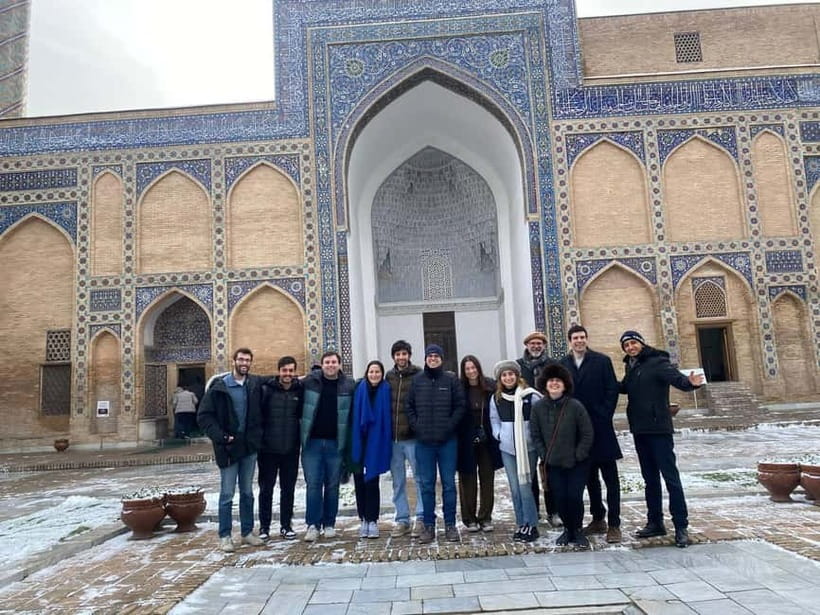
Reviewed · BUKHARA TOURS
2 – Days Guided Tour of Samarkand and Bukhara from Tashkent
Samarkand plus Bukhara in just two days is a fun problem to solve, and this tour tackles it with a very practical mix of train time and guided sightseeing. I especially like the small-group feel (limited to 8), and the fact that you get time with major monuments rather than just passing through photos. One thing to consider is the pace: you start early, you walk a fair bit on historic sites, and you are on a tight schedule to make the trains.
The route is built for people who already have a base in Tashkent and want the “big hits” without planning trains, tickets, and guides yourself. I also like that the handoff between cities is smooth, with a guide meeting you at the station and transfers handled in air-conditioned vehicles.
You will likely spend one night in Bukhara in a recommended double-room hotel, such as Amiran Boutique hotel or Asia Bukhara, or a similar option. If you prefer slower travel, or you are sensitive to long days, this may feel like a lot, but for many visitors, it is exactly the right dose of Uzbekistan.
Key reasons this tour is worth a look
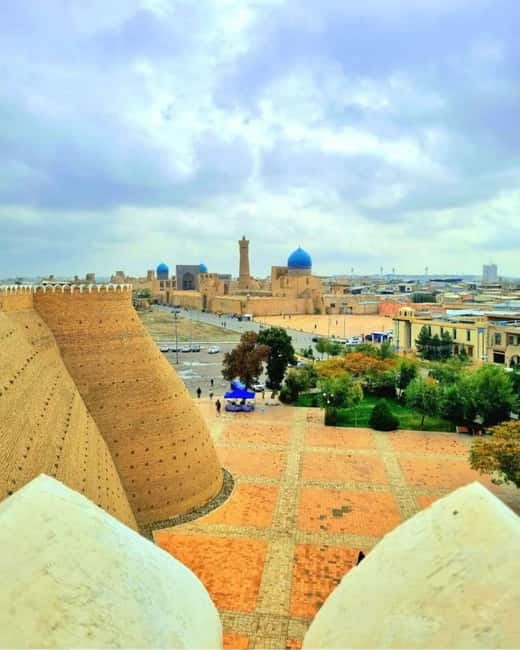
- Bullet train day between Tashkent and Samarkand, plus a later return by high-speed service
- Small group up to 8 people, which makes questions and timing easier
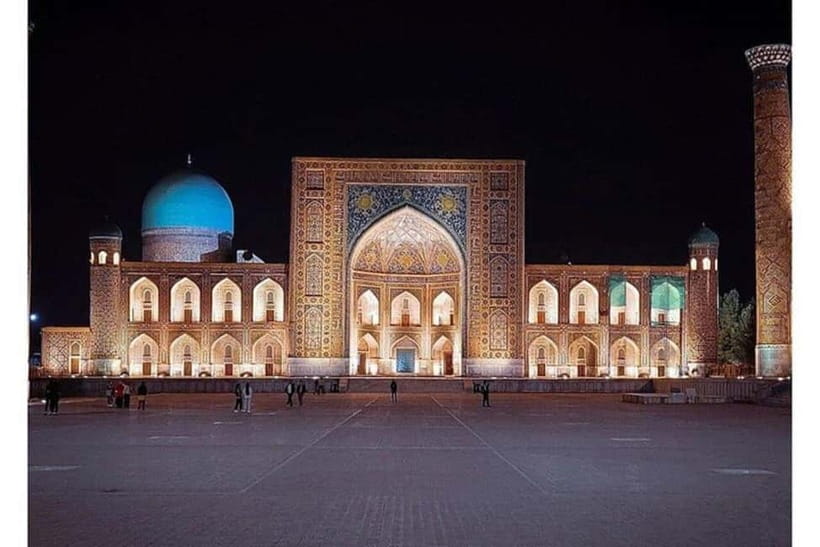
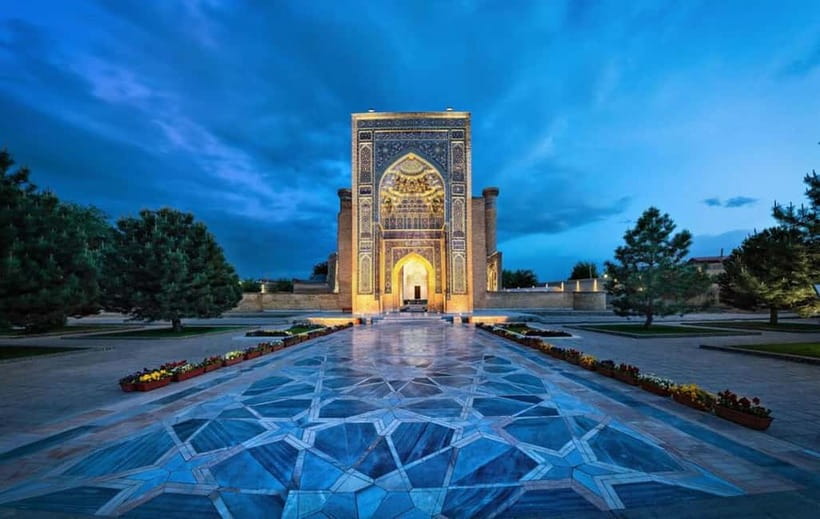
- A full Samarkand monument sequence, including Gur Emir Mausoleum, Registan, and Shah-i-Zinda
- A second day designed around Bukhara’s key ensembles, from Lyab-i-Hauz to the Kalon complex
- Hotel night in Bukhara with meals, so you do not have to piece together dinner plans every step of the way
- Guides you can get by name, including Ikrom, Nargiza, and Aziz, plus a driver team that keeps transfers on track
Why this Samarkand and Bukhara combo works from Tashkent
This is a classic “most efficient culture fix” itinerary. You are not trying to do everything in Uzbekistan, you are choosing two cities that instantly change your sense of Central Asian architecture, craft traditions, and urban history. The tour’s logic is simple: use trains to shrink travel time, then spend your sightseeing time with a guide so the monuments make sense.
From your perspective, the biggest win is mental effort. When you book a packaged route like this, you avoid the stress of figuring out which tickets you need, how to time your station arrival, and how to connect local transport between sights. The schedule is also built around meeting points that keep you moving: pickup from your hotel in Tashkent, a guide at the train station in Samarkand, and another guided day in Bukhara.
The tradeoff is intensity. You will have two long sightseeing days, and you are responsible for keeping your energy up. If you like early mornings and walking through major complexes, you will probably love it. If you prefer a slow afternoon with breaks built in, you may find the rhythm a bit tight.
Longer Silk Road routes to compare:
- 2 Days Private Safari Tour from Bukhara
★ 4.4 · 11 reviews - 2 Days Private Safari Tour from Bukhara
★ 4.5 · 6 reviews - Uzbekistan 8 Days Private Guided Tour
★ 4.6 · 3 reviews
Tashkent to Samarkand by train, then a full day of monuments
Day one starts with hotel breakfast and an early transfer to Tashkent railway station. The plan uses a high-speed service from Tashkent to Samarkand, arriving in time for a guided circuit of the city’s top highlights. From there, the day is about stacking the “signature” landmarks in an order that helps you understand how Samarkand’s power and religion shaped the city.
The itinerary then sends you back to the station for the evening train to Bukhara. That timing matters. You are not wasting daylight on transit, and you arrive in Bukhara late enough to settle into your hotel night without losing another full day of sightseeing.
The practical reality of the early start
An early departure is one of those “you either like it or you don’t” things. If you are traveling with jet lag, it might feel rough. If you are a morning person, it is a gift. You get more daylight for monuments, and you also avoid overheating in the late afternoon when you are walking around open courtyards and tiled structures.
Samarkand checklist: Gur Emir, Registan, Bibi Khanym, and Shah-i-Zinda
Samarkand is one of those cities where the architecture alone can keep you busy. But without context, you can miss why the buildings were built, who paid for them, and how different dynasties left their marks. That is where a guide earns their keep.
More of Bukhara worth pencilling in
- Bukhara: Walking Tour with a Small Group
★ 4.9 · 260 reviews - Best of Bukhara: All Day Private Old Town Tour
★ 5.0 · 66 reviews - Best of Bukhara: All Day Private Old Town Tour
★ 4.9 · 62 reviews - From Bukhara: 2-Day Desert Yurt Camp Tour
★ 4.5 · 57 reviews
Gur Emir Mausoleum
You start with the Gur Emir Mausoleum. This is where you get a first emotional anchor for the trip. Mausoleums like this are more than a photo stop. They set the tone for what you will see later, especially the way this region uses tilework, geometry, and scale to communicate authority and belief.
Registan
Next is Registan, the famous central square. Expect a strong “wow” moment, but also pay attention to how the buildings face each other across the open space. Standing in the center helps you understand that these places were designed for public life, not just private worship.
A tip for your own visit style: when you reach Registan, slow down. Look up, then look across, then look for details. The guide can point out small features that are hard to spot when you rush.
Bibi Khanym Mosque
After Registan, you visit the Bibi Khanym Mosque. This stop helps broaden the story from a single square to the wider religious and civic landscape. I like it because it shows how grand Samarkand projects were, not only the ones that survive as intact complexes.
Siyob Bazaar
Siyob Bazaar is a welcome change of pace. It is a chance to shift from monuments to everyday life. You can see how markets function in a city that is also famous for history and craft traditions.
Since lunches are included during the tour, you do not need to figure out every meal from scratch. But having bazaar time means you can also choose snacks and small purchases if you want. It is a good moment to practice simple bargaining and to ask your guide what you are looking at.
Shah-i-Zinda Ensemble
Shah-i-Zinda is one of the stops that often sticks in your memory. It has that stair-step feel and a sequence of spaces that makes the walk itself part of the experience. This is where your guide’s pacing matters. If you move slowly, you will notice patterns and colors that you would miss at a sprint.
Ulugh Beg Observatory
You end day one with the Ulugh Beg Observatory. This is a great counterbalance to the religious sites. It reminds you that this region also had major scientific ambitions and a culture of astronomy. It helps the trip feel broader than just architecture.
Night train to Bukhara
At the end of the day, you head back to the station and take the evening train to Bukhara. Then you transfer to your hotel for the night. In other words: no late-night chaos, just a planned wrap-up that keeps your second day productive.
Overnight in Bukhara: what one night lets you do
One night in Bukhara might sound short, but it is enough to feel the city as a place you can explore, not just a list of monuments. Your hotel is pre-selected and focused on good options in double rooms, with choices like Amiran Boutique hotel or Asia Bukhara, or a similar property.
This is also where you benefit from guided pacing. Bukhara’s highlights are concentrated, and much of the day is about moving from one courtyard and ensemble to the next. That means a day where you know where you are going will save energy.
Where the walking comes in
The Bukhara day involves a lot of walking. The Kalon complex, the surrounding madrasas, and the ensemble areas can add up. If you are used to strolling, you will be fine. If you have mobility issues, this is where you should think carefully.
Bukhara highlights: Lyab-i-Hauz, the Ark, and the Kalon complex
Day two is a full guided sightseeing block, starting with breakfast and a meeting with your guide. You then cover Bukhara’s best-known ensembles and major structures, finishing with time to return to the station by mid-afternoon and head back to Tashkent.
Lyab-i-Hauz ensemble
Lyab-i-Hauz is a strong starting point because it feels like a living city space. Even without inventing details, the layout helps you understand why people gather in these areas. It is a good place to recalibrate after the train day, and it is also a helpful context stop before you tackle bigger monuments.
Nodir Devon Begi Madrasah
Next comes the Nodir Devon Begi Madrasah. Madrasas are not just “schools” in the abstract. They were power centers, community hubs, and architectural statements. A guide helps you connect the dots so this does not feel like another repetitive facade.
Moschea Bolo-khauz and the Ark of Bukhara
Then you visit Moschea Bolo-khauz and the Ark of Bukhara. The Ark is one of those sites that instantly tells you this city was built for governance and control, not only ceremony. Pairing it with nearby religious architecture makes the day feel more complete.
Great Minaret of the Kalon and Poi Kalyan Mosque
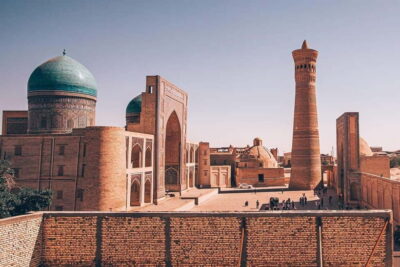
The Kalon complex is where Bukhara becomes visually unforgettable. You see the Great Minaret of the Kalon, plus the Poi Kalyan Mosque. This is a natural “stand back and take it in” moment. Look at how the structures dominate the space and how the surrounding buildings frame the main monuments.
Mir-i-Arab Madrasa
Mir-i-Arab Madrasa adds another education and tradition layer. It also helps you see how the city’s religious life tied into urban planning.
Chor-Minor and Ulugbek Madrasah
Finally, Chor-Minor and the Ulugbek Madrasah close the circuit. Chor-Minor is especially useful late in the day because by then you have already learned how to interpret motifs, tiles, proportions, and ensemble design. The guide can point out differences that become clearer after you have seen multiple madrasas and mosques earlier.
Return to Tashkent
You transfer to the station in the afternoon and take a high-speed train back to Tashkent. The day ends with a hotel transfer and you are done. No extra hotel nights, no guesswork, just a clean itinerary finish.
Guides, group size, and why it changes the whole trip
A big reason this tour rates well for value is the combination of small group size and guided interpretation. With up to 8 participants, you are not getting swallowed by a large crowd. You have room to ask questions, you can pause when something catches your eye, and you can keep up without feeling rushed by a pack.
You may also get guides like Ikrom in Samarkand and Nargiza in Bukhara, or Aziz in Samarkand, depending on the departure. That variety matters because different guides emphasize different details, but the overall goal stays consistent: you are learning the story behind the stone.
Also, the tour pairs guides with drivers who handle the vehicle transfers smoothly. That matters because it protects your energy. When you are bouncing between train stations and multiple city stops, a calm logistics team is not a luxury. It is part of what makes the day feel doable.
Food time: lunches included, bazaar time for curiosity
Food is one of the highlights of this type of route. You get 2 lunches included across the two days, which helps you stay on schedule and reduces decision fatigue. You also visit Siyob Bazaar in Samarkand, where you can experience local market life.
What I would plan for: dinner is not listed as included, so you will likely want to eat on your own in Bukhara on the night you stay there. Use your guide’s suggestions if they offer them, and keep it simple. After long sightseeing blocks, you want an easy meal, not a complicated search.
If you like buying small snacks or trying local items, the bazaar stop is a good window. Just remember you are on a tight timeline. Keep purchases light and focus on a few items you can enjoy right away.
Price and value: where the $498 per person actually goes
At $498 per person, this tour is not a budget bargain. But it can be good value if you compare it to the cost of doing the same trip yourself with trains, entrance fees, and a guide.
Here is what you are effectively buying:
- Two-city transportation, including bullet train tickets and one regular train segment
- Hotel night in Bukhara with a recommended property type in double rooms
- 1 breakfast and 2 lunches
- Entrance fees for the listed sights and museums
- Air-conditioned vehicle transfers, plus pickup in Tashkent
In plain terms, you are paying for convenience plus professional guidance. For many people, the biggest savings is time. You skip the planning workload and you get a guided route through major monuments that would take you longer to piece together.
A realistic downside
If you are the type who wants to wander independently all day, you might feel constrained by a guided pace. Also, the schedule starts early and is structured around train departures, so you are not free to change plans at the last minute.
Practical tips to enjoy the full schedule
A few small things will make a big difference on this kind of trip.
Bring the right document
Bring your passport or ID card. The tour requires it.
Expect long walks on historic sites
Wear comfortable shoes. Many of the stops involve courtyards and walking between ensembles. In Bukhara, the walking load can be significant.
Plan for variable train availability
If high-speed tickets are not available when you book close to departure (less than 60 days), the plan may switch to the most comfortable class of regular train tickets or other transport. That is a heads up, not a red flag, but it is good to know you might see changes.
Hydration and snacks
Water helps. Lunches are included, but you might want extra snacks for the gaps between sights, especially on the first day.
Who should book this 2-day tour, and who should not
This tour is a strong fit if:
- You are short on time in Tashkent and want the clearest route to Samarkand and Bukhara
- You like structured sightseeing with a guide who helps you interpret what you are seeing
- You prefer small group logistics over coordinating everything alone
It may not be the best fit if:
- You do not handle early mornings well
- You are limited by walking and long days
- You are older and the pace is a concern, since it is not suitable for people over 95 years
Should you book this from Tashkent?
If your priority is learning and seeing the big monuments in a tight time window, I think this tour is a smart choice. You get train connections handled, a hotel night in Bukhara, entrance fees covered, and meals included, all with a guide who helps make the stops feel like a connected story.
I would book it if you want convenience and clarity, not just wandering. If you want to customize every hour, or you prefer slow travel with flexible start times, then you may want a more independent plan.
FAQ
How much does the 2-day guided tour cost?
The price is $498 per person.
What is the duration and how is it split between the two days?
The tour is structured as two guided days with train travel between cities, starting in Tashkent and ending back in Tashkent.
What train tickets are included?
Bullet train tickets are included for the routes Tashkent to Samarkand and Bukhara to Tashkent. A regular train ticket is included for Samarkand to Bukhara.
Does the tour include an English-speaking guide?
Yes. The guide is English speaking, and other languages are available upon guest request.
Is pickup from my hotel included?
Yes. Pickup is included from your hotel in Tashkent. You need to share your hotel location for pickup.
What sights and ensembles are covered in Samarkand?
You visit Gur Emir Mausoleum, Registan, Bibi Khanym Mosque, Siyob Bazaar, Shah-i-Zinda Ensemble, and Ulugh Beg Observatory.
What sights and ensembles are covered in Bukhara?
You visit Lyab-i-Hauz ensemble, Nodir Devon Begi Madrasah, Moschea Bolo-khauz, Ark of Bukhara, Great Minaret of the Kalon, Poi Kalyan Mosque, Mir-i-Arab Madrasa, Chor-Minor, and Ulugbek Madrasah.
What documents do I need to bring?
Bring your passport or ID card.
Is cancellation free if I change my plans?
Yes. You can cancel up to 24 hours in advance for a full refund.
Latest reviews out of Bukhara
- Uzbekistan 8 Days Private Guided Tour★ 4.6 · 3 reviews
- Bukhara: City Highlights Guided Tour with Pickup★ 5.0 · 3 reviews
- Bukhara day tour★ 4.0 · 4 reviews
- Bukhara Private City Tour★ 2.5 · 4 reviews
- Legends of Bukhara: Exclusive Full-Day Tour★ 5.0 · 4 reviews
- 2 Day Ukhum Hiking Tour from Bukhara★ 5.0 · 4 reviews
- From Bukhara: 3-Day Yurt Stay, Hiking & Lake Aydarkul★ 5.0 · 5 reviews
- Bukhara day tour. Departure from Tashkent or Samarkand.★ 5.0 · 7 reviews
Bukhara Tours, compared.
All You Need To Know About Bukhara. A Walk In The Town
Read our review →
Browse the lists this tour appears in