
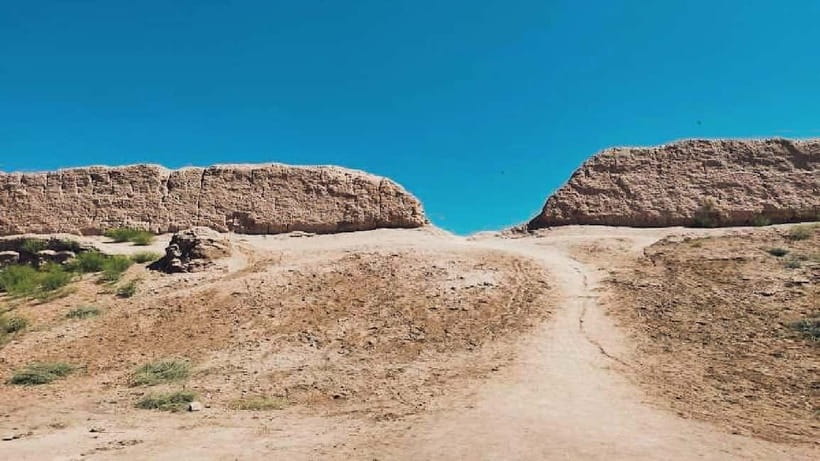
Reviewed · KHIVA TOURS
Daytrip from Khiva to Five Ancient Fortresses
A day trip to Karakalpakstan to hunt down five Khorezm fortresses is interesting because you leave the comfort of Old Khiva and go see how these places actually sat in the wider region, not just as postcard sites. I especially love the variety, from Guldursun-Kala’s big adobe defenses to Kyzyl-Kala’s survival tricks like smoke signals and a built-in water system. The main drawback to plan around is that this is mostly self-guided walking at each stop, and the level of English from your driver can vary.
What keeps it fun is that you get real time at multiple forts, with photo stops plus breaks built into a 7-hour route. If you have a driver who talks and drives calmly, the day can feel smooth and even a bit personal, like a small local taste on the ride back. Still, one safety note: a few past guests flagged fast driving on rough roads, so it’s smart to set expectations early.
Key things to know before you go
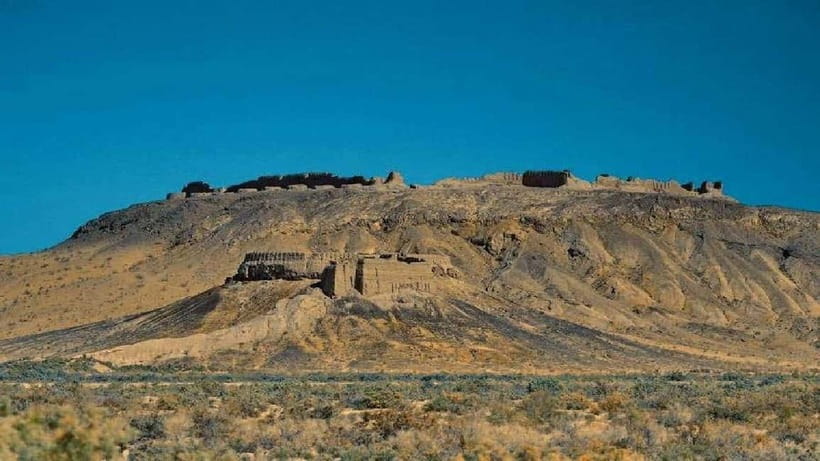
- Five fortresses in one day: Guldursun-Kala, Ayaz-Kala, Kavat-Kala, Toprak-Kala, and Kyzyl-Kala
- Mostly self-guided time at each site, so bring curiosity and be ready to read what you can on the spot
- Big scale at Kavat-Kala: the monument stretches about 15 km, so you’ll get a feel for “oasis city” sprawl
- Toprak-Kala’s finds: coins, Zoroastrian ossuary fragments, and a famous necklace of glass beads (described from excavations)
- Kyzyl-Kala’s defense system: smoke signaling, a double wall, corner watchtowers, and ceramic pipes for water
- Private A/C transport with hotel or airport pickup from Khiva or Urgench
Karakalpakstan Fortresses, Desert Scale, and Why This Day Trip Works
This trip is built for people who want more than one fortress in a box. Instead, you see a network of sites tied to Khorezmian power, farming oasis life, and defense against raids. Even when a ruin looks quiet, it helps to know what it was designed to do.
The best value here is the combination: private transport plus multiple stops. You do not waste your day negotiating rides between far-flung points, and you still get breaks, photo time, and short walks. If you like archaeology when it is paired with context, you’ll appreciate the way each fortress has its own story thread.
The other key thing: the day is not a museum tour with deep explanations at every stop. It’s closer to a route with photo moments and self-guided exploring, so you’ll enjoy it more if you read signage, ask quick questions, and let the shapes do the talking.
Other desert fortresses on the same road:
- Transfer: Bukhara – Khiva via Ancient Fortresses
★ 4.5 · 101 reviews - Daytrip From Khiva To Ancient Fortresses
★ 4.6 · 60 reviews - Ayazkala, Toprakkala & Kizilkala Fortress Tour From Khiva
★ 4.3 · 33 reviews
Getting There Smoothly: Khiva or Urgench Pickup, Private A/C, Real Time at Each Stop
You can start from either Khiva or Urgench, and pickup is arranged from your hotel or from Urgench airport or train station. You’ll ride in a round-trip A/C vehicle with parking covered, and the trip runs about 7 hours total.
The schedule is structured in a practical way. You get a first stop for photos and a short visit, then a sequence that alternates between walking time, sightseeing time, and breaks. That matters because these are not compact city stops, and the comfort of a vehicle between sites is part of the value.
One extra detail I like: the experience includes a skip-the-line setup via a separate entrance. You still need to plan for entry costs, but the process should be smoother than arriving in the standard queue.
Guldursun-Kala: 35 Hectares of Adobe Walls, Loopholes, and a Mongol-Era Footnote
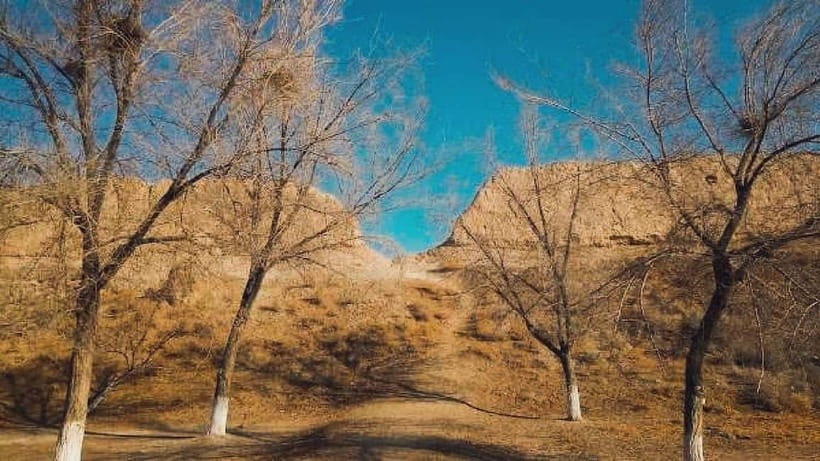
Guldursun-Kala is dated to the II to I centuries BC, which already sets a different tone. This fortress was built on a rectangular plan and covered about 35 hectares, so you should expect a site that feels expansive, not just a single mound.
What makes it especially interesting is the defensive design. Adobe walls were lined with two rows, and there were built-in loopholes, which hints at active protection rather than passive storage. In the V century BC, it fell into ruins for reasons not fully known, which adds a “history gap” feeling even before you reach the later chapters.
Then the timeline turns dramatic again. Archaeological evidence suggests the fortress was last occupied around 1220, during the rule of Shah Ala ad-Din Muhammad (b. 1169, r. 1200 to 1220). That date lines up with the Mongol invasions of the Khwarezmian Empire, so when you look at the remains, you can imagine the tension of a period when cities needed to defend themselves or disappear fast.
Practical expectation: your time here is likely a mix of photo moments and a self-walk. If you go in knowing what to look for (wall lines, loophole positions, overall footprint), you’ll get more from it than just a quick look.
Ayaz-Kala: Why This “Frosty Cold” Name Can Still Confuse You
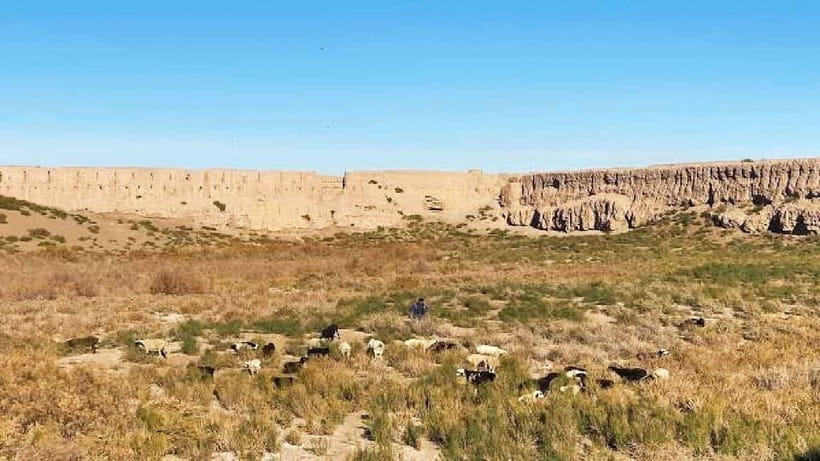
Ayaz-Kala sounds simple in name, but the site is more complex than the phrase suggests. The name is linked to Turkic roots meaning frosty or cold, yet in reality there is no single fortress you can point to as the only one.
Instead, you’re dealing with a complex of three fortresses grouped around a hill. The setting is described as being in the north-west of the Elikkala district of Karakalpakstan, about 30 km from Buston and roughly 96 km from Khiva. That location detail matters because it explains why this is a day trip rather than an easy walk from the city.
The upside is that Ayaz-Kala is considered the most showy among Khorezm’s fortresses. The slightly annoying part is that your “one main viewpoint” might not exist in the way you expect. You might circle around and realize you’re watching a group rather than a single structure.
If you like dramatic angles and “read the terrain” exploring, Ayaz-Kala is a good stop to keep your camera busy. Give yourself time to walk slowly instead of rushing toward the first wall you spot.
More of Khiva worth pencilling in
- Khiva: Historical City Highlights Guided Walking Tour
★ 4.8 · 156 reviews - Aral Sea Adventures (2 day)
★ 5.0 · 30 reviews - Khiva Historical City Highlights Guided Walking Tour
★ 5.0 · 30 reviews - Master Class – Shivit Osh Traditional Food Of Khiva
★ 4.2 · 27 reviews
Kavat-Kala: A 15 km Monument to Oasis Power and Population
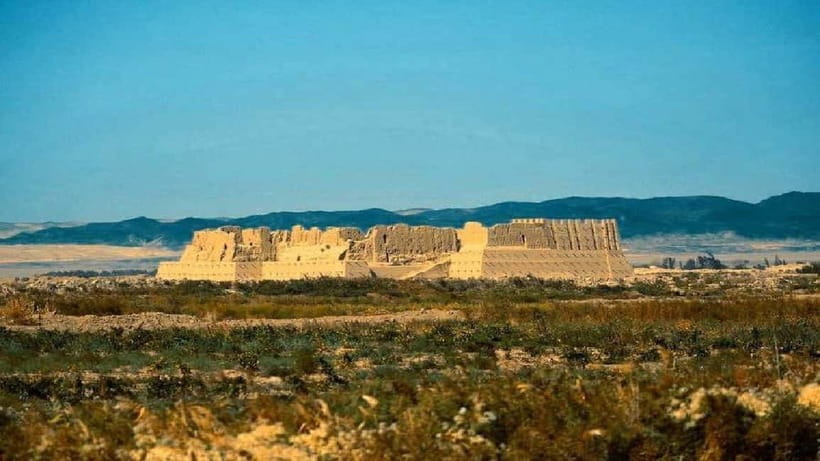
Kavat-Kala is the stop that can feel like the fortress has been stretching across the desert for years. The monument is described as unique and stretches for about 15 km, while the width is about 2 to 3 km along the Gavhore Channel.
That sheer scale changes how you experience the ruins. You are not just checking a wall segment. You’re trying to understand a long system, tied to an oasis and a populated area. Until recently, ruins were still visible, including hints of residential buildings and clay structures.
The historical “why” is one of the strongest bits of context in the whole day. From the 12th to 13th centuries, the central part of Kavat-Kala was heavily populated, with references to around 90 estates. Even better, Kavat-Kala is described as the central monument of the oasis, and today it remains under research, meaning the full story may not be fully written yet.
Practical expectation: you’ll want to treat this as the long, meandering stop. Even with a break built into the route, you’ll get more value if you pause and look for how the site line connects, rather than hunting for a single “perfect photo” spot.
Toprak-Kala: Governor Residence, War, and Finds That Sound Like a Treasure List
Toprak-Kala brings the day from defense into administration and daily life. It’s built in the 3rd century and was used as a residence for Khorezmshakhs, meaning governors of the country. There is a direct reason the fortress did not simply last forever: aggressive wars forced the governors to leave, and the city gradually decayed.
When archaeology turns up objects, you can feel daily life behind the walls. Excavations produced coins and fragments of ossuaries tied to Zoroastrian canopic jars. The list of cultural finds includes thin manufactured ceramics, wool and silk fabrics, gold ornaments, and even a necklace described as having 300 glass beads. There are also mentions of paste, amber, corals, and bowls.
You might not see all of those items on the spot during a day trip, but the value is in knowing what kinds of materials were found from this exact place. It changes your mental picture from “just old walls” to “a governor’s residence that once held real objects, real trade, real status.”
Practical expectation: Toprak-Kala includes a mix of photo stops and walking time. This one can be a good place to take notes for yourself, because the earlier defense features at Guldursun-Kala and Kyzyl-Kala will start fitting together.
Kyzyl-Kala: Smoke Signals, Double Walls, Watchtowers, and Water Pipes
If you want one fortress that feels like a survival manual, it’s Kyzyl-Kala. This site served as a refuge for local inhabitants during nomadic raids. The described communication method is one of the most vivid parts of the day: smoke signals would announce the approach of enemy armies, giving Khorezmians time to prepare and seek shelter inside the citadel.
The defense features match the function. Kyzyl-Kala was surrounded by a double wall, and at the corners there were watchtowers. That implies both layered protection and monitoring for movement.
Water is where this fortress gets smart. Ceramic pipes were installed to funnel a continual supply of water to the fort. Even if the remains look incomplete, the idea is clear: people could hold out and stay alive during an attack, not just wait for a miracle.
You’ll also have a safety briefing during this final major stop. That’s a good sign that the area can involve uneven surfaces, so take the briefing seriously and move at a steady pace.
Price and Value: What the $115 Private Group Ticket Really Buys
The price is $115 per group up to 3, which is a big deal in a country where private transport can get expensive fast. For that cost, you get round-trip A/C vehicle time, private transportation, parking fees, pickup from Khiva or Urgench, and drop-off in both places.
What you do not get is the entry cost. Entry tickets are explicitly not included, and that’s common with archaeological sites in the region. Based on what some people have paid in practice, you may want to budget extra for on-site payments, with reports of amounts around 20,000 som multiple times for different sites.
If you’re traveling solo, the per-person value depends on whether you can share the group. Since the stated group size tops out at 3, the best value usually comes when two friends join you or you’re already traveling as a small group. If you are paying for a private route anyway, this kind of structured, multi-stop day can be worth it.
The other value point is time. A full day trip lets you see five sites without turning your schedule into a complicated puzzle of drivers and waiting around.
How Much English Will You Get, and How to Ask Better Questions
This is a private transportation setup with no guide included, so your ability to understand the story depends largely on what your driver can share. The tour notes that some drivers may have limited English proficiency. That means you should not assume you’ll get a lecture at each stop.
That said, the experience can still work really well if you treat your driver like a helpful route companion rather than a full guide. Ask small, targeted questions while you’re moving, and then let the site context guide your walking.
In past experiences, drivers have handled basic communication well and stayed friendly, with personalities that made the day feel comfortable. One highlight described in feedback is a driver offering melon tasting on the return drive, which shows the human side of these rural day trips. Not every day will include that, but friendliness is a recurring theme.
If you care most about interpretation, bring curiosity and do a little prep. Even a short list of what each fortress was for, like refuge, residence, or defense, can help you notice things you might otherwise miss.
Comfort and Safety: A/C Ride, Rough Roads, and Setting Expectations Early
On paper, comfort is covered with an A/C vehicle, and the day includes parking fees and flexible departure time. Real life is more mixed, because some roads can be rough and driving style can vary.
A few past guests flagged that driving felt fast and could be risky. That’s the kind of detail you should treat seriously. If you book, I’d message or ask your driver early how they plan to drive, and I’d tell them you prefer calm, steady driving. If you feel uncomfortable at any point, speak up right away.
Also, remember this is a long day with self-guided walking at ruins. The safety briefing at Kyzyl-Kala is specifically there for a reason, so stay focused and follow instructions.
Which Travelers Will Enjoy This Most, and Who Might Feel Unsatisfied
This day trip fits best if you enjoy archaeology where the context matters. You’ll probably love it if you like piecing together how these forts worked, why they were built, and what kinds of objects have been found at places like Toprak-Kala.
You might feel less satisfied if you expect “museum-level clarity” at every stop. Since the day is mostly self-guided with possible limited English explanations, some forts may not feel instantly legible. Even Kavat-Kala, with its huge stretch, can feel like a lot of space without obvious signage.
Another mismatch: if you strongly prefer a guided narrative with deep explanations, plan for gaps. You can still have a great day, but you may have to do some of the connecting yourself.
Should You Book This Five-Fortresses Day Trip?
Book it if you want a single, efficient day that takes you across multiple Khorezm fortresses and gives you enough time to actually walk, photograph, and form your own picture of the sites. The private A/C transport and the multi-stop structure are what make it practical, especially if you don’t want to spend your time arranging logistics.
Consider skipping or rethinking if you are sensitive to driving style, because road conditions and speed can vary. Also, if you need a guide to explain what you’re seeing line by line, this setup may feel too light on interpretation.
If you do book, go in with the mindset of route exploring: you’re there to compare different fortress jobs, defense systems, and time periods. When you do that, even simple ruins start to make sense, and the day feels like more than five quick stops.
FAQ
What fortresses are included on this day trip?
You visit five ancient fortresses in Khorezm: Guldursun-Kala, Ayaz-Kala, Kavat-Kala, Toprak-Kala, and Kyzyl-Kala.
How long is the day trip from Khiva?
The duration is listed as 7 hours.
Where do you get picked up?
Pickup is available in Khiva and also in Urgench, including pickup from hotels, and from Urgench airport or train station.
Where do you get dropped off?
Drop-off is included in both Khiva and Urgench.
Is the transportation private and air-conditioned?
Yes. The experience includes private round-trip transportation by A/C vehicle, plus parking fees.
Are entry tickets included?
No. Entry tickets are not included.
Is a guide included?
A guide is not included. Your driver may share some information, but English proficiency can vary.
Is lunch included?
No. Lunch is not included, though optional lunch may be possible.
Do you have time for photos and breaks?
Yes. The schedule includes photo stops plus walking or sightseeing time, with breaks during the day.
Do I need to pay extra for different sites?
Entry tickets are not included, so you should expect to pay on site for access to the fortresses.
Is there free cancellation?
Yes. Free cancellation is offered up to 24 hours in advance for a full refund.
Latest reviews out of Khiva
- Khiva: classic Half-Day Tour★ 3.7 · 3 reviews
- Khiva: City Highlights Guided Walking Tour★ 4.6 · 3 reviews
- Master Class – Uzbek Bread (Khiva)★ 3.5 · 4 reviews
- Traditional Khiva Cooking Class with Market Visit & Lunch★ 5.0 · 4 reviews
- Old Khiva Stories with Your Local Guide★ 5.0 · 5 reviews
- A Night In The Kyzylkum Desert [2] From Khiva★ 4.5 · 3 reviews
- Khorezm Fortress and KyzylKum Desert Private Tour★ 5.0 · 3 reviews
- Kunya Urgench Day Tour from Uzbekistan★ 1.3 · 3 reviews
Khiva Tours, compared.
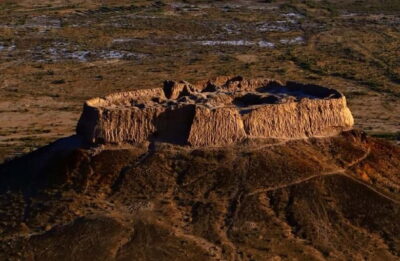
Transfer: Bukhara – Khiva via Ancient Fortresses
Read our review →
Khiva Historical City Highlights Guided Walking Tour
Read our review →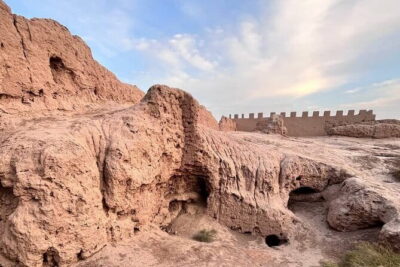
Private Daytrip to 7 Ancient Fortresses of Khorezm
Read our review →
From Khiva To Aral Sea 2-Days One Night In Yurt Stay
Read our review →Browse the lists this tour appears in