
Reviewed · KHIVA TOURS
Aral Sea – Extended trip (3 days)
This extended Aral Sea trip through Karakalpakstan feels like stepping off the paved world and into a place where nature, history, and human choices all show up at once.
I love the way the route is handled with private 4×4 plus sedan driving, so the long desert miles stay organized instead of stressful. I also love the storytelling potential, because you may get historian context from people like Olimjon, plus that unforgettable overnight in a yurt camp out in the desert.
One possible drawback is the pace, it starts at 6:00 am and covers about 1,200 km in three days, so you need decent stamina. Also, plan extra budget for museum tickets and some fortress entrance fees.
Key things to know before you go
- 1,200 km in 3 days, covered with a sedan and a 4×4 so you are not stuck waiting in one vehicle
- Aral Sea shore plus Ships Cemetery, two ways to understand what vanished when the sea shrank
- Nukus stop for I.V. Savitsky’s museum, a culture pause before the salt, sand, and ruins
- Ustyurt Plateau viewpoints and remote sites, like Sudoche lake and the salt marsh Barsakelmes
- Ayaz-Kala yurt camp night, sleeping in the desert is a major part of the memory
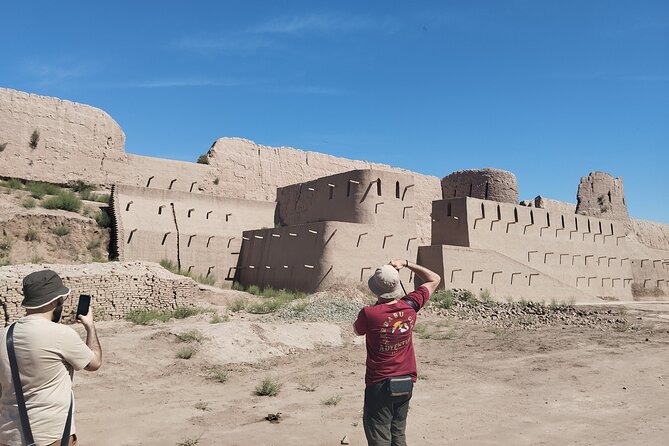
- A fortress circuit, with multiple archaeological sites from different periods and styles of fortification
Getting oriented at 6:00 am from Khiva
The tour kicks off early, around 6:00 am, with a meeting point at the west gate of Ichan Kala in Khiva. If you hate rushing, this may not feel casual, but it does pay off. Early departures help you move through the day while the temperature and light are more forgiving for walking around ruins and museum stops.
This is a private experience for up to 3 people, and the company includes hotel pickup and drop-off plus audio guide materials. That matters because the Aral Sea region can feel confusing without guidance. With the audio materials and a driver who knows the route, you keep your bearings faster.
Further trips to what is left of the Aral:
- Aral Sea Adventures (2 day)
★ 5.0 · 30 reviews - From Khiva To Aral Sea 2-Days One Night In Yurt Stay
★ 4.6 · 20 reviews - Daytrip From Khiva to Aral Sea Cemetery Of Ships . All In One
★ 4.5 · 18 reviews
How the driving works: two cars and 1,200 km of desert logistics
You should expect a lot of time in the vehicle. The plan is a three-day loop that totals over 1,200 km, using two cars during the round trip: one sedan and one 4×4. In practice, that split is a smart way to keep the group moving smoothly when roads get rough.
The tour also calls out experienced drivers who handle desert conditions with smooth driving. That is not a small detail here. Over long distances, it is the difference between feeling alert for sites versus feeling worn out before you even step out of the car.
You get air-conditioning in the vehicle, which helps on hot days. Still, treat the drive time as part of the experience, not just transit. You are traveling across a region where the road itself changes what you see outside the window, from cultivated areas toward the stark edges of the Aral Sea story.
Day 1: Chilpiqqala, Savitsky Museum in Nukus, then the Aral Sea shore
Day 1 is built like a strong on-ramp into Karakalpakstan. The first stop is Chilpiq(Shilpiq) qala, a Zoroastrian monument known for its age of more than 2,200 years. You are looking at a round, roofless tower-like structure, about 15 meters high and 65 meters in diameter. Even without climbing, the scale makes it easier to picture why ancient people built at hard-to-reach points.
Next comes the State Museum of Art named after I.V. Savitsky in Nukus. This museum stop works well because it changes your mood before the darker, more environmental parts of the trip. Art in Nukus gives you a contrast to the sand and rust tones you will see later at Muynak.
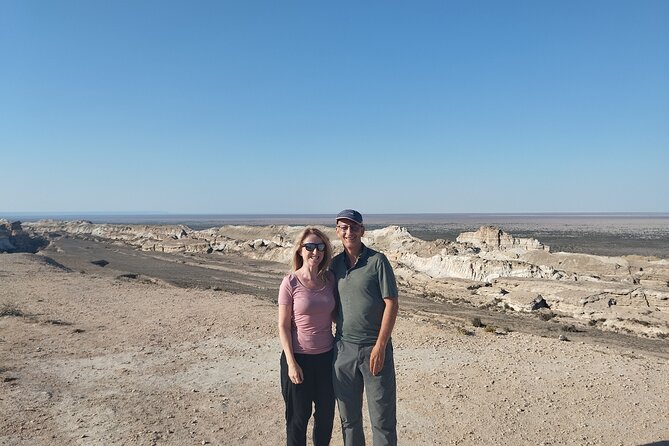
Then you shift to the Aral Sea shore, with about an hour allocated there. The experience is described as a place to observe the local climate and environment from hills and rocks that were once part of the Aral Sea. You are not just sightseeing, you are standing in the setting where the story of shrinkage becomes physical, with terrain that now looks and feels different than a sea.
Day 1 at Muynak: Ships Cemetery and the Aral Sea ecological museum
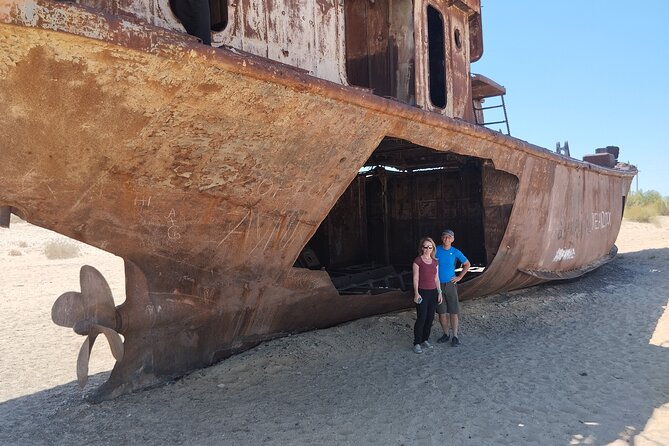
After the shore, the tour heads to the Ships Cemetery. This is one of the clearest emotional stops on the route, because the vanished sea leaves behind a concentration of abandoned vessels in a place that no longer matches the original use. You get about an hour here, which is useful because you want time to walk slowly and take in scale without rushing for photos.
Right after that, you visit the Regional History and Aral Sea Museum in Muynak, also referred to as the Muynak Regional Studies Museum or ecological museum. The visit time is shorter, around 30 minutes, but the point is to tie the visuals of the ship cemetery to context. A small museum can be easier to absorb on a day like this, when your brain is already processing big changes.
A practical note: museum and site tickets are not included for these stops. The Aral Sea Museum entrance is listed as USD 3 per person, and the Savitsky Museum entrance is USD 7 per person. If you want minimal friction, keep those numbers in mind before you arrive.
More of Khiva worth pencilling in
- Uzbekistan 3 Day Private Tour Tashkent-Bukhara-Samarkand Bullet Train
★ 4.5 · 23 reviews - Desert yurt camp and Mountain tour – 3 days
★ 4.5 · 15 reviews - 3-Day Chimgan Trekking Tour
★ 5.0 · 10 reviews - From Bukhara: 3-Day Yurt Stay, Hiking & Lake Aydarkul
★ 5.0 · 5 reviews
Day 2: Sudoche lake, Mizdakhan necropolis, and the Ustyurt Plateau feel
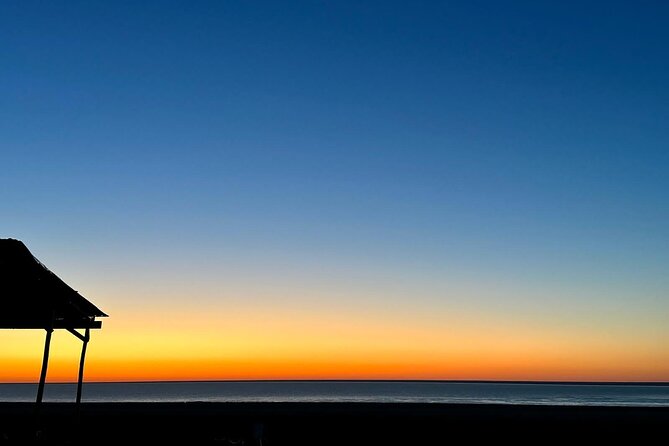
Day 2 takes you away from the Muynak area and deeper into the region’s remote character. The first major stop is Sudoche lake. It is described as a natural lake near the Aral Sea with flora and fauna. Even if you do not expect a tropical experience, the idea here is contrast, water and life in an area known more for dryness.
You also get a sense of remoteness around villages like Urga and Qibla Ustyurt, which are mentioned as remote areas worth seeing. The tour is not framed as a quick drive-by. You get about an hour at Sudoche and then continue on.
Then comes Mizdakhan Necropolis, located near the remains of Gyaur-Kala fortress. This necropolis is described as one of the oldest and most visited pilgrimage sites of Karakalpakstan. In other words, you are not only looking at ruins. You are stepping into a place tied to long traditions of reverence.
Day 2 forts and salt: Ayaz-Kala, Qubla-ustyurt, and Barsakelmes
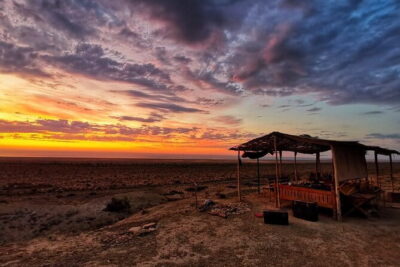
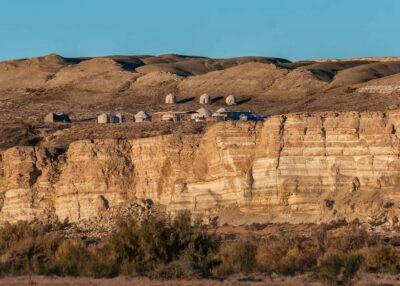
Later in Day 2 you head to Ayaz-Kala yurt camp for overnight. The key detail is that you sleep in the middle of the desert. That is the whole point of this day. The overnight makes the journey feel like more than a checklist, because the light, the silence, and the distance are part of what you remember.
Before the camp, the route includes Qubla-ustyurt with nearby Ustyurt Plateau attractions. The description notes that on traditional jeep tours, visitors see a cluster of sites across the plateau, including Kurgancha-Kala and areas around Urga and Qibla Ustyurt. You also stop at Barsa-Kelmes, a salt marsh covering about a thousand square kilometers. It is about 200 km from Nukus, and it is described as industrially harvesting salt.
The line about Barsakelmes being a kind of non-returnable place due to remoteness is dramatic, but it points to the truth of the area. Distances feel longer. Roads and visibility can be tricky. That is where having a driver who handles desert conditions matters again.
Ayaz-Kala yurt camp night: what that adds to the whole trip
The yurt camp is not just a bed for the night. It is the emotional anchor of the entire three days. The itinerary explicitly calls out overnight at Ayaz-Kala yurt camp, and that it is set in the desert.
If you want authentic western Uzbekistan memories, this is where you get them. Even the tone of the tour feedback highlights desert food and star observing as unforgettable. The “off road conditions, desert food, star observing at night” theme shows up as a common highlight, which makes sense. When you stay overnight, the experience stops being only daytime travel.
There is also a practical side to it. The tour lists Aral Sea yurt camp at USD 40 and Ayazkala yurt camp at USD 50, and it notes dinner at USD 90 per person. Because the pricing details are written in a way that can feel confusing, I would treat this as a key budget check before you commit.
Day 3: fortress circuit through Kushan-era and medieval walls
Day 3 continues the fortress-focused theme, and it is the densest archaeology day. Expect more short visits than museum hours, but the goal is pattern recognition, seeing how fortifications change over time.
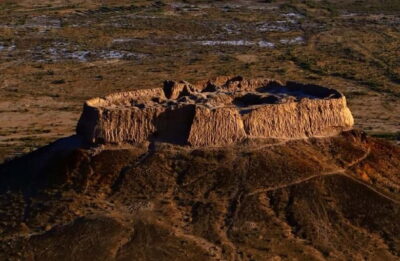
You start with Ayaz-Kala again, now as an archaeological site in Ellikqala District, dated from about the 4th century BCE to the 7th century CE, with a view over the Kyzylkum Desert. You then move to Fortress Toprak Kala, dated to the Kushan period around the 2nd and 3rd centuries CE. It is described as a royal residence and briefly a royal sanctuary for kings of the Khorezm.
From there, you visit Guldursun Qala, a fortified town with exterior walls and towers dating to the 12th century CE. Archaeological finds like pottery, bronze items, and coins are mentioned, which helps you understand that these are not only blank walls, but places where people lived and traded.
Koi Krylgan Kala, Angka Kala, and the final Duman Kala ruins
The route keeps the archaeology rolling with more fortified sites. Koi Krylgan Kala is described under the name Kizil Kala, originally constructed in Late Antique times (1st to 4th centuries CE), abandoned, then rebuilt in the 12th to 13th centuries. There is even a hint of debate in the description, which is useful. It signals that archaeology in this region still has questions, not just answers.
Next is Angka Kala, a settlement described with periods from I to III centuries and X to XII centuries A.D. It is said to be well preserved and almost square in architectural plan. The tour time is about 20 minutes, which means you should walk slow. Even in a short stop, the plan of a fortress can be easier to understand if you take a few minutes to look for the layout.
The last listed ruin focus is Duman Kala, described as three adjacent sections: a square-shaped western enclosure with corner towers, a smaller square-shaped citadel, and an irregular four-sided northern enclosure. Even if you are not a specialist, that description helps you picture what to look for. You are not just taking in one wall, you are seeing a complex with multiple parts built for defense.
Price and value: what your USD 899 per group really buys
The tour price is USD 899 per group, for up to 3 people. That is the first value hook: you are paying as a small private group, not a mass tour. In a remote region like Karakalpakstan, privacy plus private transport is not a luxury add-on, it is part of how the itinerary actually works.
Included basics are solid: audio guide materials, hotel pickup and drop-off, an air-conditioned vehicle, and private transportation. There are also key inclusions that reduce friction, like a mobile ticket and the option for the tour to start or finish in Khiva, Urgench, or Nukus depending on what you want.
Where costs can rise is in entrances and food. Not-included items listed are:
- Savitsky Museum entrance, USD 7 per person
- Aral Sea Museum entrance in Muynak, USD 3 per person
- Lunch
- Fortress entrance fees, each around USD 2
- Yurt camp accommodation (USD 40 at Aral Sea yurt camp, USD 50 at Ayazkala yurt camp) and the notes about dinner at USD 90 per person
So, the value calculation depends on how you budget for those add-ons. If you treat it as a desert road trip plus cultural stops plus a night out, it can still feel fair. But if you expect everything to be baked in, you may be surprised when tickets and meals come up.
Who should book this desert Aral Sea fortresses trip
This is a good match if you:
- Want a high-impact three days that combine Aral Sea realities with real archaeology sites
- Like structure, because you get a planned circuit with short, focused stops and a private vehicle
- Prefer small-group comfort, with pickup and drop-off and a car setup that includes a 4×4
It is less ideal if you:
- Dislike early starts and long driving days
- Need a slow pace with long museum sessions, since many fortress stops are time-light by design
- Get uncomfortable with desert conditions, even though the tour emphasizes smooth desert driving and includes a private setup
If weather turns bad, the tour notes it can be canceled or moved due to good-weather requirements. That is one reason to keep your schedule flexible.
Should you book Aral Sea + fortresses with Oxus Travel?
If you want one trip in western Uzbekistan that feels different from the usual city-and-museum pattern, this is a strong pick. The mix is practical: Savitsky Museum gives culture context, Muynak gives environmental context, and the fortress circuit gives you time-depth.
I would book it if you are comfortable with a packed schedule, can handle some walking around uneven archaeological areas, and you are ready to budget for tickets and yurt camp meals. If that sounds like you, you will likely come away with the kind of memories that stick, especially the overnight desert night and the scale of the Aral Sea ship cemetery.
FAQ
What time does the trip start and where is the meeting point?
The start time is 6:00 am, and the meeting point is the west gate of Ichan Kala in Khiva (99H4+CRQ, Khiva, Xorazm Region, Uzbekistan).
How much is the tour and is it for a group?
The price is USD 899.00 per group (up to 3). It is a private tour, meaning only your group participates.
How long is the trip?
It runs for 3 days (approx.).
What is included in the price?
Included items are audio guide materials, hotel pickup and drop-off, an air-conditioned vehicle, and private transportation.
What tickets and meals are not included?
Not included are the Aral Sea Museum entrance (USD 3 per person), the Savitsky museum entrance (USD 7 per person), lunch, and fortress entrance fees (each around USD 2). Accommodation at yurt camps is also listed separately.
Where will I stay overnight during the trip?
The overnight is at Ayaz-Kala yurt camp. The pricing notes Aral Sea yurt camp as well, with amounts listed for both options.
What kind of physical fitness do I need?
The tour asks for moderate physical fitness, which is mainly relevant for spending time at sites and walking around ruins in desert conditions.
Latest reviews out of Khiva
- Khiva: classic Half-Day Tour★ 3.7 · 3 reviews
- Khiva: City Highlights Guided Walking Tour★ 4.6 · 3 reviews
- Master Class – Uzbek Bread (Khiva)★ 3.5 · 4 reviews
- Traditional Khiva Cooking Class with Market Visit & Lunch★ 5.0 · 4 reviews
- Old Khiva Stories with Your Local Guide★ 5.0 · 5 reviews
- A Night In The Kyzylkum Desert [2] From Khiva★ 4.5 · 3 reviews
- Khorezm Fortress and KyzylKum Desert Private Tour★ 5.0 · 3 reviews
- Kunya Urgench Day Tour from Uzbekistan★ 1.3 · 3 reviews
Khiva Tours, compared.
Transfer: Bukhara – Khiva via Ancient Fortresses
Read our review →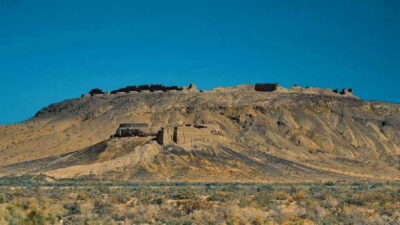
Khiva Historical City Highlights Guided Walking Tour
Read our review →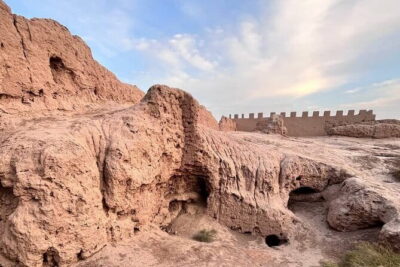
Private Daytrip to 7 Ancient Fortresses of Khorezm
Read our review →
From Khiva To Aral Sea 2-Days One Night In Yurt Stay
Read our review →Browse the lists this tour appears in