
A 6-day private Silk Road loop through Khiva, Bukhara, Samarkand, and Tashkent is interesting because you’re not just ticking off monuments, you’re also moving between the regions in a way that keeps the days efficient. I really liked the local internet access and the way this trip folds in accommodation plus breakfast, so you start each day ready to explore.
The one thing to watch is that the Tashkent to Urgench domestic flight is listed as not included, so you may need to budget extra depending on your timing and routing.
What This Tour Does Well: Fast, Human Logistics Across Four Cities
- Local internet access so you can look up stops, translate menus, and get directions without guessing
- Private city guides in each place meaning you learn what you’re actually standing in front of
- Entrance tickets included for the big-ticket monuments and museums
- Comfort-first travel with an air-conditioned vehicle and planned transfers between cities
- Customization is allowed if you want to adjust pace, sights, or add something special like a traditional yurt night
A 6-Day Silk Road Route That Feels Structured, Not Rushed
This is the classic Uzbekistan highlights route, but done with a real plan behind it. You get four cities that are often visited in separate trips, with hotel time and meals built into the schedule, not tacked on at the end. That matters because in Central Asia, half the battle is simply keeping your head clear while you move.
The route makes sense geographically. You start in Tashkent, drop into Khiva via Urgench, then head east to Bukhara, and finally to Samarkand before returning to Tashkent. By the time you reach Samarkand, you’re already fluent in the visual language of tiled domes, high mausoleum walls, and old-city planning.
Also, this is private. That sounds obvious, but it changes everything. You’re not stuck waiting for a slow group or pulled along by someone else’s pace. Your city guide can shift the day around you, and the itinerary is described as customizable with no or small charges.
Longer Silk Road routes to compare:
- 2 Days Tour to Bukhara and Samarkand from Tashkent by train
★ 5.0 · 53 reviews - Uzbekistan 8 Days Private Tour Tashkent-Urgench-Bukhara-Samarkand-Tashkent
★ 4.5 · 38 reviews - From Tashkent: Uzbekistan Private 6-Day Tour
★ 5.0 · 6 reviews
Day 1 in Tashkent: Arrival Day Without the Guesswork
Day 1 keeps it easy. You arrive, enjoy the first views of Tashkent as transport gets you to your hotel, and that’s it. It’s a simple start, but it’s exactly what you want after travel. There’s no big sightseeing push that day, which helps you hit the ground running tomorrow.
Tashkent has a different feel than the older Silk Road cities. It’s more modern, more spread out, and it has that Soviet-era planning influence. If you want a clean contrast later in the trip, that first-night reset is a good move.
Practical note: your hotel is described as centrally located, and it’s paired with local guidance for mobility. That usually means less time lost in transit when you’re jet-lagged or just unfamiliar with the city.
Day 2: Flying to Urgench, Then Immersing in Khiva’s Ichan Kala
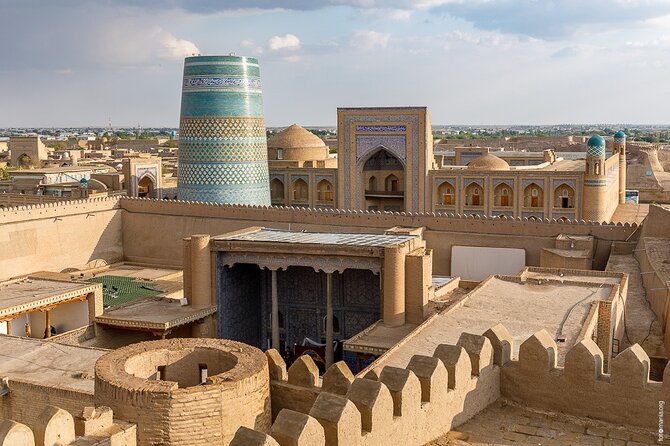
Khiva is one of those places where it clicks quickly. The old city, Itchan Kala, is the star. It’s described as a walled inner town with a long history, and you feel that age in the tight lanes and the way the monuments cluster like they’re guarding each other.
The day starts with a transfer to Tashkent Airport domestic terminal, then a flight to Urgench. Then you transfer to Khiva (Itchan Kala). One useful tip here is to double check the flight situation early, since the flight ticket is not listed as included. If you can, confirm your exact domestic timing before you go.
Once in Khiva, the itinerary is built for a strong old-city walk. Here’s what each stop contributes:
Itchan Kala: The Whole Stage, Not Just a Single Monument
You’re given time in Itchan Kala, and that’s smart. Instead of sprinting from one highlight to the next, you get the feel of the place: tiled surfaces, historic gates, and the dense concentration of religious and civic buildings.
If you only did one day in Khiva, this area is the reason why.
More of Tashkent worth pencilling in
- Uzbekistan Tour – 6 Days 5 Nights
★ 5.0 · 4 reviews - Uzbekistan 6 Days Private Tour Khiva-Bukhara-Samarkand by Train
★ 5.0 · 4 reviews
Kunya Ark Citadel: Power and Fortification
The Kunya Ark citadel sits at the heart of Khiva. It’s described as a fortified seat, with roots reaching back to early centuries. Even without going deep into dates, you can see the logic of old defensive architecture, and why rulers needed a physical center.
This stop pairs well with the next mausoleum and mosque visits, because it shifts your mindset from beauty to authority.
Pakhlavan Mahmud Mausoleum: Local Philosophy with a Human Touch
The Pakhlavan Makhmud Mausoleum is tied to a local poet and philosopher who was known for strength and healing. That detail matters because it shows Khiva wasn’t only about ruling dynasties, it also preserved local reputations and stories.
Juma Mosque and Islam Khoja Minaret: Religious Identity in Tile
You visit the Juma Mosque, linked to Friday prayers, and then the Islam Khoja Minaret complex. These places help you understand the rhythm of religious life and the role of minarets as visual markers.
If you like architecture, Khiva’s tilework can be a quiet obsession. The minaret complex description points to a madrasa and the minaret, which gives you more than one type of structure to look at.
Tash Khauli (Stone Palace) and Kalta Minor: Royal Grandeur and Visual Drama
The Stone Palace (Tash Khauli) is dated to the early 1800s and described as Khorezm architectural grandeur. Then comes Kalta Minor, the minaret known for its unique glazed-tile decor and being unfinished.
That unfinished element is worth paying attention to. It’s the kind of detail you only catch if you slow down, and a private guide makes that easier.
Day 3: Khiva to Bukhara by Train, With Free Time Built In
Day 3 is a travel day with options. You go from Khiva to Bukhara, either by train or by car transfer, with about six hours of journey time. You also get free time built around the move, either in Khiva before departure or in Bukhara after arrival, depending on how you choose.
This is one of the best design choices on the trip. If you’re the type who wants one more look at old alleys before leaving Khiva, you can do it. If you’d rather save energy for Bukhara, you can.
Bukhara is the next big character in the story, and your afternoon time there gives you the emotional transition from desert fortress city to scholarly, market-heavy old center.
Day 4 in Bukhara: Lyab-i Hauz, Kalyan Minaret, Ark Fortress
Bukhara’s itinerary hits the classic trio: a social square, a towering minaret, and the old fortress core.
Lyab-i Hauz Ensemble: Where People Actually Sit
The Lyab-i Hauz Ensemble is a major Bukhara square from the 16th to 17th centuries. You’re given about an hour, and the description highlights how it functions as a rest stop. That’s a subtle point, but it’s practical: you’ll likely want breaks during these packed days, and squares are the safest place to reset.
This also gives you a better sense of daily life than monuments alone.
Great Minaret of the Kalon (Kalyan Minaret)
The Kalyan Minaret reaches around 45.6 meters, and it’s described as a surviving fragment from the Kara-Khanid era. This means you’re standing in the shadow of older eras than the later buildings around it.
If you enjoy “how long this place has been evolving,” this stop rewards your attention.
Bolo Hauz Mosque: Opposite the Ark
The Bolo Hauz Mosque is positioned opposite the Ark Fortress. The name ties to an octagonal pond, and this stop helps you connect the urban planning layout: power on one side, religious architecture and water infrastructure on the other.
Ark of Bukhara: A Town Within a Town
The Ark of Bukhara is described as Bukhara’s oldest structure, home to rulers for over a millennium. You get about an hour and a half, which is enough to understand that this wasn’t a single building so much as a whole ruling complex.
Even if your feet are tired, don’t skip the Ark. It’s where you stop seeing everything as separate landmarks and start reading the city as a system.
Evening Transfer to Samarkand
Late afternoon you transfer to the Bukhara train station in Kagan (15 km away), then take the train to Samarkand (subject to availability). You arrive and get moved to your hotel.
The station swap (Kagan for Bukhara) is the kind of detail that can confuse first-timers, but having it built into the itinerary removes stress.
Day 5 in Samarkand: Registan, Shah-i Zinda, and the Timurid Heavyweights
Samarkand is where the trip really peaks visually. You have multiple sites that people already know by name, and the pacing makes sense because you alternate between squares, tomb ensembles, and markets.
Gur Emir Mausoleum: Tamerlane’s Tomb
The Gur Emir Mausoleum is tied to Tamerlane. It’s described as the beautifully reconstructed tomb complex. Even if you know only the basics, the place carries weight because of who it represents.
This is a strong opener in Samarkand since it sets the political context for what you’ll see next.
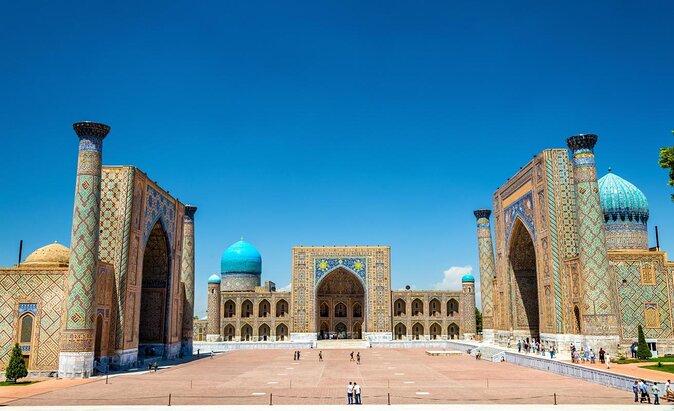
Registan: The Main City Stage
Then comes Registan, reconstructed several times, and surrounded by Ulugbek, Sherdor, and Tillokori medreses. This is one of the places where you should just stand and look. The itinerary gives you about an hour and a half, which is enough time to watch how the square changes with light.
If you’re a photo person, this is where you’ll feel tempted to rush. Don’t. Give yourself a little time to absorb scale.
Bibi Khanym Mosque: Monumental, Story-Driven Architecture
The Bibi Khanym Mosque is tied to Temur’s order and is dated 1399 to 1404. You have about 30 minutes, so go in thinking: this is about monumental design and ambition.
Siab Bazaar: The Day Gets Real
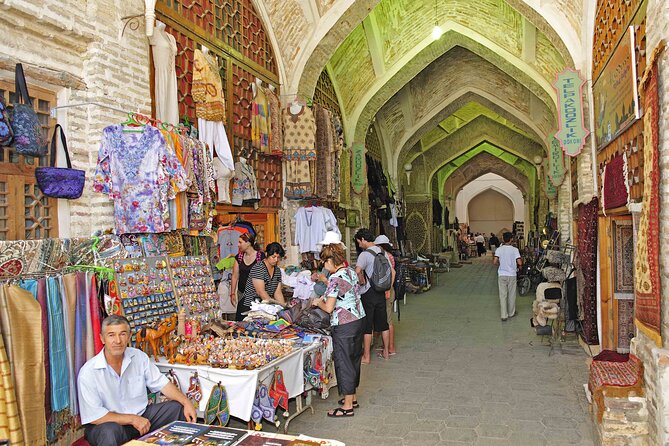
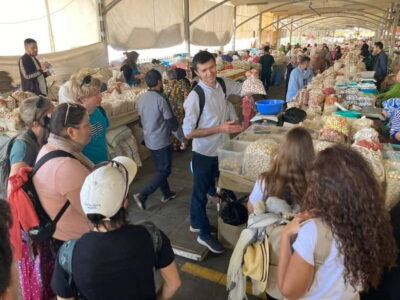
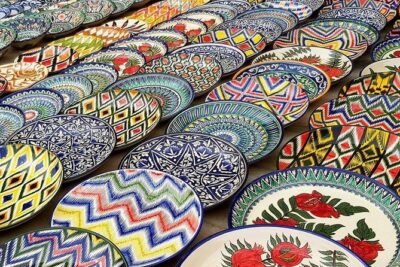
After the big stone monuments, you stop at Siab Bazaar. It’s described as still impressive, with produce and handicrafts showing Uzbekistan’s wealth and people’s skills. The ticket says admission ticket free, and you get about 40 minutes.
This is a reset stop. You can snack, browse, and get out of pure monument mode.
Shah-i Zinda: A Long Line of Mausoleums
Next is Shah-i Zinda, an ensemble described as consisting of 44 tombs in more than 20 mausoleums. You get about an hour. This stop rewards slow walking. The architecture looks like it’s connected by generations, and the route keeps pulling you forward.
Ulugbek Observatory: Science Left in the Ground
The Ulugh Beg Observatory has only foundations remaining, but it’s described as truly extraordinary because Ulugbek was an astronomer, scientist, and architect. You have about 50 minutes.
This is your reminder that the Silk Road wasn’t only about trade goods. People were learning, measuring, and building knowledge too.
Day 6: Back to Tashkent, Old City Spiritual Stops, and the Metro
Day 6 is a mix of transport and Tashkent highlights. You transfer to Samarkand train station, take an early morning train back to Tashkent (subject to availability), then meet your guide and driver for sightseeing.
This is where you’ll feel the rhythm change. The earlier cities are about old stone and tile. Tashkent adds green squares, museums, and a different kind of cultural identity.
Alisher Navoiy Theater: A Built-in Cultural Landmark
You can do a stop at the Alisher Navoiy Theater. The description notes design by Alexey Shchusev and that tours are conducted by facility staff. You have about 20 minutes.
Even a short stop can help you understand that Tashkent’s identity is also built through institutions, not just monuments.
Hazrati Imam Complex (Khast Imam): A Sacred Old City Core
The Hazrati Imam complex, popularly called Khast-Imam, is in the heart of the old city. It includes Tillya Sheikh mosque and Abu Ba… (the data cuts off, but the key point is the ensemble nature). You get about 1.5 hours.
This is one of those places where being respectful and taking your time matters more than rushing for pictures.
Tashkent Metro: Architecture You Can Ride
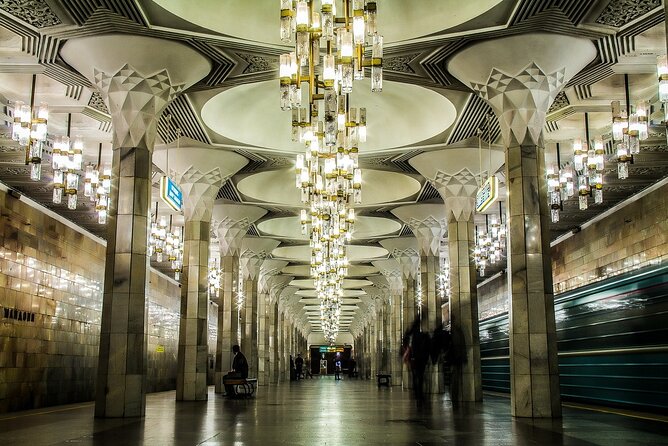
The tour includes the Tashkent metro, described as the first underground in Central Asia and completed in 1977. You spend about an hour, and the description notes that stations have unique architecture with marble, granite, columns, colorful bas-reliefs, and ganch.
If you want something different from the usual mosque-and-mausoleum routine, this is a good pick.
Amir Temur Square and the State Museum of History of Uzbekistan
You’ll visit Amir Temur Square and then the State Museum of History of Uzbekistan, founded in 1876. You get about an hour at the museum.
Important consideration: museums and complexes can change closures, exhibits, or access depending on the date. If a specific site matters a lot to you, ask your coordinator to confirm it during your last day in each city.
Airport Transfer
Finally, you transfer to Tashkent International Airport for your outbound flight. The day is built to end neatly so you’re not scrambling at the last minute.
Price and Value: Is $850 Worth It?
At $850 per person, this tour sits in the “you’re paying for convenience and coverage” category. The real question is what you would otherwise spend your time doing.
Here’s what your price covers, based on the tour details:
- Air-conditioned vehicle
- Train tickets for the key long segments: Khiva to Bukhara, Bukhara to Samarkand, and Samarkand to Tashkent
- Local licensed guides in each city
- Accommodation in twin rooms at centrally located 3-star or boutique hotels
- All entrance tickets to museums and sites
- Breakfast for 5 days
- Mobile ticket and a city-guide setup for mobility
Big value here is entrance tickets plus guides plus hotels together. In these cities, that combination adds up fast if you do it DIY. Also, private guides save time because they help you move between sites efficiently.
Two cost considerations to factor in:
- The Tashkent to Urgench flight is listed as not included, even though the day 2 schedule depends on that move.
- If you need a single room, there’s a $20 per night supplement.
If you’re two people sharing a room, the pricing usually feels more fair. If you’re traveling solo and need single accommodations, you should budget the supplement early.
Tips That Make This Trip Work Better (Even If You Have Only a Week)
A few practical things I’d do to get the most out of this kind of route:
Confirm Transport Pieces Early
This itinerary uses trains and also includes a flight segment. Since the flight ticket is not included, I’d ask your organizer to confirm the exact date, time, and who issues which tickets.
Also, train type can vary based on what’s available. There is some mention that fast train availability can be limited close to departure, so if train comfort matters a lot to you, ask what option is being used for the Samarkand to Tashkent leg.
Plan for Walking, Not Just Looking
Khiva and Shah-i Zinda both reward walking. You do get guided time and ticket coverage, but the best experience comes when you wear comfortable shoes and keep a slow pace for at least part of each day.
Use the Free Time With Intention
Day 3 lets you choose where to spend free time, either in Khiva or in Bukhara. Pick based on your style: one more old-city wandering moment in Khiva, or a chance to settle into Bukhara before the next day’s monuments.
Take Your Coordinator’s Suggestions Seriously
In real-world terms, this trip is held together by the people scheduling it. The reviews highlight an organizer named Amir, plus coordination support from Umid, and that’s a good sign for smooth pickups and quick fixes when plans change.
Who This Tour Suits Best
This is ideal if you want the Silk Road hits without the organizational headaches. You’ll probably enjoy it most if:
- You like history and architecture and want expert local context
- You value private guiding over group pacing
- You want hotels and entrance tickets handled, so you can focus on what you see
- You’re okay with travel days between cities, since the route is structured around those moves
It may be less ideal if you want ultra-slow travel with lots of downtime. This itinerary is designed to keep things moving efficiently.
Should You Book This Private Tashkent-Khiva-Bukhara-Samarkand Loop?
I’d book this if you’re chasing four “big” cities in a single trip and you want the planning load taken off your plate. The best reasons are practical: guides in each city, entrance tickets included, and an itinerary that balances major monuments with breaks like markets and squares.
I would pause and double check two things first: the Tashkent to Urgench flight extra cost, and any dates where museums or sites might have access changes. If those are handled early, this is the kind of trip that can turn Uzbekistan from a list of names into a clear, memorable route.
FAQ
What does the price include?
The package includes an air-conditioned vehicle, train tickets for Khiva to Bukhara to Samarkand to Tashkent, local licensed guides in each city, twin-room accommodation in centrally located 3-star or boutique hotels, entrance tickets to museums and sites, and breakfast for 5 days.
Is this tour private?
Yes. It’s described as a private tour/activity, so only your group participates.
Which cities are covered?
You visit Tashkent, Khiva (via Urgench), Bukhara, and Samarkand, then return to Tashkent.
Are entrance tickets included for the sights?
Yes. The tour includes entrance tickets to museums and sites.
Is the domestic flight included?
No. The flight ticket Tashkent to Urgench is listed as not included, even though the day 2 schedule uses that flight.
Do I need to pay for museum photo or video charges?
The tour notes that photo and video museum charges, if any, must be paid cash at the entrance, listed as about $1 to $2 per museum.
Can I request changes to the itinerary?
Yes. The itinerary can be customized at no or small charge based on your requests.
Is there free cancellation?
Yes. There is free cancellation, and you can cancel up to 24 hours in advance for a full refund.
Do I need a visa for Uzbekistan?
Visa requirements depend on your nationality. The tour advises you to check the visa policy for Uzbekistan before you travel.
Latest reviews out of Tashkent
- Tashkent Mountain Tour Amirsoy with Transport★ 3.5 · 3 reviews
- Private Intercity Transfer Tashkent – Samarkand – Tashkent★ 3.5 · 3 reviews
- Amirsoy & Chimgan mountain tour from Tashkent★ 5.0 · 3 reviews
- Tashkent: 3-Day Horseback Riding Tour in Chimgan Mountains★ 4.4 · 3 reviews
- Private Tashkent City Tour★ 5.0 · 3 reviews
- Transfer Tashkent Airport / Railway Station – Hotel★ 3.5 · 3 reviews
- Heliocomplex “Institute of the Sun” – Remnants of USSR★ 5.0 · 3 reviews
- Tashkent One Day Tour★ 4.6 · 4 reviews
Tashkent Tours, compared.
Best of Tashkent Mountains: Amirsoy, Chimgan & Charvak Trip
Read our review →
Samarkand One Day Tour – Departure From Tashkent
Read our review →
2 Days Tour to Bukhara and Samarkand from Tashkent by train
Read our review →
Browse the lists this tour appears in