
Reviewed · TASHKENT TOURS
Shymkent Day Tour from Tashkent
Shymkent is the rare day trip where you actually cross into another country, see how everyday city life looks in Kazakhstan, and still end the day back in Uzbekistan. What I like most is the mix of stops, from the roadside legends near Kazygurt to Shymkent’s old town citadel and modern parks. I also love that you get a hands-on English or Russian guide, and names matter here, like Larissa and Maftuna, who clearly know how to turn a checklist of sights into a story you can follow.
The main drawback is timing. The tour is listed as 8 hours, but the border process can add major minutes, sometimes turning it into a closer-to-half-day-with-legs day than a neat little sprint. If you have a flight or appointment later that same evening, plan extra buffer.
Key highlights you should plan around
- Border crossing with changing drivers so you are not left figuring out logistics on your own
- Kazygurt and Noah’s Ark stop on the way, including a chance to try mare’s milk
- Shymkent citadel views and some of the oldest preserved religious structures
- Parks and public squares from Abay Park to Independence Square, with lots of photo-friendly stops
- Museum of Victims of Political Repression for context that is heavy but important
- Arbat Shymkent fun including the upside-down house side attraction
Why Shymkent makes sense as a day trip from Tashkent
If you are already in Tashkent, Shymkent is an easy “one more country” move, without needing a whole new hotel. The city sits in Kazakhstan’s South Kazakhstan region, and it shows in the atmosphere: caravan-road vibes, Soviet-era layers, and a modern push toward parks, squares, and street-level life.
This tour also has a smart structure. You do not only chase monuments. You get a road-to-city arc: the trip starts with a border crossing, you break up the drive with a legendary stop near Kazygurt, then you spend your Shymkent time in a concentrated zone of old town, memorials, parks, and a lively pedestrian strip.
Finally, this is a private group day trip, so your pace is not trapped behind a big bus schedule. In the reviews, people repeatedly mention that guides adjusted the day to interests, and that matters on a border day where you want to avoid dead time.
More of Tashkent worth pencilling in
- Best of Tashkent Mountains: Amirsoy, Chimgan & Charvak Trip
★ 4.8 · 567 reviews - Samarkand One Day Tour – Departure From Tashkent
★ 5.0 · 313 reviews - Samarkand One-Day Tour Departure from Tashkent
★ 4.7 · 171 reviews
The border crossing reality check (and why your day can run long)
On paper, the route is simple: Tashkent to Shymkent and back, with a border crossing in between. In practice, it is the most important part of the day to understand.
Here is what you can expect based on the tour setup:
- You get pickup in Tashkent from your hotel, airport, or train station area.
- Your driver takes you to the border, and you cross with your passport as directed.
- You meet a Kazakhstan-side driver after crossing, then continue to Shymkent.
- Cars change at the border. Uzbekistan-side driver on one end, Kazakhstan-side driver on the other.
The good news is the process is organized. People describe it as manageable and not as chaotic as it sounds. The part to respect is the unpredictability of lines. Several reviewers said the border can be the slow element, with some reporting extra time beyond the listed schedule.
My practical advice:
- Start the day as early as you can. Border lines can swing during the day.
- Keep patience ready. This is not the time to bargain with bureaucracy.
- If you have a late flight, leave a wide safety gap. One review mentioned the day running around 11 hours total.
Roadside Kazygurt stop, Noah’s Ark, and a taste of local legend
Between Tashkent and Shymkent, the itinerary includes a stop at the Sacred Mound of Kazygurt. This is one of those places where geography, faith, and storytelling overlap. You are not just passing by scenery. You are stopping at a point connected to Great Silk Road routes and local beliefs.
The key detail: there is a legend that Noah’s Ark landed on the top of the mountain. Whether you treat it as myth, folklore, or spiritual storytelling, it gives you a lens for how people in this region connect landscape to meaning.
One more reason this stop feels practical, not touristy: it breaks the drive. And if the timing works, there is also a chance to try mare’s milk. One of the nice surprises in reviews was how people enjoyed that hands-on roadside moment, even if it sounds unusual before you try it.
Shymkent citadel: old structures, minaret, and a panoramic payoff
Once you reach Shymkent, the city tour centers on the historic core around the citadel. The claim in the tour description is that the citadel area dates back to the 9th century, and it also connects it with a much older time scale, with preserved mosque and minaret elements still in place.
The most valuable part for your visit is not the exact age. It is the concentration of preserved old town features in a compact area, plus the fact that the citadel sits at the highest point, giving you a panoramic view across Shymkent.
This stop is where your day turns from transport to orientation. Standing in that elevated spot helps you understand what you see later in parks and squares. You get a sense of the city’s layout, not just a series of separate photos.
If you like architecture details, this is also one of the stops you should not rush. The tour includes mention of the oldest mosque and minaret being preserved here, so you are seeing the kind of continuity that you do not get in every city on a single day.
An easier afternoon once Tashkent is done:
- Tashkent: Amirsoy Resort, Chimgan Mountain and Charvak Lake
★ 4.8 · 170 reviews - Explore Amirsoy, Chimgan & Charvak – A Full-Day Mountain Tour
★ 5.0 · 158 reviews - Tashkent City Tour
★ 5.0 · 121 reviews - Tajikistan : Exclusive Seven Lakes Day Tour From Samarkand
★ 4.9 · 102 reviews
Ordabasy Complex and Zher Ana: symbols in the city center
Under the citadel, the tour brings you to the Ordabasy Complex, described as a shopping area with a newer complex built beneath the old setting. This is a good reminder that historic areas in Kazakhstan are not frozen museums. They are active zones where commerce and daily life keep happening.
Then comes the Zher Ana Complex, built in the same territory and described as symbolizing independence and freedom of Kazakhstan. It may not be a long stop, but symbolism matters on a political and cultural day, especially since the schedule later includes a repression museum.
If you tend to skip “monument” stops, do not do that here. These two breaks help you connect the historic citadel with modern national storytelling. It turns the visit into a timeline rather than a pile of stops.
Independence Square, Metallurgists Park, and how Shymkent handles public space
Shymkent’s public spaces are a big reason people enjoy this day trip. The tour includes:
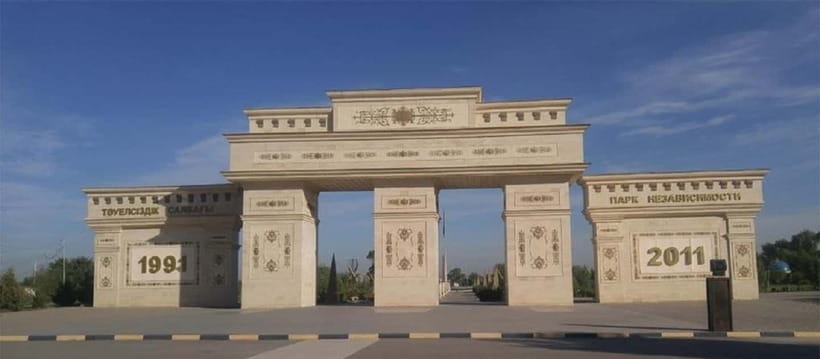
- Independence Square, opened in 2011, described as the largest and newest park area in the city
- Metallurgists Park, built before the war, located in a city quarter built by German and Japanese prisoners of war
- Abay Park and the memorial complex in its center
Independence Square gives you a modern city feeling. Think wide open space for walking, resting, and photos, with the kind of landscaping you usually only see after a city decides to invest in public areas.
Metallurgists Park is the emotional contrast. The tour description ties it to a specific WWII-era story of prisoner-of-war labor and settlement. This is not a stop you treat as only scenic. It is one where your guide can help you connect the space to the people who lived through history there.
Abay Park and the WWII memorial message
In the itinerary, Abay Park includes an Alley of Glory and a memorial complex for the events of World War II. The central place is installed Memorial of Glory.
On a day trip, I like memorial stops that have a clear focus. This one is set up that way. It helps you spend your time respectfully but still actively: you can walk the area, take in the layout, and understand why the monument sits where it does.
You will also get the Abay connection. The park is named after Abai Kunanbayev, described as a major Kazakh poet and educator and also the founder of modern Kazakh literature and philosophy, with a monument on site.
If you enjoy learning how countries represent national identity through places, this is a strong section of the day.
Arbat Shymkent and the upside-down house: the lighter side
After the memorial and symbolic stops, the tour shifts to Arbat Shymkent, the city’s “Broadway” style pedestrian area. This is an important pacing move. It gives you time to breathe, shop, and look around without the emotional weight of museums.
The upside-down house is specifically listed as one of the preferred attractions for locals. Even if it is a quirky detour, it helps make the day feel like a real day in Shymkent, not just a rushed sightseeing circuit.
I like including one light, playful stop when the schedule includes heavy material. It keeps your energy up and makes the darker parts easier to process.
Museum of Victims of Political Repression: sober, but worth your attention
The Museum of Victims of Political Repression is on the itinerary, and the tour description is clear that it covers Stalin-era repressions against Kazakh people. This is not a casual museum stop. It is designed to educate and to confront a painful chapter.
How long you stay depends on your interest and your guide’s pacing, but you should go in with the right mindset. Bring mental space, and do not expect to “skim” your way through it.
In the reviews, people frequently describe this museum as sad but well worth learning from, and that is the balance I would recommend. If you care about context, this stop pays off. If you are already emotionally maxed out by other history in your trip, you can still visit, but I would keep expectations realistic.
Russian Orthodox Church of St. Nicholas: Soviet-era reforms in brick and stone
The tour includes the Russian Orthodox Cathedral of St. Nicholas, described as built in 1988 during perestroika reforms.
This is a good stop for people who want to see how religion reappeared and reshaped during late Soviet changes. It also connects Shymkent’s layered story: caravan history, Soviet era, and modern Kazakhstan all show up somewhere in the city.
You may not spend long here, but it adds texture to the day. It reminds you that Shymkent’s religious landscape includes more than one tradition, and not all of it is medieval.
Back to Tashkent: green camps, farms, and a final photo window
After Shymkent time, you return to Tashkent by road. The tour description mentions “some stops to take photos of green camps (April-May), farms and livestock farms” on the way back.
Because the exact timing of these photo stops can depend on season and daylight, treat this as an add-on, not a fixed photo guarantee. Still, it is a nice way to end the day with something quieter than museums and memorials.
And on a practical note, it is also an opportunity to reset. You will have done a lot of walking and a lot of “new input” during the day. The return drive gives you that decompress time.
Drivers and guides: why this private tour feels smoother than DIY
The biggest repeat praise in the reviews is not just the sights. It is the people running the day.
Drivers are described as punctual and professional, and the border handoff is a key reason. Several reviewers specifically appreciated that the driver brought them right to the border, and that the Kazakhstan-side driver met them after crossing.
The guide side is where you get depth. Larissa and Maftuna appear in multiple accounts, with people describing guides who explain site context in detail, keep a good rhythm, and adjust when interests change. One review even mentions a guide speaking multiple languages, which helps if you want more nuance than a quick overview.
If you like to understand what you are looking at, this matters a lot. You are paying for the translation of “what is this place” into “why does it matter here.”
Price and value: is $250 per group up to 3 worth it?
At $250 per group for up to 3 people, this is not a budget day trip. It is pricey, and you should be honest about that.
But the value equation is more than distance:
- You get an A/C vehicle on both sides of the border.
- You get a professional guide in the cities.
- You get organized border logistics, including a driver change at the crossing.
- You get a planned route with multiple stops, not just a single city drop.
If you compare this to DIY, the DIY part is possible in theory. You can likely arrange transport and you can cross the border on your own. The risk is that border time eats your day, and you can lose the benefit of a structured itinerary.
So who is it worth it for?
- You want a managed day and less stress with paperwork and timing.
- You care about explanations at each stop, especially for the museum and memorial sites.
- You are traveling as a small group of up to 3 and can split the cost.
Who might feel it is overpriced?
- You are flexible on time and truly enjoy figuring things out yourself.
- You want fewer stops and more free time in each place.
- You are sensitive to long border delays and want control over pacing without a fixed itinerary.
What to bring, and small rules that affect your comfort
This day is simple, but the comfort details matter.
Bring:
- Comfortable shoes. You will walk in parks, around the citadel area, and through public spaces.
- Comfortable clothes suited to weather changes.
Plan for:
- No drinks in the vehicle.
- No food in the vehicle.
Lunch is not included. The guide will recommend good restaurants, so if you want a specific kind of food, tell your guide when you arrive in Shymkent.
The practical call: should you book this Shymkent day tour?
I would book this tour if you want a smooth, structured way to add Kazakhstan to your trip without dealing with the border and scheduling headaches yourself. The combination of Shymkent old town, major parks, and the repression museum gives you real range in one day, and the guide quality, especially Larissa and Maftuna in multiple accounts, is a big part of why people feel the day was worth it.
I would hesitate if your travel calendar is tight. The border can stretch the schedule, and you might lose the neat 8-hour promise. If you do have flexibility, start early, keep your patience hat on, and treat this as a full day of learning and walking, not a quick checkmark.
If you are game for a day that mixes legend roadside stops, major public squares, and a heavy museum in between, Shymkent is a strong target.
Latest reviews out of Tashkent
- Tashkent Mountain Tour Amirsoy with Transport★ 3.5 · 3 reviews
- Private Intercity Transfer Tashkent – Samarkand – Tashkent★ 3.5 · 3 reviews
- Amirsoy & Chimgan mountain tour from Tashkent★ 5.0 · 3 reviews
- Tashkent: 3-Day Horseback Riding Tour in Chimgan Mountains★ 4.4 · 3 reviews
- Transfer Tashkent Airport / Railway Station – Hotel★ 3.5 · 3 reviews
- Private Tashkent City Tour★ 5.0 · 3 reviews
- Heliocomplex “Institute of the Sun” – Remnants of USSR★ 5.0 · 3 reviews
- Oriental Tastes of Tashkent: A Gastronomic Journey”★ 5.0 · 3 reviews
Tashkent Tours, compared.
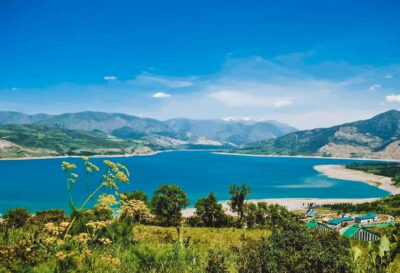
Best of Tashkent Mountains: Amirsoy, Chimgan & Charvak Trip
Read our review →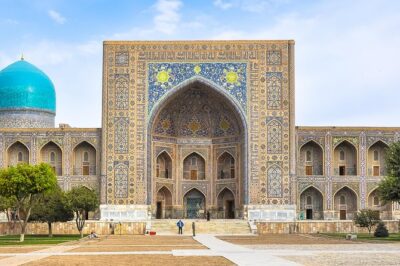
Samarkand One Day Tour – Departure From Tashkent
Read our review →

2 Days Tour to Bukhara and Samarkand from Tashkent by train
Read our review →
Tashkent: Private Full-Day City Tour on a Premium Car
Read our review →Browse the lists this tour appears in