
Tashkent has a trick up its sleeve, it feels like two cities in one day: old market lanes on one side, Soviet-era and European-style boulevards on the other. This one-day tour strings together the places that explain why people call it the City of bread and the Gates of the East. I especially like how the route moves from worship and pilgrimage to food and craft, without turning the day into a checklist. One thing to plan for: entry tickets are not included, so you may spend a bit extra at a few stops.
My favorite part is the mix of scales. You get big public landmarks like Independence Square and then you step into smaller, hands-on experiences like the Applied Art Museum, which helps you understand what Uzbek craft actually means in real life. The other consideration is simply time: at 6 hours, you’ll see a lot, but you will not have hours and hours in each place.
Key highlights you will care about
- Hazrati Imam Historical ensemble: madrassas, mosques, mausoleum, and an ancient Holy Quran manuscript from the 7th century
- Metro Tashkent: the first metro in Central Asia, with stations that feel like a changing museum
- Chorsu Bazaar: the oldest bazaar in Uzbekistan, right in the old-city heart for real atmosphere and food
- Applied Art Museum: a strong introduction to Uzbekistan’s mastercrafts in a building with its own story
- Romanov Palace: monumental colonial architecture that looks unusual in Central Asia and makes good photo material
A smooth start from your hotel, then straight into Tashkent’s story
The day starts when you want it to. You’ll be picked up from your hotel, airport, or railway station, and the guide can shift the start time by request. From there, you roll through Tashkent in an A/C vehicle, which matters in hot weather and keeps the day feeling efficient rather than rushed.
This is a private group set-up, priced for a group of up to 2. In practice, that matters because the guide can pace the stops to your speed, and you are not stuck in a slow-moving herd. It also helps you ask direct questions. One review specifically called out how the guide Nuriddin took very good care of the group and knew the city well, and that kind of local command is what makes a one-day overview actually work.
Do bring comfortable shoes. Many of the stops involve walking outdoors and moving between sites that are close enough for a day tour, but not close enough to stay on one level surface the whole time. Also, pack a scarf or headscarf, because you’ll want to be prepared for religious spaces and dress expectations.
More of Tashkent worth pencilling in
- Samarkand One Day Tour – Departure From Tashkent
★ 5.0 · 313 reviews - Bukhara One Day Tour – Departure From Tashkent
★ 4.5 · 37 reviews - All in One Day Tour of Samarkand from Tashkent
★ 5.0 · 34 reviews
Hazrati Imam, pilgrimage architecture, and a 7th-century Quran manuscript
Your first major stop is the Hazrati Imam Historical ensemble. This is one of the most important pilgrimage locations in Tashkent. You’ll see a cluster of religious architecture that includes madrassas (Barakhan and Tillesheyh), mosques, and a mausoleum tied to one of the early imams of Tashkent.
The practical reason this stop is such a strong opener is that it gives you a spiritual and historical anchor for the day. Instead of only seeing buildings as scenery, you get context for how Tashkent’s identity is tied to faith and learning.
There’s also a standout detail that can really change how you look at the site: here you can see one of the 4 manuscripts of the Holy Quran from the 7th century in Central Asia. That single fact turns the visit from pretty architecture into something more meaningful and rare.
A possible consideration: religious sites can be strict on clothing. If you arrive in clothes you feel unsure about, you will spend mental energy figuring it out on the spot. Bring that scarf/headscarf so you can focus on the visit.
Monument of Courage, the 1966 earthquake, and why the city rebuilt so visibly
Next comes the Monument of Courage. This is connected to the earthquake of 1966, which reshaped Tashkent. The city was rebuilt, and this monument honors the restoration at the disaster’s epicenter.
What I like about including this stop is that it shows another layer of Tashkent’s character. You are not only learning what the city was, you’re seeing how it reacted. In a place where you’ll also notice imperial and Soviet influences, this monument explains how the physical city you walk through today was also made through recovery.
You’ll get a view of what the city looks like after reconstruction, and it helps you interpret the wider cityscape as something intentional, not random. Even if you are not a history person, this is the kind of landmark that makes the rest of the day feel more coherent.
Independence Square (Mustaqilliq Maidoni), from imperial power to today
Then you move to the Independence Square, also known as Mustaqilliq Maidoni. This is the main square of Uzbekistan, and you’ll see administrative offices connected to the country’s governance, including the Cabinet and the Senate.
But the reason this square hits is the contrast. Long ago, this same place served as an administrative center for Russian tsarist and communist regimes. Today it symbolizes independence, but the location’s past is visible in the layers of architecture and political meaning.
If you’re thinking like a traveler, this is a great stop to reset your mental picture of Tashkent. It connects earlier imperial influence to modern identity, and it sets up what you’ll see next when you enter Tashkent’s more modern civic core.
An easier afternoon once Tashkent is done:
- Best of Tashkent Mountains: Amirsoy, Chimgan & Charvak Trip
★ 4.8 · 567 reviews - Samarkand One-Day Tour Departure from Tashkent
★ 4.7 · 171 reviews - Tashkent: Amirsoy Resort, Chimgan Mountain and Charvak Lake
★ 4.8 · 170 reviews - Explore Amirsoy, Chimgan & Charvak – A Full-Day Mountain Tour
★ 5.0 · 158 reviews
Metro Tashkent, the underground museum feel you cannot skip
The tour includes a ride and visit around Metro Tashkent, described as the first metro in Central Asia. The big idea here is that the stations do not all copy the same design. Instead, each station has its own approach and shape, which is why it gets the nickname underground Museum of Tashkent.
In real terms, this makes the metro one of the easiest wins on a one-day route. You get culture without losing time, and you get a very local, everyday setting. It also helps you understand that Tashkent’s modernization is not only about streets and squares. It’s also about how people move through the city, and how design shows up there.
Plan for basic metro common sense: it can be busy and you may need to follow the guide’s timing. But the value is high, especially because the tour is already packed. This one slot gives variety without adding extra time-consuming detours.
Chorsu Bazaar, oldest market heart and food atmosphere
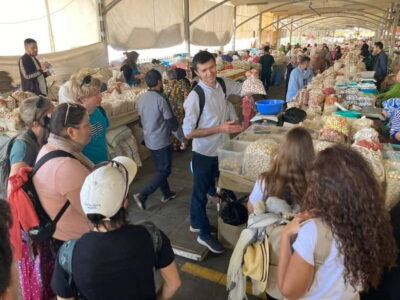
After the metro, you’re taken to Chorsu Bazaar, described as the oldest bazaar in Uzbekistan. This is the heart of the old city, and it’s also where you get a real Eastern-market feel inside the modern city.
This stop is more than a photo opportunity. Bazaars like this are where you learn how daily life works. You see goods, textures, colors, and the kind of informal rhythm that disappears when a city becomes only museums and formal landmarks.
There’s also the practical joy of Chorsu Bazaar: food. One of the reviews emphasized delicious food served freshly by local cooks in that market setting. If you have a sensitive stomach or a tight budget, you can snack lightly and stick to what you feel comfortable choosing, but the point is that the bazaar gives you a taste of Tashkent that no monument can replace.
A small consideration: markets can be hot, noisy, and crowded. Go in with flexible expectations and wear shoes you can handle on uneven ground.
Navoi Opera Theater and Amir Timur Square, modern symbols with deep shadows
Next up is the Navoi Opera Theater, noted as the first opera and ballet theater in Central Asia and now one of the cards of modern Tashkent. The architecture is described as a combination of folk art with Neoclassicism, which is a fancy way of saying the building doesn’t look like copy-paste Europe or copy-paste Soviet design. It mixes influences into something that feels local enough to remember.
From there, you shift to Amir Timur Square, called the heart of modern Tashkent. This is where first university and a bank of Central Asia are associated, and you’ll also see how the square has changed politically over time. There were monuments to Stalin and Marx, but now the prominent theme is Tamerlane.
This stop is a good match for travelers who like to connect the dots. When you see political symbols rotate across decades, the city feels less random. It feels like a place with a memory, and that memory shows up in the public space.
If you’re short on patience for speeches and lectures, this is where you will want a guide who can keep it conversational. The reviews you have point to guides who know how to explain without turning everything into a lecture.
Sayilgoh Broadway Alley and the Applied Art Museum, craft meets public life
Your day also includes Broadway Alley Sayilgoh, described as the Broadway of Tashkent. The neat backstory is that the area used to be a huge swampy place. The governor general Von Kaufman turned it into a square for tsarist soldiers and their families, and local residents were allowed in too.
That kind of origin story matters because it explains why the space feels like public life. You are not just walking past a pretty street. You are walking through a planned transformation from marshland to civic gathering space.
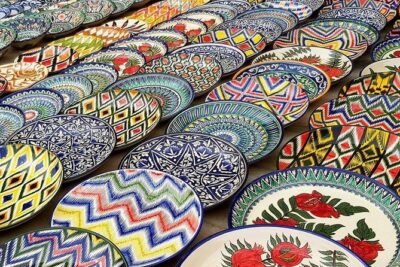
After that, you finish at the Uzbekistan State Museum of Applied Art. This museum is described as one of the best introductions to national applied art, and the setting adds weight because it used to be the home of a Russian merchant. That means you’re learning not only what artisans make, but also how different cultures and eras left physical traces in the city.
This is a smart ending. After markets and monuments, your brain is ready for details. Applied art lets you see technique, pattern, and craft decisions that are easy to overlook when you only do the biggest landmarks.
One more architecture note: the tour also highlights the Romanov Palace as a unique colonial monumental building in Central Asia. If you enjoy unusual architecture, this is one of the stops that tends to feel like a visual reward, especially because it stands out against typical regional expectations.
How the price and 6-hour format add up for value
At $180 per group up to 2 for 6 hours, you’re paying for more than admission-free sightseeing. You’re paying for a professional guide, an A/C vehicle, and hotel pickup and drop-off. That can be great value in a city where getting efficiently from religious sites to squares to metro to markets would otherwise take extra planning.
Also, because it is private, you do not waste time syncing your interests with strangers. If you care most about culture and architecture, a private setup helps you spend more of the limited day on those parts, and less time on waits.
The one cost catch is simple: entry tickets are not included for the monuments. So your final spend depends on what you choose to pay for inside each site. That said, having the guide manage the flow, plus skip the line through a separate entrance, often helps your time stay on track.
Who should book this Tashkent one-day tour
This tour is a strong fit if you:
- Want a first-time Tashkent day that covers religion, Soviet-era memory, modern squares, metro design, and the bazaar all in one go
- Prefer a private group pace instead of squeezing into other schedules
- Like the idea of seeing design, from the metro’s station style to applied arts craft details, rather than only exterior landmarks
- Appreciate a guide who can adjust explanations to your questions, like Nuriddin did for one group in the reviews
It might be less ideal if you:
- Want long unbroken time in one single museum or bazaar
- Have a very strict entry-ticket budget, since tickets are not included
Quick practical tips before you go
- Wear comfortable shoes you can handle on market days.
- Bring a scarf/headscarf so you can enter religious spaces without stress.
- Think of the day as “many chapters,” not one deep essay. The value is in the arc from old city to modern civic center.
- If there’s a specific theme you care about, tell the guide early. The reviews show the itinerary can be adjusted to your requirements.
Should you book this Tashkent one-day tour?
If you want a smart, efficient introduction to Tashkent with real texture, I think it’s worth booking. The tour’s biggest strength is the balance: Hazrati Imam gives you religious and historical depth, Chorsu Bazaar brings daily life and food, and Metro Tashkent adds design culture that feels local rather than staged. Add a guide who actually knows the city well, and the day becomes more than a route through landmarks.
I would book it if you are traveling with a partner or on your own and you want a private, guide-led format for about half a day. Skip it only if you hate markets, hate metro rides, or you want hours in fewer places rather than a wide city overview.
FAQ
How long is the Tashkent One Day Tour?
The tour lasts 6 hours.
What is the meeting and pickup plan?
You can start the trip from your hotel, airport, or railway station, and hotel pickup is included. You should wait in the hotel lobby about 5 minutes before your scheduled pickup time.
Is this a group tour or private?
It is a private group tour.
What’s included in the price?
Included items are a professional guide, an A/C vehicle, and hotel pickup and drop-off.
Are entry tickets included?
No. Entry tickets to the mentioned monuments are not included.
What languages are available for the guide?
The live tour guide is available in English, Spanish, German, French, Russian.
Can I request a different start time?
Yes. The start time can be changed by request of the traveler.
Latest reviews out of Tashkent
- Tashkent Mountain Tour Amirsoy with Transport★ 3.5 · 3 reviews
- Private Intercity Transfer Tashkent – Samarkand – Tashkent★ 3.5 · 3 reviews
- Amirsoy & Chimgan mountain tour from Tashkent★ 5.0 · 3 reviews
- Tashkent: 3-Day Horseback Riding Tour in Chimgan Mountains★ 4.4 · 3 reviews
- Transfer Tashkent Airport / Railway Station – Hotel★ 3.5 · 3 reviews
- Private Tashkent City Tour★ 5.0 · 3 reviews
- Heliocomplex “Institute of the Sun” – Remnants of USSR★ 5.0 · 3 reviews
- Oriental Tastes of Tashkent: A Gastronomic Journey”★ 5.0 · 3 reviews
Tashkent Tours, compared.
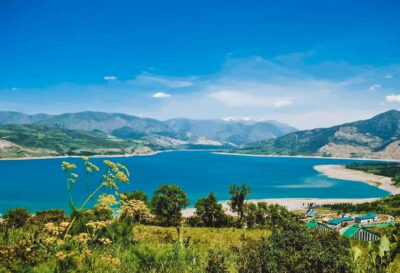
Best of Tashkent Mountains: Amirsoy, Chimgan & Charvak Trip
Read our review →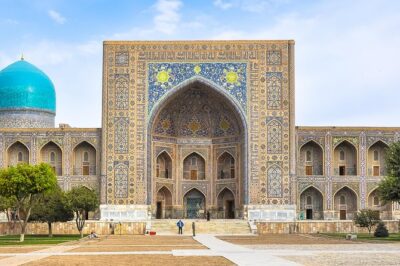
Samarkand One Day Tour – Departure From Tashkent
Read our review →
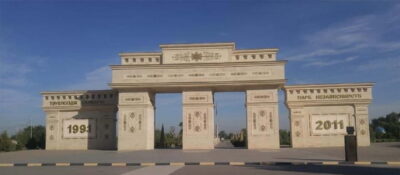
2 Days Tour to Bukhara and Samarkand from Tashkent by train
Read our review →
Browse the lists this tour appears in