
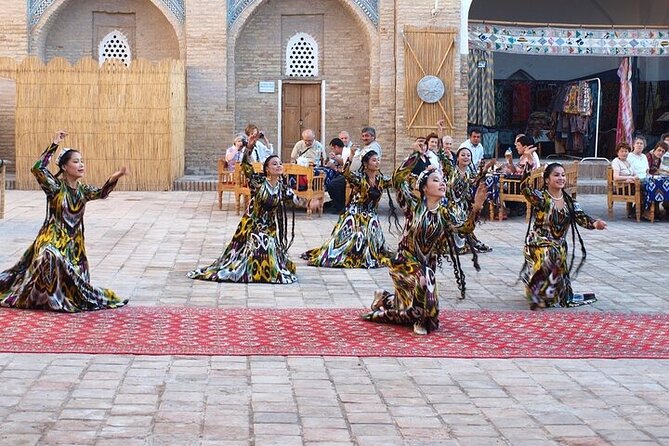
Reviewed · SILK ROAD MULTI-DAY TOURS
Uzbekistan 6 Days Private Tour Khiva-Bukhara-Samarkand by Train
What makes this tour interesting is the train-based rhythm linking Khiva, Bukhara, and Samarkand instead of packing in constant road transfers. You start in Urgench, then you spend real time inside the most atmospheric old-city areas before hopping by rail to the next chapter.
I love two things most. First, Itchan Kala in Khiva is handled like a destination, not a drive-by, with a tight sequence of major monuments across a compact walled core. Second, the pacing in Bukhara gives you standout town-center sights like Lyab-i Hauz and Po-i-Kalyan (with the Kalyan Minaret complex), plus time for market life.
One consideration: the days are monument-heavy and you’ll do a fair amount of walking at each stop. Also, train departure timing can vary, with Khiva to Bukhara listed for either 15:00 or 18:00, so you should stay flexible and keep your day organized.
Key points that make this Khiva-Bukhara-Samarkand by train trip work
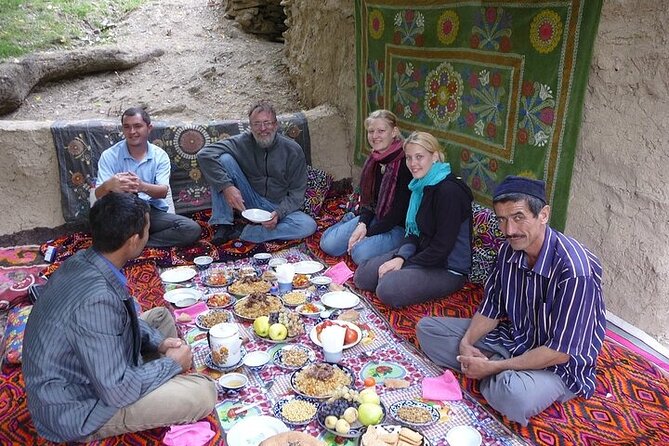
- Private door-to-door meets at Urgench Airport with a driver waiting at the arrival hall exit with your name shield
- Itchan Kala focused sightseeing using the inner-city layout as a natural walking route
- Train tickets included for Khiva to Bukhara and Bukhara to Samarkand, with set departure windows
- Bukhara’s top ensembles covered in one go, including Lyab-i Hauz, Po-i-Kalyan, and the Ark
- Samarkand big hitters in one day like Registan, Gur Emir, Shah-i Zinda, and Ulugh Beg Observatory
- Centrally located 3-star or boutique hotels plus breakfast for 5 mornings, with 24-hour support
Day 1 in Urgench and Khiva: easy arrival, then Itchan Kala’s tight old-city loop
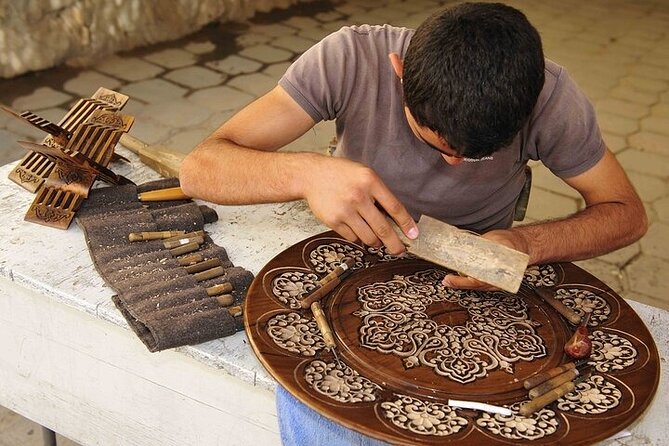
This starts the way good tours should: calm, clear, and low-stress. You land at Urgench Airport, then a driver meets you at the arrival hall exit with a name shield. That’s a small detail, but it matters the first hour, when you’re tired and just want your bearings.
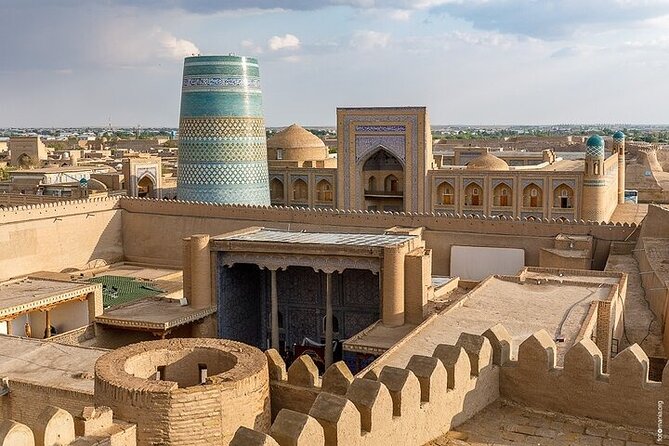
After the airport meet-and-greet, you head into Khiva’s historic core, Itchan Kala, the inner old city. Itchan Kala is only about 650 by 400 meters as an overall rectangle shape, so your sightseeing feels efficient without feeling rushed. The walls can be up to ten meters high, and the whole area reflects the way Central Asian towns were planned for defense, status, and daily life.
Your first big stop in the old city is Itchan Kala itself, where you can appreciate the layout: a walled grid with the khan’s palace area and more everyday quarters separated into distinct zones. If you like history, you’ll enjoy how the physical town plan explains the social map of the past. If you’re more into photos and atmosphere, the compact shape still helps, because you can walk from one highlight to the next without long transfers inside Khiva.
Kalta Minor to Juma Mosque: the Khiva highlights you can actually see in depth
Khiva’s best moments come in layers. You don’t just hit one landmark, you get a chain of monuments that show different roles in the city.
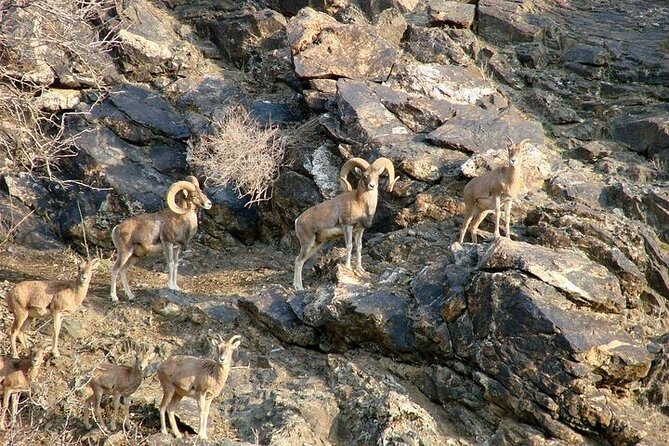
Kalta Minor Minaret is one of those “wait, how is that unfinished?” sights. It’s known for being completely covered with glazed tile and majolica. Commissioned in 1851 by Mohammed Amin Khan to rise over 70 meters, construction stopped at 29 meters, which is why it’s called the Short Minaret. Even without a lecture, the visual effect of “almost complete” helps you understand what ambitious building meant during that era.
Next is Kunya-ark, the citadel at the heart of Ichan Kala. It’s been there since at least the 12th century, with major parts tied to Arang Khan’s period in the late 1600s. It’s the kind of site that helps you picture Khiva as a town-within-a-town, where power and administration sat right inside the city walls.
Then you shift from fortification to spiritual and civic life. The Pakhlavan Makhmud Mausoleum (with its large blue-tiled dome) connects local legend, healing traditions, and religious practice. The mausoleum’s story starts modest and grows into a larger complex with a khanaka and mosque additions.
The Juma Mosque rounds out the “religious heart” feeling. It’s located near the center of Itchan Kala, so it has the right positioning for Friday prayers, when rulers would have been read aloud during sermons. That gives the site a specific, lived-in sense rather than it being just another stone building.
Tash Khauli and Islam Khodja: when Khiva’s details reward patient looking
If you tend to zoom through sightseeing, these last two Khiva stops are where slowing down pays off.
Stone Palace (Tash Khauli), built between 1830 and 1838 by order of Allakuli-Khan, gives you a sense of Khorezm architectural grandeur. It’s a palace scale site in an old-city setting, which changes how you read the city. You’re not only looking at religious and administrative structures, you’re also seeing how elite residences expressed power through design.
The Islam Khodja Complex adds another layer. It includes a madrasa and minaret southeast of the main east-west street in Itchan Kala. The complex is tied to Islam Khodja, the grand vizier and first cousin of Muhammad Rahmi Bahadur II. If you like understanding who these people were, this kind of name connection helps turn architecture into a story.
Day 1 is long enough to feel satisfying, and most stops come with admission tickets included. That matters, because you avoid that “ticket hunt” feeling that can break momentum in smaller markets.
Day 2 in Khiva: a second Itchan Kala chance before the train to Bukhara
Day 2 gives you more time in Itchan Kala, which is smart. In Khiva, one pass rarely feels enough, because the details are everywhere: tile patterns, doorways, courtyard walls, and the way streets compress the city’s scale.
You get about four hours to “discover more magnificent monuments in this open sky museum medieval city.” Practically, that means you can revisit the areas you liked on Day 1, or just wander a bit. No one forces a single route, but you still have a structure behind the scenes.
Then it’s time to transition to the next chapter. You transfer to the Khiva railway station for the train to Bukhara departing either 15:00 or 18:00, depending on the day of travel. Having set departure windows is useful, because it keeps the day from becoming a guessing game.
Once you arrive in Bukhara, it’s a short transfer from the train station to your hotel. You’re not expected to figure out local logistics after the train. That’s part of the value here: the trip stays coherent.
Bukhara on Day 3: Lyab-i Hauz, Po-i-Kalyan, the Ark, and old bazaar life
Bukhara is where the monuments start feeling like a whole city stage. Day 3 is packed, but it’s also logically grouped: squares, mosques, major civic structures, and then market connections.
Your first stop is Lyab-i Hauz, a 16th to 17th century ensemble with the Nodir divan Begi Medressah, a water reservoir, and a caravanserai component. It’s still one of Bukhara’s major squares. The best thing about this stop is that it doesn’t feel like dead museum space. It’s described as tranquil, grand, and a common rest point, so you can actually breathe for a moment in the middle of a sightseeing day.
Next comes the Great Minaret of the Kalon, which is part of the Kalyan Minaret complex. This is the centerpiece at Po-i-Kalyan square, standing around 45.6 meters. The site is linked to the Kara-khanid era and predates the Mongol conquests, and it even has a famous legend tied to Genghis Khan refusing to order its destruction. Even if you only catch the legend lightly, the scale of the minaret does the rest.
Ark of Bukhara follows, and this is one of those “town-within-a-town” ideas that makes you rethink the word fortress. The Ark is described as Bukhara’s oldest structure, home to rulers for over a millennium. You’re not just looking at one era, you’re looking at the medieval core of the city.
After that, you get two mosque stops that add architectural variety. Bolo Hauz Mosque sits opposite the Ark in a kosh arrangement, with the pool and the name meaning above the pool. Then Maghak-i Attari Mosque is noted as the oldest surviving mosque in Central Asia and also connected to an older temple use story. That kind of layered continuity helps you understand why Bukhara feels unusually deep.
To finish the day, you visit the Trading Domes, a medieval bazaar with artisan workshops. This is valuable because it reminds you that these cities were designed for daily commerce, not just for rulers and prayers.
Day 4 Bukhara rest time, then the Kagan station train to Samarkand
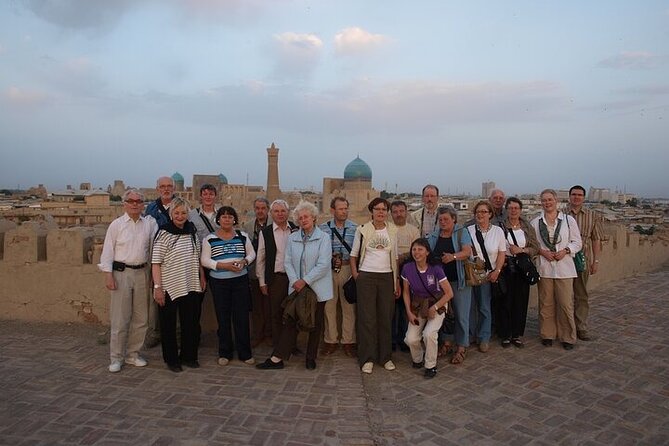
Day 4 starts with intentional breathing room. You have free time at leisure in Bukhara for about four hours, which is exactly what you need after a packed Day 3. You can use this for a calmer monument loop, a slower market walk, or just taking time to absorb the city’s pace.
Then comes the rail transfer. You move to Kagan railway station, about 15 km away, for the train to Samarkand, subject to availability. Since availability can shift, this is one point where flexibility helps. The good news is that the transfer is included in the plan, so you’re not left figuring out timing alone.
Once you arrive in Samarkand, it’s a hotel transfer, short and direct.
Samarkand Day 5: Registan, Gur Emir, Shah-i Zinda, and Ulugh Beg’s sextant
This is the day most people picture when they think of Samarkand. You get a long, impressive set of sights, but the schedule still flows city-center to sacred complexes to science.
You start at Gur Emir Mausoleum, tied to Tamerlane and described as his tomb in the beautifully reconstructed Gur-Emir Mausoleum. You’ll also hear about the largest piece of jade (greenstone) in the world. That kind of detail makes the site feel specific, not generic.
Then it’s straight to Registan, the city square that became the stage after life in Afrosiab stopped. It’s surrounded by three medreses: Ulugbek, Sherdor, and Tillokori. The fact that it was reconstructed multiple times is part of what makes it feel alive across centuries.
Next, Bibi Khanym Mosque. It was built between 1399 and 1404, named for the wife of Temur, and tied to a legendary story involving the order after combat of Delhi. There’s also the note that the minaret was supposed to be the tallest. Even when you don’t chase every historical thread, you’ll appreciate the scale and ambition.
You break from monument formality at Siab Bazaar, which is still described as impressive, with produce and handicrafts. This is one of your easiest ways to connect the UNESCO-level sights to everyday life.
Then comes Shah-i Zinda, the ensemble of tombs on the southeastern mound of Afrosiab. The description includes 44 tombs within more than 20 mausoleums. It’s also tied to the Prophet Muhammad’s first cousin, who is said to resemble the Prophet. This stop can feel intensely atmospheric, mainly because the complex is designed around sacred procession and repeated architecture.
Finally, you visit Ulugh Beg Observatory. Only foundations remain, but it still feels extraordinary. Ulugh Beg is described as an astronomer, scientist, and architect, and the tour notes that part of a huge sextant survives, with the lowest part in a deep trench around 11 km. Even if you’re not a science person, this kind of measurement story makes the city’s intellectual legacy tangible.
Day 6 flight out: a simple send-off after the big three cities
Day 6 is transfer to Samarkand Airport and fly home. It’s only about 30 minutes listed for the airport transfer, which means you’re not stuck in a full extra sightseeing day at the end of an already intense week.
If you like a clean ending, this is a good structure. It keeps the trip from dragging on your last day when energy usually fades.
Hotels, guides, and transport: what’s included and why it reduces stress
You’re staying 5 nights in the center of each city area, in highly rated 3-star or boutique hotels. That location focus is practical. It helps you walk or move quickly to the sights without long cross-city commutes.
Transport is air-conditioned, and you have a licensed, experienced local guide in each city. You also get 24-hour customer service, plus pickup offered at arrival. The private setup means your schedule is built around your group, not around random bus stops.
You’ll also use a mobile ticket, and group discounts can apply. Even if you’re traveling solo, these small operational choices often translate into less confusion on the ground.
Price and value for $800 per person, plus the single-room supplement
At $800 per person for 6 days, the value mostly comes from what you do not have to arrange yourself: central hotels, trained guides, air-conditioned transport, entrance tickets to the museums, and the key rail legs between cities. Add in breakfast for 5 mornings, and it starts to look less like a sightseeing package and more like a logistics package.
The one obvious add-on is the single room supplement of $25 per single room per night. If you plan to travel solo and want your own room, that’s a cost to factor in early.
There are also small on-site costs to plan for, which I cover next, because they’re easy to forget until you reach a gate.
Photo and video charges, tickets, and tips you should budget for
Two lines in the plan are the ones that can surprise you.
First, photo and video charges for museums are not included, and you pay cash at the entrance, listed around $1 to $2 per museum. If you care about filming inside, budget a little extra for that last step.
Second, tips for guides and drivers are not included but are appreciated. This is common in private-guided travel, and it makes sense because you’re getting licensed guides and dedicated transport.
Can you customize this trip, like adding Tashkent?
The operator says the tour is customizable at no or small charge, including detour options like desert or mountain variations. And the trip has a setup that can support adding other cities, with an example being adding Tashkent while still keeping city-to-city connections well planned.
If you want a longer arc, this flexibility is worth paying attention to. A route built around trains can make expansion easier, because you’re not rewriting the entire transportation plan from scratch.
Should you book this Khiva-Bukhara-Samarkand train tour?
Book it if you want a structured route that hits the core monuments in Khiva, Bukhara, and Samarkand without spending your time on ticket wrangling or city logistics. The tour is especially appealing if you like guided context, because it pairs the big stops like Registan and Gur Emir with the supporting ensemble buildings that explain the city’s organization.
Skip or reconsider if you dislike busy sightseeing days. This trip strings major sites together across multiple days, and you’ll want to be comfortable walking through historic centers. Also, keep in mind that train departure timing can vary from Khiva to Bukhara, so you should not plan any tight personal appointments around that window.
FAQ
What is the tour price and duration?
The Uzbekistan 6 Days Private Tour Khiva-Bukhara-Samarkand by Train is $800.00 per person and lasts about 6 days.
Are train tickets included?
Yes. Train tickets Khiva to Bukhara and Bukhara to Samarkand are included.
What time does the train leave from Khiva to Bukhara?
The train from Khiva to Bukhara departs at either 15:00 or 18:00 depending on the day of travel.
What about airport pickup?
You are met at Urgench Airport at the arrival hall exit with a name shield, with pickup included.
Do hotels and breakfast come with the price?
Yes. The tour includes 5 nights in center located 3-star or boutique hotels and breakfast for 5 mornings.
Are there any extra costs I should plan for?
Single room supplement is $25 per single room per night. Also, photo and video charges for museums are paid cash at the entrance (about $1 to $2 per museum). Tips for guides and the driver are also appreciated but not included.
More Train Experiences in Urgench
- Tashkent Airport & Train Station Pick Up & Drop Off
★ 4.5 · 50 reviews - Day Tour to Samarkand from Tashkent by train.
★ 5.0 · 34 reviews - Uzbekistan 3 Day Private Tour Tashkent-Bukhara-Samarkand Bullet Train
★ 4.5 · 23 reviews - Afrosiyob high speed train tickets – Guaranteed Pass
★ 3.5 · 18 reviews
Longer Silk Road Routes
- 2 Days Tour to Bukhara and Samarkand from Tashkent by train
★ 5.0 · 53 reviews - Samarkand: Great Silk Road Ancient Sites and Monuments Tour
★ 5.0 · 45 reviews - Uzbekistan 6 days private tour Tas-Khiva-Buk-Sam-Tas
★ 5.0 · 45 reviews - Uzbekistan 8 Days Private Tour Tashkent-Urgench-Bukhara-Samarkand-Tashkent
★ 4.5 · 38 reviews
Silk Road Multi-Day Tours, compared.
2 Days Tour to Bukhara and Samarkand from Tashkent by train
Read our review →
Samarkand Ancient Silk Road City Tour w/ Pickup & Lunch Option
Read our review →
Kunya Urgench-Darvaz-Ashgabat Tour from Uzb 2 Days/ 2 Nights
Read our review →
2 – Days Guided Tour of Samarkand and Bukhara from Tashkent
Read our review →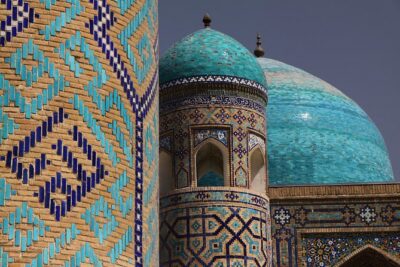
Browse the lists this tour appears in