
If you like seeing a country’s big moments without spending half your trip in airports and ticket lines, this Uzbekistan plan is built for you. In eight days you cover the old-cities core of Khiva, Bukhara, and Samarkand, then circle back through Tashkent. It is a focused run through the Silk Road world, with guides doing the heavy lifting.
I really like that you travel with a private group and licensed guides in each city, so you are not stuck with guesswork. I also love the pace of the “great sights first” approach, plus real free time, so you can rest or wander at your own rhythm. In my view, the only catch is the tight schedule, including a domestic flight into Urgench and high-speed train legs, so you should pack light and move fast between cities.
What makes this private tour work so well
- Private group with city-by-city licensed guides, including guides such as Amir in Tashkent, Tulkin in Khiva, Behrus in Bukhara, Jusra in Samarkand, and Nusrat in Tashkent.
- Entrance tickets are included for the main sights, so you avoid the constant pay-at-the-door rhythm.
- Old-city architecture is the star, from Khiva’s Itchan Kala to Samarkand’s Registan and Bibi Khanym.
- Trains do the long legs, including Khiva to Bukhara and Bukhara to Samarkand to Tashkent (subject to availability for the high-speed segment).
- You get structured sightseeing plus downtime, so the days do not feel like a nonstop march.
Is $975 a smart value for an 8-day private Uzbekistan trip?
At $975 per person, the value depends on what you hate doing on trips: booking logistics, hunting tickets, or waiting for your group to catch up. This tour includes transport by air-conditioned vehicle, hotel stays (6 nights), breakfast (6), and entrance tickets to the included sights and museums. It also includes the train rides connecting Khiva to Bukhara and Bukhara to Samarkand to Tashkent.
That matters, because Uzbekistan can involve multiple transit modes in a short time. If you priced this yourself, the train seats, guided entrances, and central hotels would add up quickly. The tour also includes visa support if needed and a 24-hour customer service line, which is practical peace of mind when your schedule is moving.
Now the “watch-outs” part. Tips for guides and drivers are not included, and there is a note about a photo museum charge you pay cash at the entrance (listed as $1-2 per site). Also, the domestic airline ticket Tashkent to Urgench starts at $50, so you’ll want to budget for that leg separately.
Longer Silk Road routes to compare:
- 2 Days Tour to Bukhara and Samarkand from Tashkent by train
★ 5.0 · 53 reviews - Uzbekistan 6 days private tour Tas-Khiva-Buk-Sam-Tas
★ 5.0 · 45 reviews - From Tashkent: Uzbekistan Private 6-Day Tour
★ 5.0 · 6 reviews
Tashkent arrival and the first day of contrasts (Metro, Hazrati Imam, Amir Temur Square)
You start in Tashkent with a meet-and-transfer setup that keeps things simple after you land. Your driver meets you at the arrival hall exit with a name shield, then you head straight to your centrally located hotel for the night.
On your first full day, the tour balances old and new. You visit the Ensemble Hazrati Imam in the old city area, known by many as Khast-Imam. This is one of those stops where the setting does a lot of work. You are in a religious complex area with multiple landmarks, so you get a sense of how Tashkent’s spiritual identity sits inside everyday city life.
From there you move to Amir Temur Square, a lush, green central space with fountains and a statue of Tamerlane on horseback. It is not just a “look but don’t touch” square. It helps you reset your head after temple and craft streets, because the architecture shifts and the mood opens up.
Then comes the city’s showcase of engineering and style: the State Museum of History of Uzbekistan, plus the Tashkent Metro. The metro is worth your time because it is not a plain commuter tunnel. It was Central Asia’s first underground, opened in 1977, and stations are designed with distinct architectural appearances and lots of stonework detail.
A small practical point: the Alisher Navoiy Theater stop is not included on the entrance fee list, so you may need to account for that if you want a full look at the building. Also, not all museums and monuments operate on identical schedules, so it is smart to wear comfortable shoes and be ready for some walking inside complexes.
Khiva’s Itchan Kala: walking into the old city walls
Your next big shift is into Khiva, and the experience is not subtle. Khiva is famous for the sense that you are stepping into a living museum, and the best way to access it is Itchan Kala, the inner walled city.
The tour keeps you focused on the core monuments: you spend time in Itchan Kala, then build out the story with signature architecture. You will see Kalta Minor Minaret, famous for its glazed tile and majolica decoration. It is also known for being commissioned in the 1850s and for its famous incompleteness, which is one of those details that makes the site feel human, not just monumental.
Next is Kunya-ark, a fortified citadel area rooted in early foundations (the description notes parts as early as the 12th century). This helps you understand how power worked here, because it was not only about religion and markets. It was about control of the city and defense.
Then you move through a set of religious and cultural landmarks that show Khiva’s variety:
- Pakhlavan Makhmud Mausoleum, tied to a local poet and philosopher associated with heroic strength and healing.
- Juma Mosque, with 64 hand-carved columns of different designs. This is one of the best “look up” moments on the route.
- Islam Khodja Complex, including a madrasa and minaret in Itchan Kala’s east-side story.
- Stone Palace (Tash Khauli), built in the 1830s by order of Allakuli Khan, which gives you a window into how rulers displayed wealth through architecture.
One of the more modern-feeling stops is the Khiva Silk Workshop, a community-run workshop run by local women for designing and hand weaving of famous Khiva silk carpets. This is not a hard sell stop. If you like crafts, you’ll probably enjoy watching the process and seeing how the designs connect to the city’s identity.
The drawback, again, is that Khiva days can feel busy because the sites are close but the walking adds up. Bring sun protection and plan for uneven surfaces around old-city lanes.
Bukhara: Silk Road trading spirit at Lyab-i Hauz, the Ark, and Poi Kalyan
Bukhara is the kind of city where your feet do most of the storytelling. The old streets connect the monuments like chapters, and the tour gives you the main reading list without making you spend your whole day reading signs.
Your Bukhara highlights include Lyab-i Hauz, built in the 16th to 17th centuries and still one of Bukhara’s major squares. I like this stop because it gives you a breather. It is a natural rest point, and it helps you switch from “sightseeing mode” to “people-watching mode” without feeling like you abandoned the tour.
Then you hit Poi Kalyan Mosque and its famous Kalyan Minaret, with the description noting it as the last surviving fragment of the Kara-khanid era mosque built in 1127. At 45.6 meters, it is also a strong visual anchor for the whole city. Stops like this matter because you get a reference point for the rest of your day, even when you’re wandering later.
You also visit Ark of Bukhara, described as a royal town-within-a-town and Bukhara’s oldest structure, with rulers living there for over a millennium. This is one of those stops where time compression is real. You understand why Bukhara kept being important long after smaller towns disappeared. It was administration, wealth, and geography all at once.
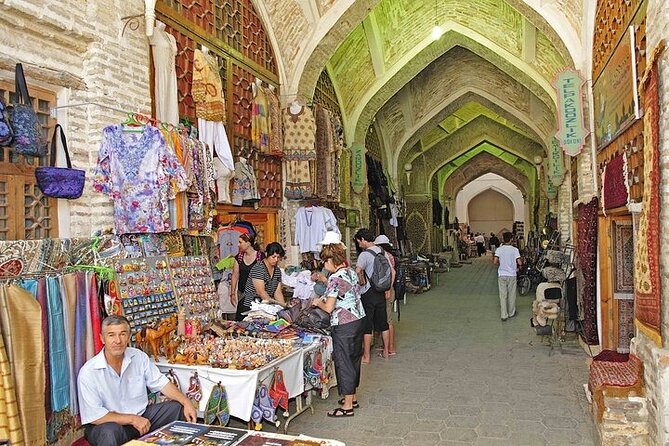
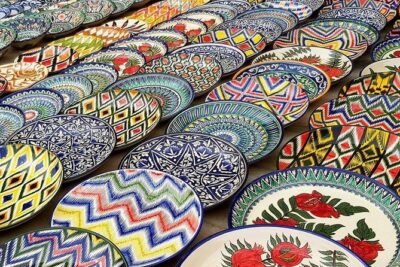
The tour also includes Trading Domes, a colorful old bazaar area with artisan workshops. If you like handmade items and you enjoy seeing work in progress, this part is for you. You’ll get that Silk Road marketplace feel, plus a sense of how craft skills are still part of local life.
For the architecture nerds in the group, Maghak-i Attari Mosque is a standout. The description says it once served as a Buddha and Zoroastrian temple before becoming a mosque. That kind of layered meaning is exactly why people love this region. You are not just looking at a building, you are looking at how belief systems changed in the same footprint over time.
And across from the Ark is Bolo Hauz Mosque, linked in a kosh arrangement with the Ark. The name means above the pool, tied to an octagonal hauz. It is a good reminder that the design is not only about big domes. Water features and layout matter here.
One optional add-on is mentioned for a half-day Bukhara countryside style extension, including the Summer Residence of Emir, Bakhautdin Naqsband Mausoleum, and Samani Mausoleum. If you want something calmer and less packed with city crowds, that kind of option can be a nice counterbalance.
More of Tashkent worth pencilling in
- Best of Tashkent Mountains: Amirsoy, Chimgan & Charvak Trip
★ 4.8 · 567 reviews - Samarkand One Day Tour – Departure From Tashkent
★ 5.0 · 313 reviews - Samarkand One-Day Tour Departure from Tashkent
★ 4.7 · 171 reviews - Tashkent: Amirsoy Resort, Chimgan Mountain and Charvak Lake
★ 4.8 · 170 reviews
Getting from Bukhara to Samarkand by train without losing the day
This is where the itinerary uses its most practical trick: rail. You move by train from Khiva to Bukhara, then later from Bukhara to Samarkand using a high-speed train segment, subject to availability. After arrival in Samarkand, you transfer to the hotel and settle in.
The important part for you is timing. The description indicates an afternoon transfer to Kagan train station, about 15 kilometers away, and then the high-speed ride to Samarkand, then hotel check-in. That means your day is structured around the rail schedule rather than relying on slow road travel.
If you hate rushing, this is not a relaxed tour in the sense of long leisurely travel days. But it is a smoother travel day than road-only routing. You get to cover serious distance while the guide handles the logistics.
Samarkand’s greatest hits: Registan, Gur Emir, Shah-i Zinda, and Bibi Khanym
Samarkand is the city that people remember, because it’s visually extreme. The architecture feels grand, and the tour makes sure you see the heavyweights.
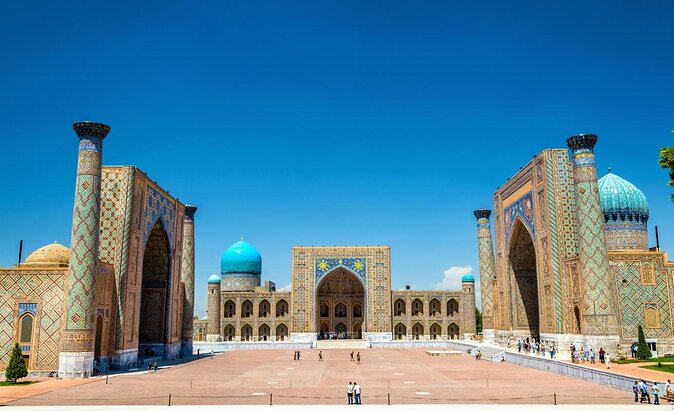
The first big set piece is the Registan. The description notes that it became the city square when life in Afrosiab stopped, and that it was reconstructed several times. Today it is surrounded by three medreses: Ulugbek, Sherdor, and Tillokori. Even if you only have time for a quick look at each façade, you will see why this is considered the center of Samarkand’s public story.
Next is Gur Emir Mausoleum, tied to Tamerlane and the legacy described in the tour notes, including the mausoleum being dated to 1404-1405. This is a powerful stop because it mixes political history and funerary art. You get the sense that the city was built to remember.
Then you visit Shah-i Zinda, an ensemble of tombs and mausoleums on the southeastern mound of Afrosiab. The tour description states the site has 44 tombs in more than 20 mausoleums. That matters because it sets expectations: this is a walk through a stacked chain of spaces, not a single room.
After that is Bibi Khanym Mosque, named for Temur’s wife and dated in the notes to 1399-1404. It’s one of the best places to notice scale. You see how big public religious architecture was meant to be, including the way it projects authority.
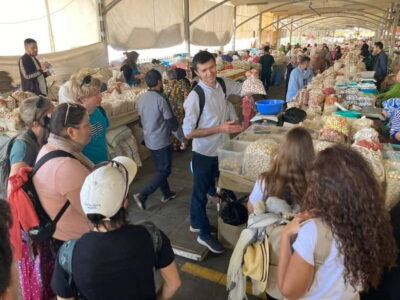
You also stop at Siab Bazaar. Unlike the monument blocks, this is about daily life. The tour notes point out the bazaar’s produce and handicrafts as evidence of local skill and natural wealth. It helps to break up your day so you do not go from one ceremonial space to another, nonstop.
There is also an optional half-day in Samarkand that includes Ulugbek Observatory, Afrosiyob Museum, and Hodji Danior Mausoleum. If you want the science and city history angle beyond the main square and mausoleums, this can be a good fit.
Back to Tashkent: a fast return that still lets you end well
Your final transit is a high-speed train from Samarkand back to Tashkent, subject to availability. The tour schedules this for late afternoon, then you have time to get ready for your departure.
This is where I recommend you keep your last day simple. You are coming off a day packed with major architecture, so plan one calm meal, and save your energy for the airport. The tour includes the transfer to Tashkent International airport for your flight departure.
Hotels, guides, and the small details that make the trip feel easy
This tour uses centrally located 3-4 star or boutique hotels for 6 nights in twin rooms. Breakfast is included for those 6 days, which helps on a route where sightseeing starts early. You also get an air-conditioned vehicle for transfers, which is a real quality-of-life upgrade when you’re doing multiple cities back to back.
The best part, from the names of guides I saw shared, is how the guiding feels personalized. Amir in Tashkent, Tulkin in Khiva, Behrus in Bukhara, Jusra in Samarkand, and Nusrat in Tashkent are each associated with a well-run experience. In practical terms, that means you spend less time figuring out what is worth your attention, and more time understanding what you are seeing.
Photo note: the itinerary calls out a possible photo museum charge paid cash at entrance ($1-2/site). If you care about photos, keep a small amount of cash just for that kind of fee.
What I would pack for this route
- Comfortable walking shoes for old-city lanes and mosque courtyards
- Sun protection and water, since many stops are outdoors or have outdoor viewing
- A small amount of cash for the photo museum fee mentioned
- Light layers, because you will spend time moving between indoor and outdoor spaces
Should you book this Khiva, Bukhara, and Samarkand private tour?
Book it if you want an organized, private run through Uzbekistan with major Silk Road cities packed into eight days. The included entrances, central hotels, train legs, and breakfast remove the biggest stress points, so you can focus on the sights.
Do not book if you need a slow travel pace. The itinerary moves fast, and you will be switching between city centers, rail stations, and a domestic flight into Urgench. If that sounds exhausting, consider a longer trip with fewer transfers.
If you are traveling as a couple or small group and you like architecture, markets, and a guide who can explain what you are looking at, this is a strong way to see the highlights without wasting time.
FAQ
How long is the Uzbekistan private tour?
It is listed as 8 days (approx.).
What is the price per person?
The price is $975.00 per person.
What is the start time?
The tour start time is 8:00 am.
Is this a private tour?
Yes. It is described as a private tour/activity, with only your group participating.
What is included in the tour price?
Included items are air-conditioned vehicle, all fees and taxes, entrance tickets to sights & museum, 6 nights twin rooms in high rated centrally located 3-4 star or boutique hotels, experienced licensed guides in each city, train Khiva-Bukhara, high speed train Bukhara-Samarkand-Tashkent, visa support if needed, 24-hour customer service, and breakfast (6).
What is not included?
Not included are tips for guides and drivers, photo museum charge (paid cash at entrance, $1-2/site), a single room supplement of $20 per single room/night, and the domestic airline ticket Tashkent-Urgench starting at $50.
Which train rides are included?
The tour includes the train Khiva-Bukhara and the high speed train Bukhara-Samarkand-Tashkent (subject to availability for the high-speed train segment).
Do you get pickup?
Pickup is offered.
Do I need a visa?
The tour notes that you should check if you need a visa to enter Uzbekistan.
Is free cancellation available?
Yes, there is free cancellation. You can cancel up to 24 hours in advance of the experience start time for a full refund.
Latest reviews out of Tashkent
- Tashkent Mountain Tour Amirsoy with Transport★ 3.5 · 3 reviews
- Private Intercity Transfer Tashkent – Samarkand – Tashkent★ 3.5 · 3 reviews
- Amirsoy & Chimgan mountain tour from Tashkent★ 5.0 · 3 reviews
- Tashkent: 3-Day Horseback Riding Tour in Chimgan Mountains★ 4.4 · 3 reviews
- Transfer Tashkent Airport / Railway Station – Hotel★ 3.5 · 3 reviews
- Private Tashkent City Tour★ 5.0 · 3 reviews
- Heliocomplex “Institute of the Sun” – Remnants of USSR★ 5.0 · 3 reviews
- Oriental Tastes of Tashkent: A Gastronomic Journey”★ 5.0 · 3 reviews
Tashkent Tours, compared.
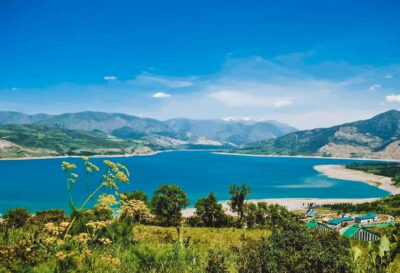
Best of Tashkent Mountains: Amirsoy, Chimgan & Charvak Trip
Read our review →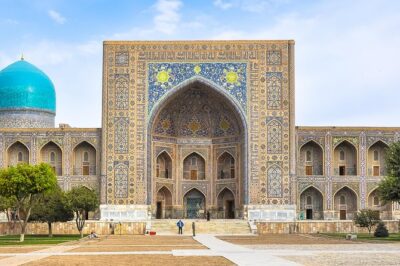
Samarkand One Day Tour – Departure From Tashkent
Read our review →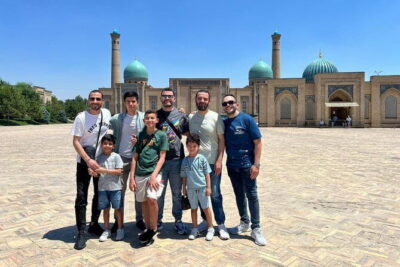
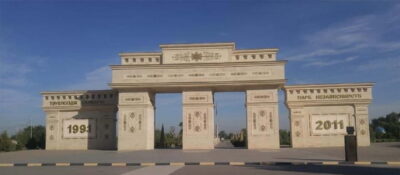
2 Days Tour to Bukhara and Samarkand from Tashkent by train
Read our review →
Browse the lists this tour appears in