
Reviewed · TASHKENT TOURS
Tashkent-Samarkand-Bukhara tour-3nights/4 days
This 4-day Tashkent to Samarkand to Bukhara circuit is interesting because you get a fast, guided loop through the Central Asian core of the Silk Road, with Afrasiyab high-speed trains doing the heavy lifting. It also keeps your days structured, so you spend less time figuring out transport and more time looking at the buildings, tiles, and markets that shaped the region.
I especially like that the program mixes major monuments with everyday places like Chorsu Bazaar. I also like that the team is described as friendly and thoughtful, which matters a lot when your schedule includes early departures. One possible drawback is the pace: one day starts with breakfast before dawn to catch the train.
You’re not stuck with set meals, either. Breakfast is included in your three cities, and your guide can point you toward Uzbek food worth seeking out, but lunches and dinners are on you. If you’re someone who wants long, slow museum time or zero early mornings, you’ll want to consider whether this schedule feels right.
Key highlights you’ll feel right away
- Private pacing: it’s just your group, not a big shared scramble
- Afrasiyab rail: Tashkent to Bukhara and Samarkand legs are built in
- Monuments with context: mosques, madrasahs, and mausoleums are paired with Silk Road explanations
- Old-city texture: Chorsu Bazaar adds the human scale that pure sightseeing can miss
- Carpet and craft stops: you get decorative arts context, not only big architecture shots
- Rail timing built into your day: early starts and evening arrivals keep travel efficient
A 4-Day Silk Road Sprint Through Tashkent, Bukhara, and Samarkand
If you want Uzbekistan highlights without the stress of planning every transfer, this kind of private, guided rail-and-car route is a very practical way to do it. The big idea is simple: you move through three cities that are central to the Silk Road story, and you let a guide handle the connections, entrance tickets, and city logistics.
What makes it feel different from a basic sightseeing loop is the pairing of places that show different layers of life. You start in Tashkent’s older religious quarter, then you hit a major bazaar where trade culture is still visible. After that, you switch into the monument-heavy side of the story in Bukhara and Samarkand, but you don’t only do photo stops. You get time at the mosques, the madrasahs, and the citadel that shaped how cities functioned.
Yes, it’s a short trip for three major cities. That’s also the point. You trade a bit of lingering time for an efficient route that still gives you real time inside the sites.
Price and Value: What You’re Really Buying for $1,200 Per Person
At $1,200 per person, you should judge value by what’s bundled, not by the sticker price. Here, the package includes twin-basis accommodation and breakfast in Tashkent, Samarkand, and Bukhara. It also includes all transfers by comfortable car as per the itinerary, plus Afrasiyab high-speed train economy tickets for the main legs between cities.
Even more important, the package covers entrance tickets at the stops where admission is listed as included. That matters in Uzbekistan because big-ticket sites can add up fast if you’re doing them one by one.
What you don’t get is also clear, and it affects your day-to-day planning:
- Lunches and dinners are not included
- Tips are not included
- Photography and video fees may apply at sites
- International flights and personal expenses are not included
My practical take: this is a good fit if you would otherwise spend money on a guide, private transport, and train tickets anyway. If you’re the type who wants total freedom to wander without any structure, you might feel boxed in by a fixed schedule. But if you want “less friction, more sites,” this pricing model is usually fair.
More of Tashkent worth pencilling in
- Hiking tour to Hayat, Uhum and Asraf villages – 4 days
★ 5.0 · 12 reviews
Day 1 in Tashkent: Hazrati Imam, Chorsu Bazaar, and Applied Arts
Your day starts in Tashkent, with a start time of 7:00 am from the meeting point at Hotel Uzbekistan. Even before you get to the monuments, you feel the benefit of having pickup offered and a clear departure plan.
Ensemble Hazrati Imam: Tashkent’s religious heart
The first stop is the Ensemble Hazrati Imam, described as the cultic architectural complex and religious core of old Tashkent. You visit Barak Khan madrasah, built in the 16th century, and the Kaffal Shashi maus is part of what makes this area feel like a spiritual center rather than just an old building cluster.
What I like about starting here is that it sets a tone. You’re not just collecting landmarks. You’re learning what religious and educational architecture signaled about status, scholarship, and community life along the Silk Road networks.
Chorsu Bazaar: trade you can still see
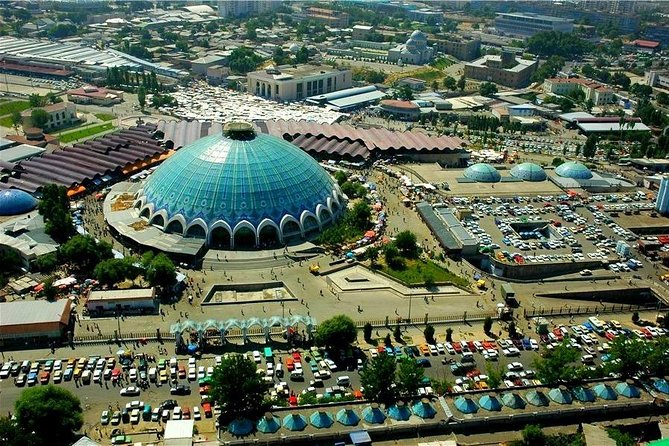
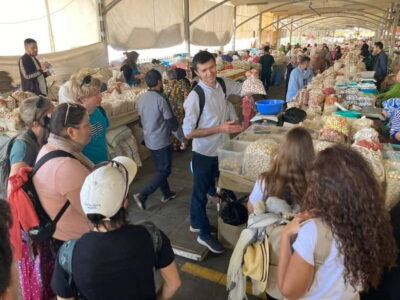
Then you go to Chorsu Bazaar, one of the largest bazaars in Uzbekistan and Central Asia, located in the old city (Eski Shahar). It has Middle Ages importance in how it functioned for trade, and you get 40 minutes here with admission not required.
This is one of those stops that changes how the trip feels. Architecture can be grand and distant. A bazaar brings the story back to real people and everyday commerce. If you want to buy small gifts or snacks, this is the most natural place to do it, and your guide can explain what’s local and what’s touristy.
An easier afternoon once Tashkent is done:
- Best of Tashkent Mountains: Amirsoy, Chimgan & Charvak Trip
★ 4.8 · 567 reviews - Samarkand One Day Tour – Departure From Tashkent
★ 5.0 · 313 reviews - Samarkand One-Day Tour Departure from Tashkent
★ 4.7 · 171 reviews - Tashkent: Amirsoy Resort, Chimgan Mountain and Charvak Lake
★ 4.8 · 170 reviews
Kukeldash (Kokaldash) Madrasah: big education in big scale
Next comes Kokaldash Madrasah, also spelled Kukeldash. It’s identified as the largest of the 23 madrasahs of old Tashkent, built in 1569. The guide framework here helps you understand why madrasahs weren’t only schools. They were also institutions tied to power and patronage.
You get a shorter visit window here, about 20 minutes, so come ready to look closely at details rather than expecting a long, slow education in stone.
Uzbekistan State Museum of Applied Art: craft context, not just souvenirs
You end the sightseeing run with the Uzbekistan State Museum of Applied Art. It was founded in 1937, originally based on a temporary handicrafts display, and the collection is described as holding over 4,000 exhibits covering the history of decorative art, including wood carving.
This museum is a smart choice for a Silk Road route because crafts are part of the exchange story. If you love seeing how decorative techniques travel and evolve, this stop gives you a reason to notice tiles, patterns, and objects later in the trip.
Amir Temur Square: modern Tashkent with a historical anchor
Finally, you spend time around Amir Temur Square in the city center. It’s noted as a favorite spot for locals and visitors, and it hosts major state events and parades on national holidays. It’s not a museum, but it helps you understand how Tashkent’s identity mixes modern civic spaces with the region’s historical references.
You overnight in Tashkent.
Day 2: The 3h 50m Afrasiyab Ride to Bukhara, Then Sitorai Mokhi-Khosa
Day 2 is built around an efficient jump. You have breakfast at your hotel’s restaurant from 05:30 to 06:00, then check out and transfer at 06:30. You board the Afrasiyab high-speed train to Bukhara, with the trip described as 600 km, about 3 hours 50 minutes, arriving around 11:15.
This is the kind of schedule you’ll either love or simply tolerate, depending on your energy level. I like it because it buys you more time in the destination cities, instead of burning a full day on slow transit.
Sitorai-Mokhi-Khosa: palace time without rushing
Upon arrival you visit Sitorai Mokhi-Khosa, called the Palace of Moon-like Stars, with about 3 hours allocated. You’re not just looking at rooms. The way these palatial residences functioned helps explain how rulers and elites organized power, luxury, and cultural display.
A practical tip: keep an eye on the light and your camera settings. In palace settings, details often matter more than wide shots, and the lighting changes your perception quickly.
After this stop, you’re in Bukhara for the next days of monument-heavy sightseeing.
Day 3 in Bukhara: Magoki Attari, the Kalon Minaret, and the Ark
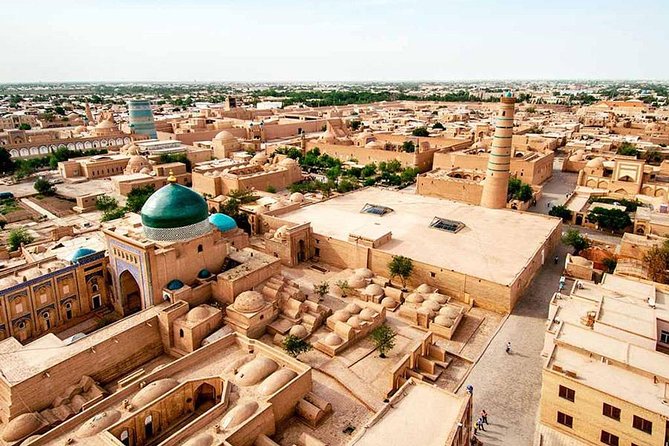
Bukhara is where the trip really leans into major Silk Road architecture. The atmosphere changes, and you start feeling how these cities were designed to impress, teach, and control movement.
Lyab-i Hauz Ensemble: a calm break inside the old city
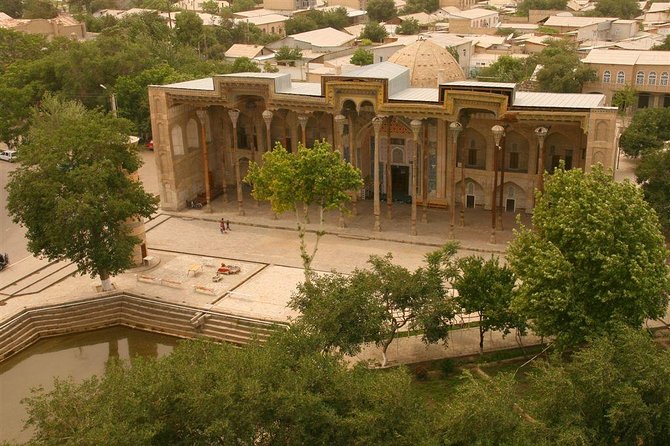
You start with Lyab-i Hauz Ensemble, described as one of the most popular Bukhara tourist attractions. It’s known for its grandness, tranquility, and age, and it’s located in the southeast shakhristan (the old city quarter).
This stop matters because it gives you a breather between denser sites. When you’re walking between monuments, it’s easy to feel like every stop blends together. A calm courtyard and water-area setting helps you reset and notice the architecture again.
Magoki Attari Mosque and carpet museum: below-ground perspective
Next is the Magoki Attori Mosque and carpet museum. The mosque is described as a medieval column-domed structure from the 12th to 16th centuries, and the key detail is that it sits more than 4.5 meters below ground level.
That below-ground placement is a great example of how layered the area is. Cities built, rebuilt, and thickened over time. You can feel that idea in your body, not just your brain.
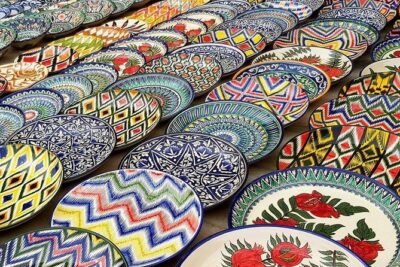
You also get a carpet museum component here. Even if you don’t buy anything, it’s a chance to connect patterns and craft techniques to what you’re seeing across the rest of Bukhara and Samarkand.
Great Minaret of the Kalon (Poi Kalyan): skyline architecture
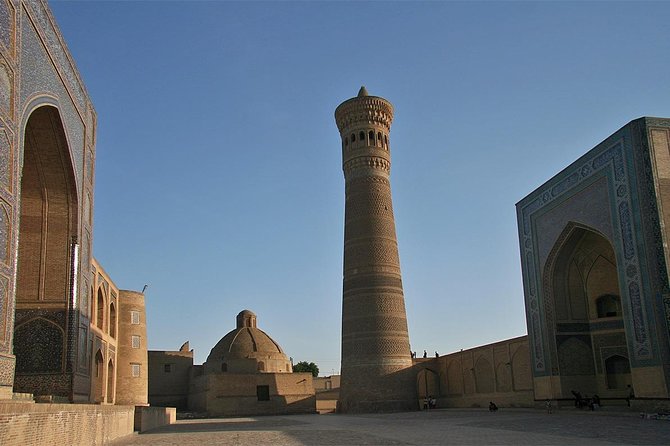
Then comes Poi Kalyan and the Great Minaret of the Kalon. The ensemble includes the Kalyan minaret, the Kalyan mosque, and the Miri Arab madrasah, all built across the 12th to 16th centuries.
You get about 40 minutes, which is enough time to look up, then look around. This is one of the places where your perspective matters. Stand back for the minaret shape, then come in closer for the ensemble geometry.
Ark of Bukhara: citadel energy and scale
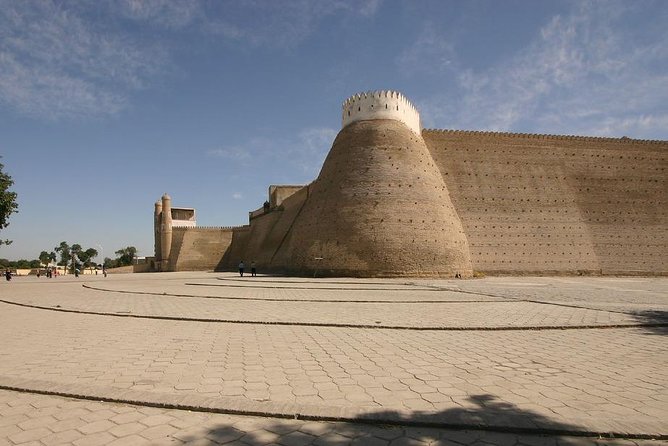
Finally, you visit the Ark of Bukhara, the ancient citadel. It’s described as a monumental fortress rising nearly 20 meters above the surrounding level, covering around 4 hectares.
An Ark stop is not only a history lecture. It shows you power in physical form. When you stand in a place like this, you understand why rulers needed defensible, visible command centers.
Evening transfer to Samarkand
At 15:50, you take Afrasiyab high-speed train to Samarkand, arriving around 17:15. You overnight in Samarkand.
Because the transfer happens before evening, this day still feels like you get a full chunk of Bukhara. It’s also a reminder to pack your energy well for sightseeing and rail changes.
Day 4 in Samarkand: Registan, Gur Emir, Ulugh Beg Observatory, and Shah-i-Zinda
Samarkand is a showstopper city, but the best way to enjoy it is to treat it like a sequence of ideas: authority, learning, astronomy, and burial architecture.
Gur Emir Mausoleum: Tamerlane’s family stories in tile and stone
You start with Gur Emir Mausoleum, the burial place of Tamerlane, his mentor Mir Sayyid Barak, and some members of the Timur family. You get about 1 hour.
This stop is emotionally strong. It’s a place where architecture and symbolism work together. If you take a few minutes before rushing into details, you’ll notice how the setting encourages stillness.
Registan: the iconic square with three madrasahs
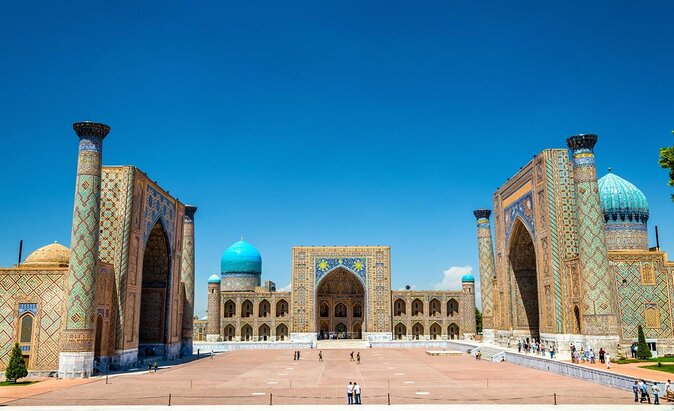
Next is Registan, the famous square framed by three huge madrasahs: Ulughbek, Shirdar, and Tillakori. You have about 1 hour here, with entrance ticket included.
If you’ve seen photos before, you already know it looks dramatic. The difference here is timing and guidance. You can look at the way the buildings face the square and how the square functions as a public stage.
Ulugh Beg Observatory: astronomy built into the city story
Then you visit the Ulugh Beg Observatory near Samarkand on Kuhak Hill, built between 1424 and 1428 by Ulugbek. The visit is around 40 minutes.
This is a smart contrast to purely religious sites. It broadens the Silk Road story beyond trade routes into science and scholarship. Even if you’re not an astronomy person, the site helps you understand why rulers invested in learning.
Shah-i-Zinda: mausoleums in a processional complex
You also visit Shah-i-Zinda, described as a medieval architecture monument with an ensemble of mausoleums of Karakhanid and Timurid nobility, and it notes the complex reached you consists of eleven mausoleums.
You get about 1 hour here. This is the kind of place where pacing matters. Slow down and focus on pattern transitions and tile work. The sequence of spaces is part of the effect.
Bibi Khanum Mosque: grand cathedral mosque with detailed decoration
The day also includes a stop at Bibi Khanum Mosque, built between 1399 and 1404. It’s described as the grandiose cathedral mosque of Tamerlane, richly decorated with tiles, carved marble, and murals.
This is one of those sites where rich surface detail can steal your attention from the overall scale. Let the guide point out what to notice first, then you can go back for your own close viewing.
Return to Tashkent by train
At 17:30, you take Afrasiyab high-speed train to Tashkent, arriving about 19:40. The route is described as about 2 hours 10 minutes. This finishes the loop and gets you back to the capital for onward travel.
Timing and Food Tips: How to Plan Lunch and Dinners Without Stress
Breakfast is included in the three cities, but lunches and dinners are not. So you’ll want a simple plan:
- Use your guide’s suggestions for Uzbek food. The tour explicitly encourages asking for authentic meal recommendations.
- Don’t assume every stop will have an easy sit-down restaurant nearby. Bazaar and monument areas can mean quick meals on the go.
- Carry a little cash for snacks if you’re stopping in bazaars.
Also, be aware of site photography and video fees. The tour lists that photography and video making fees at sites may apply, so if you’re planning serious photo work, ask your guide what to expect.
The schedule includes a very early morning on Day 2, with breakfast from 05:30 to 06:00. If you’re sensitive to early starts, build in a more relaxed evening routine on Day 1 so you don’t feel wiped out.
Who This Private Tashkent, Bukhara, Samarkand Tour Is Best For
This tour fits best if you want:
- A private experience with only your group
- Major Silk Road landmarks across three cities without planning every transfer
- The structure of a guide handling entrance tickets and city logistics
- Comfortable transport by car and the speed of Afrasiyab trains
It’s also a good match if you enjoy architecture and want craft and culture added in, like the Uzbekistan State Museum of Applied Art and the carpet museum component in Bukhara.
If you are the type who needs lots of unscheduled downtime, or you dislike early starts, the pace may feel intense. But if you like a clear plan with strong highlights, it’s a very efficient way to see the core of Uzbekistan in just 4 days.
Should You Book This Tashkent-Samarkand-Bukhara Tour?
I’d book it if your priority is a guided, streamlined Silk Road hit across Tashkent, Bukhara, and Samarkand with trains and entrances handled. The included breakfasts and entrance tickets help control daily costs, and the private setup keeps the experience from turning into a chaotic group stampede.
You might skip it if you want to build your own route, avoid early mornings, or you plan to spend most days only on one city. This is a momentum trip, and it rewards people who like moving while still looking closely.
If you do book, I’d focus your energy on asking your guide where to eat and what local foods are worth trying. That’s the one part of the trip you truly control, and it can turn a good sightseeing trip into one that tastes like where you are.
FAQ
What does the tour price include?
The price includes twin-basis hotel accommodation, breakfast in Tashkent, Samarkand, and Bukhara, comfortable car transfers, Afrasiyab high-speed train economy tickets for the routes between cities, and all taxes. Entrance tickets are listed as included for the scheduled sightseeing stops.
Are lunch and dinner included?
No. Lunches and dinners are not included, so you’ll need to plan meals separately during sightseeing days.
Is pickup available in Tashkent?
Pickup is offered, and the tour also gives a clear meeting point at Hotel Uzbekistan (Mirzamakhmud Musakhanov Street 45, Tashkent). You can request pickup if it is easier than finding the departure point on your own.
How does the high-speed train travel work between cities?
You take Afrasiyab high-speed trains on the included legs: Tashkent to Bukhara (about 3 hours 50 minutes for 600 km), then Bukhara to Samarkand (depart 15:50 and arrive 17:15), and finally Samarkand to Tashkent (depart 17:30 and arrive 19:40, about 2 hours 10 minutes).
What time does the tour start on Day 1?
The activity start time is 7:00 am, beginning at the meeting point in Tashkent.
Is this a private tour?
Yes. It is a private tour/activity, and only your group participates.
What is the cancellation policy?
You can cancel up to 24 hours in advance for a full refund. If you cancel less than 24 hours before the start time, the amount paid is not refunded.
Latest reviews out of Tashkent
- Tashkent Mountain Tour Amirsoy with Transport★ 3.5 · 3 reviews
- Private Intercity Transfer Tashkent – Samarkand – Tashkent★ 3.5 · 3 reviews
- Amirsoy & Chimgan mountain tour from Tashkent★ 5.0 · 3 reviews
- Tashkent: 3-Day Horseback Riding Tour in Chimgan Mountains★ 4.4 · 3 reviews
- Transfer Tashkent Airport / Railway Station – Hotel★ 3.5 · 3 reviews
- Private Tashkent City Tour★ 5.0 · 3 reviews
- Heliocomplex “Institute of the Sun” – Remnants of USSR★ 5.0 · 3 reviews
- Oriental Tastes of Tashkent: A Gastronomic Journey”★ 5.0 · 3 reviews
Tashkent Tours, compared.
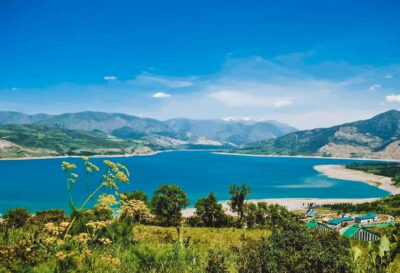
Best of Tashkent Mountains: Amirsoy, Chimgan & Charvak Trip
Read our review →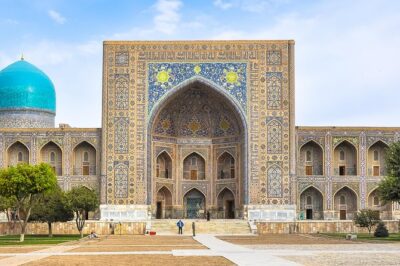
Samarkand One Day Tour – Departure From Tashkent
Read our review →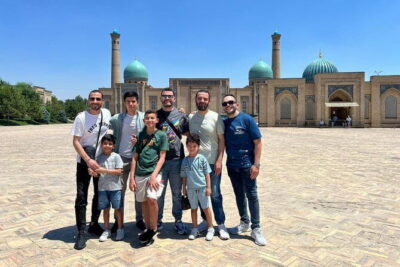
2 Days Tour to Bukhara and Samarkand from Tashkent by train
Read our review →
Browse the lists this tour appears in