
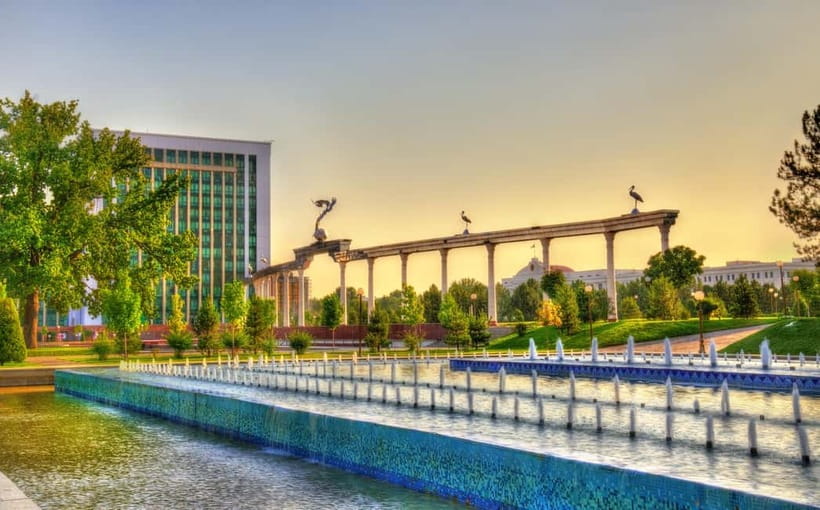
Reviewed · TASHKENT TOURS
Tashkent: Hidden Gems Walking Tour with Local Snacks
This tour is interesting because you pair two of Tashkent’s most important sights with a food crawl, local stories, and photo stops that feel off the usual route. I like the local snack tasting focus, especially the chance to try non bread and other everyday bites. I also like that you get real time at Khast-Imam Square, including the world-famous Quran of Caliph Uthman. One drawback to plan for: it is still a 4-hour walking experience, so comfortable shoes matter.
You’ll spend the morning or afternoon in a tight loop through religious landmarks, markets, and showy Soviet-era and European-influenced architecture, plus quieter side streets with courtyards, cafes, and quirky legends. If you want a Tashkent taste that goes past photos and into how people talk about their city, this is a smart format.
Key highlights worth marking on your map
- Khast-Imam Square with the Quran of Caliph Uthman and a guided look at major sacred spaces
- Chorsu Bazaar for spices, fresh produce, and street-food energy
- Local snacks plus non bread so you’re not just watching, you’re eating
- Kokaldash Madrasah as a shorter cultural stop that breaks up the day
- Courtyards, cafes, and Soviet-era details that add texture beyond the big sites
- Photo-friendly rooftop views paired with quirky legends and personal storytelling
Why this 4-hour Tashkent walk is a smart use of your time
Tashkent can feel like a city of contrasts: old sacred places sit close to Soviet-era buildings, and everyday life happens right beside major landmarks. This tour leans into that reality. You get a guided, structured walk that keeps you from wandering in circles or guessing which streets are actually worth your time.
I like the pacing. It is long enough to feel like you had a day in the city, but short enough that you do not burn your whole afternoon on transit or “see everything” fatigue. You are also in a private group, so you can ask questions without the guide having to rush through everything.
The best part for most visitors is that you get context. Yes, you will see markets and monuments. But you also learn how the city endured an earthquake, how Soviet influence changed parts of Tashkent, and how the city became what it is today. That background turns the buildings and streets from scenery into a story you can actually remember.
More of Tashkent worth pencilling in
- Tashkent Walking City Tour
★ 4.5 · 70 reviews - Tashkent Walking Tour with Local Lady / Gentleman
★ 4.5 · 29 reviews - Tashkent Walking & Food Tour: Highlights + Local Flavors
★ 5.0 · 18 reviews
Khast-Imam Square and the Quran of Caliph Uthman up close
Khast-Imam Square is the kind of place where even a quick visit can feel weighty, because it centers on faith and historic continuity. On this tour, you get a guided session there, focused on what matters and why it matters.
The headline is the world-famous Quran of Caliph Uthman. Even if you know the reference, seeing how it fits into the larger sacred setting makes it sink in. Your guide helps connect the object to the square’s broader religious spaces, so it feels more meaningful than a quick photo stop.
You should also pay attention to the atmosphere the guide creates. This tour includes time for walking within the square and learning what to look for, including the way these places hold tradition while the city around them keeps moving. If you like history, you will appreciate the explanations. If you do not even love history, you will still enjoy the way the square organizes your senses, sights, and attention.
One practical note: this is a religious area. Dress and behavior matter. Wear comfortable shoes, and keep your camera ready but respectful.
Chorsu Bazaar: spices, fruit, and street-food snack time
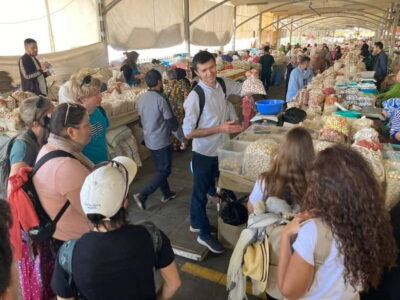
Chorsu Bazaar is where Tashkent becomes loud in the best way. It is not about quiet museum walls. It is about smells, colors, and the constant motion of people buying what they need and what they crave.
On this tour, you spend guided time there and get a hands-on experience through the snack tasting. Expect a mix of local bites, plus the tour’s famous non bread experience. The food angle is not an afterthought. It is the lens the guide uses to explain local tastes and daily habits.
What I like about this approach is that it teaches you how to read the market. You learn what different stalls and ingredients signal, and you get enough direction to know what to ask for and how to enjoy without feeling lost. If you’ve ever walked through a market and thought, I like the vibe, but I do not know what to eat, this solves that problem.
There is also a sensory bonus. Even if you skip most of the tastings, your guide’s pacing keeps you close to spice and produce areas so you pick up the “why” behind what you see. You leave with a better sense of what everyday Tashkent tastes like, not just what it looks like.
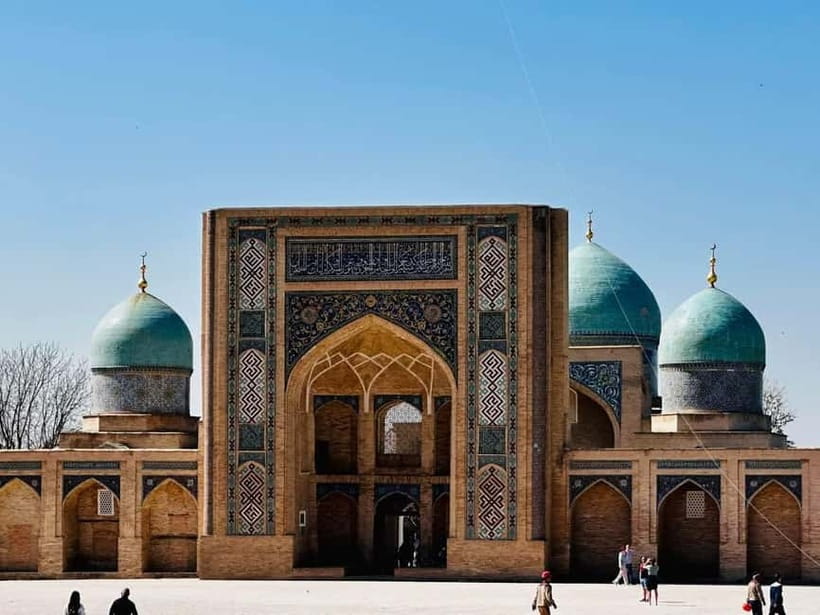
Kokaldash Madrasah: a short cultural stop that changes the mood
Not every highlight needs to be long to be effective. Kokaldash Madrasah is a 20-minute visit, and that short window works because it shifts the rhythm of the tour.
After the market energy and before you settle into more sacred spaces, this kind of stop gives your eyes and brain a reset. Madrasahs tend to reward slow observation: entrances, courtyards, and architectural details that you might otherwise rush past. Your guide uses the time to point out what to notice and how the education-and-religion legacy fits into the city’s identity.
If you are the type who likes structure, this is where the tour earns its keep. You do not just move from one famous spot to another. You get variety, and you learn how different parts of the city communicate its values in different ways.
An easier afternoon once Tashkent is done:
- Best of Tashkent Mountains: Amirsoy, Chimgan & Charvak Trip
★ 4.8 · 567 reviews - Samarkand One Day Tour – Departure From Tashkent
★ 5.0 · 313 reviews - Samarkand One-Day Tour Departure from Tashkent
★ 4.7 · 171 reviews - Tashkent: Amirsoy Resort, Chimgan Mountain and Charvak Lake
★ 4.8 · 170 reviews
Quieter courtyards, secret cafes, and Soviet-era hints
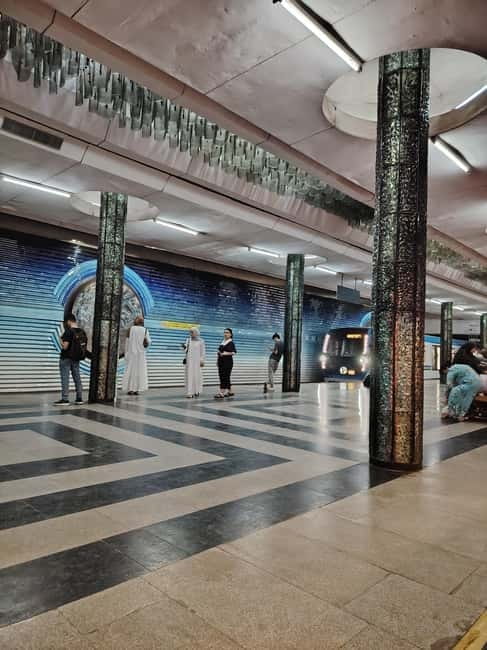
Between the major stops, you will have time in the parts of Tashkent that feel less like a checklist and more like a living city. The tour includes time for tucked-away courtyards, quieter cafes, and details that connect to the Soviet era, including things like mosaics.
This is where you start noticing how Tashkent survived big changes and still carries daily routines forward. Your guide also explains how the city endured an earthquake and how Soviet-era influence reshaped parts of the urban fabric. That matters because it changes what you perceive when you look at a building or a street corner.
I like that the tour does not treat these spots as filler. The quieter areas add emotional contrast. One minute you are in a crowded bazaar. The next you are in a calmer pocket with courtyards where daily life feels closer and more personal.
Tip: if you get tempted to sprint for photos every second, slow down here. Courtyards and side cafes are where you can actually talk, ask questions, and absorb the city’s mood.
Palace of Duke Romanov, Bolshoy Theater, and Amir Temur Square
Not all of Tashkent’s “big feels” are ancient sacred landmarks. This tour also includes time connected to three well-known city anchors: Palace of Duke Romanov, Bolshoy Theater, and Amir Temur Square.
These stops give you a different lens. They help you understand how Tashkent grew and how different cultures influenced the look and layout of parts of the city. Your guide connects those influences to the broader story of Soviet-era transformation and modern Tashkent life.
Even if you care more about religion and markets, these architecture-adjacent stops help you build the mental map you will need later. You start to understand how the city’s main public spaces relate to the markets and historic core.
Also, they are great for photos. Just do not treat them like a drive-by. Ask your guide what to look for in the building details, and you will get more out of ten minutes than you would from an hour of self-guided wandering.
Hidden-rooftop photo views and the stories you will remember
One of the most fun aspects is the combination of photo-perfect views with quirky local legends and personal storytelling from someone who calls Tashkent home. That pairing matters, because a good view is just a view until you understand what you are looking at.
The tour includes photo opportunities from hidden rooftops. That usually means you get angles most people do not reach easily, and you gain perspective on how Tashkent is layered. You can see the city’s shape and feel how different eras coexist in one place.
The legends part is what sticks in your head. Even when a story is funny or a little strange, it adds cultural texture. It answers the question, Why do people in Tashkent talk about this? That turns sightseeing into something closer to understanding.
Practical tip: bring your camera, and plan on charging it or keeping extra battery capacity. Rooftop time can make you forget to think about your phone storage until later.
Price, group size, and when this tour is worth the money
This tour costs $118 per group, and the group size is up to 4. Since it is a private group, that price can be a good deal if you are traveling with a partner, a small family, or two friends.
Here is the value equation I use: you are paying for a guide, guided time at Khast-Imam Square and Chorsu Bazaar, snack tasting, and multiple major stops. You also get pickup from your hotel, which saves time and hassle. Over four hours, that starts to look like a fair trade for the amount of guidance you receive.
If you are traveling solo, it may still be reasonable because you get a focused walk without waiting for a large group. But the best value tends to be when you can share the total cost across two to four people.
Also remember what you are buying beyond the sights. You are buying an interpretation of the city. Without that, you can still visit these places. With the guide, you notice more, eat better at the market, and get stories that help the city feel real.
What to bring for a comfortable, low-stress half day
For a walking tour, gear is not glamorous, but it is the difference between enjoying the day and counting down the minutes. Bring:
- Comfortable shoes (non-negotiable for 4 hours on your feet)
- A camera (you will want it for the rooftops and major squares)
- Water (markets and walking add up fast)
If you wear something easy to move in, you can focus on the experience instead of your feet. Also, if you are sensitive to crowds, Chorsu Bazaar can feel intense, so a water break helps keep you comfortable.
Who this tour fits best
I think this tour is best for you if you want a concentrated, guided taste of Tashkent that blends sacred sites with market life. It is also a strong pick if you enjoy food experiences that come with explanations, not just a quick bite.
You will likely enjoy it most if you:
- Like walking tours that still feel structured
- Want to see Khast-Imam Square and Chorsu Bazaar with context
- Prefer a private guide so you can ask questions
- Enjoy photos, especially rooftop perspectives
It may not be ideal if you struggle with walking for four hours. It is also not suitable for babies under 1 year, and it is not listed for people over 95 years.
Should you book this Tashkent walking tour?
If you want a 4-hour Tashkent experience that mixes Khast-Imam Square, Chorsu Bazaar, and real snack time with stories and photo views, I think you should seriously consider booking. The value improves when you split the group cost, and the private format makes it easier to get answers that make the city feel understandable.
Skip it only if you want a mostly self-paced tour, or if your mobility is limited. Otherwise, this is a practical way to get a lot of Tashkent meaning into one half day.
FAQ
How long is the Tashkent walking tour?
The tour lasts 4 hours.
How much does the tour cost?
It is $118 per group, up to 4 people.
Is this a private tour?
Yes, it is a private group.
Does the tour include hotel pickup?
Yes, pickup is included from your hotel. Transportation to the meeting point is not included.
What language is the live guide?
The live tour guide speaks English and Russian.
What does the tour include besides the walking?
It includes a guided walking tour, tastings of local snacks, visits tied to Khast-Imam Square and Chorsu Bazaar, plus stops connected to the Palace of Duke Romanov, Bolshoy Theater, and Amir Temur square.
What should I bring?
Wear comfortable shoes, bring a camera, and bring water.
Should I cancel if plans change?
You can cancel up to 24 hours in advance for a full refund, depending on availability.
Latest reviews out of Tashkent
- Tashkent Mountain Tour Amirsoy with Transport★ 3.5 · 3 reviews
- Private Intercity Transfer Tashkent – Samarkand – Tashkent★ 3.5 · 3 reviews
- Amirsoy & Chimgan mountain tour from Tashkent★ 5.0 · 3 reviews
- Tashkent: 3-Day Horseback Riding Tour in Chimgan Mountains★ 4.4 · 3 reviews
- Transfer Tashkent Airport / Railway Station – Hotel★ 3.5 · 3 reviews
- Private Tashkent City Tour★ 5.0 · 3 reviews
- Heliocomplex “Institute of the Sun” – Remnants of USSR★ 5.0 · 3 reviews
- Oriental Tastes of Tashkent: A Gastronomic Journey”★ 5.0 · 3 reviews
Tashkent Tours, compared.
Best of Tashkent Mountains: Amirsoy, Chimgan & Charvak Trip
Read our review →
Samarkand One Day Tour – Departure From Tashkent
Read our review →
2 Days Tour to Bukhara and Samarkand from Tashkent by train
Read our review →
Browse the lists this tour appears in