
Tashkent Modern Tour is interesting because it treats Tashkent like a living timeline, mixing Soviet rebuilding, post-empire religious buildings, and today’s urban energy in one smooth half-day circuit. I like how it keeps the focus on places you can actually visit and look at, not just talk about. Panoramic views plus major memorials make it feel like you get the city’s “why” with the city’s “wow.”
I love the chance to ride Tashkent’s first metro system and see why locals call it an underground museum. I also love the contrast between the tall, new-feeling city symbols like the TV Tower and the more serious reminders like the Museum of Victims of Repressions. Metro Tashkent and the Railway Museum together give you a sense of how the city thinks in eras.
One possible drawback to keep in mind is that at least one key stop can be closed on certain days, which can limit what you’re able to enter. In those cases, you may still get plenty to see and understand, but the day won’t go exactly as scripted.
Key Things You Will Enjoy Most
- TV Tower 375 m panoramas that help you read the city fast
- Museum of Victims of Repressions paired with great photo angles of the TV Tower
- Earthquake Memorial tied to Tashkent’s 1966 rebuilding story
- Orthodox and Catholic cathedrals, plus a newly built mosque that’s already a city “business card”
- Metro Tashkent as an attraction, not just transportation
- Railway Museum that feels like stepping into 19th and 20th century time
A 6-Hour Orientation to Modern Tashkent, Without the Guesswork
This is the kind of tour that helps you get your bearings quickly. Tashkent can feel different from other parts of Uzbekistan, because it blends older Uzbek fabric with layers from Russian imperial and Soviet eras, then adds a more Europeanized, colonial-era street feel. You’ll be seeing the city’s newer public spaces and big monuments, but the stops also explain what happened here and why.
You’ll move by air-conditioned vehicle, and the tour runs about 6 hours. You also get the benefit of a private group, so you can keep questions flowing and you’re not stuck timing your questions around a big crowd.
A practical note: the program starts from your hotel or from the airport or railway station. Pickup timing can be customized, which is helpful if your flight lands late or you’re arriving by train. Just remember the pickup rules for airport or railway station timing start after 09:00 in winter and after 08:00 in summer.
More of Tashkent worth pencilling in
- Best of Tashkent Mountains: Amirsoy, Chimgan & Charvak Trip
★ 4.8 · 567 reviews - Samarkand One Day Tour – Departure From Tashkent
★ 5.0 · 313 reviews - Samarkand One-Day Tour Departure from Tashkent
★ 4.7 · 171 reviews
TV Tower 375 m: The Fastest Way to Read Tashkent
You’ll start your city “map lesson” with the Tashkent TV Tower, standing at 375 meters. It’s built on the highest point in the city, so even if you only get a limited time at the top, the view is the point. From up there, you can connect what you see on the ground with what you’re hearing about the city’s growth and rebuilds.
This is also one of the easiest places in the day for cameras. The angle you get helps you understand where major areas sit relative to each other, so later stops like Independence Square and the modern entertainment zones feel less random.
And there’s a smart pairing built into this tour: the day includes a nearby memorial museum where the TV Tower can become the backdrop for photos. That means you can get both the wide view and the “tower framed by history” shot.
The Museum of Victims of Repressions and the Earthquake Memorial
Two stops bring the tour from sightseeing into meaning.
First, you’ll visit the Museum of Victims of Repressions. It’s the only place in Uzbekistan dedicated specifically to the victims of Stalin’s political repression. If you care about understanding modern Central Asia beyond the usual travel highlights, this stop is a heavy one in the best way. It also helps explain why memorial culture is so visible in Tashkent and why some public spaces are designed to make you pause.
The museum is also set up for practical photo moments. The grounds and views can give you some of the best angles on the TV Tower, so you can capture the contrast between a towering symbol of modern communication and the human stories tied to repression. Even if you take no photos, it’s worth slowing down here, because the point is reflection.
Then you’ll move to the Monument of Courage Earthquake Memorial. Tashkent was hit by a devastating earthquake in 1966, and the monument is dedicated to the end of the restoration. This matters because it explains the look of parts of the city today. A lot of what you’ll see later in squares, facades, and major buildings makes more sense once you understand the city had to rebuild itself on a massive scale.
Minor Mosque, Orthodox Church, and Catholic Cathedral, All in One Flow
One reason people like this tour is that it doesn’t isolate religion into a single box. You see multiple faith sites that reflect different communities and different time periods, and you learn how each building fits into the city’s changing layers.
You’ll visit the Minor Mosque, built recently and already considered a city business card. Bring your cameras, but also bring your eyes with a little warning. The tour notes suggest using glasses, because glare off the mosque can be bright. That small detail is actually useful on sunny days, because it lets you keep sightseeing without getting stuck squinting.
After that, you’ll see the Cathedral of the Assumption of the Virgin. This Orthodox church is one of the largest and among the oldest in Central Asia, and it’s now the center of the diocese of the Moscow Patriarchate. It was built for Russian Empire soldiers, and you may hear that it’s known among residents as the military hospital church. Even if you just watch how locals treat the building, you’ll understand that this is not a museum-style church stop. It’s still part of community memory.
Next up is the Sacred Heart of Jesus Cathedral, the largest and one of the oldest Catholic cathedral buildings in Central Asia. This one also connects to people, especially the Polish diaspora in Tashkent, which makes up the majority of Catholics in Uzbekistan. If you like history that has real human faces, this is a strong match.
An easier afternoon once Tashkent is done:
- Tashkent: Amirsoy Resort, Chimgan Mountain and Charvak Lake
★ 4.8 · 170 reviews - Explore Amirsoy, Chimgan & Charvak – A Full-Day Mountain Tour
★ 5.0 · 158 reviews - Tashkent City Tour
★ 5.0 · 121 reviews - Tajikistan : Exclusive Seven Lakes Day Tour From Samarkand
★ 4.9 · 102 reviews
Metro Tashkent and Broadway Alley: Two Ways to See City Life
The tour keeps the day moving, but it also gives you two “everyday Tashkent” style stops.
First, there’s Metro Taschkent. The metro is the first metro in Central Asia, and it’s treated as more than a transit system. The tour frames it as an underground museum of sorts. The practical value for you is simple: you get to experience how locals move through the city, not just stand in front of buildings.
Then you’ll visit Broadway Alley, a surprisingly interesting story for a place that today feels like a leisure strip. Long ago, the spot was a swamp, then it was drained and turned into a recreation area for Tsar’s soldiers. Now it’s an entertainment area for both locals and visitors. That kind of transformation is a quick way to understand how Tashkent’s modern city planning keeps reusing space instead of erasing everything.
Between the metro and this alley, you get a shift from monuments to life. It’s a good balance, and it helps you avoid the “everything was important, nothing was fun” problem that some history-heavy tours create.
Independence Square and the Railway Museum Time Machine
By the time you reach Independence Square (Mustaqilliq Maidoni), you’ll be ready for the big picture.
This square is the main public stage for the country, with administrative offices tied to the Cabinet and the Senate. It’s also a symbol of independence now, but it used to be an administrative center under Russian Tsarist and Communist regimes. That layering is what makes the square feel more than just photographic. You can stand there and understand why different eras cared about controlling public space.
Now here’s the curveball that makes this tour memorable: the Railway Museum.
It’s described as the first and unique museum dedicated to Central Asian railway transport. The experience is built to feel like you stepped into the 19th and 20th centuries, and you’ll see trains that are much older than some modern countries. Even if you’re not a rail enthusiast, you’ll probably enjoy this stop because it gives you a tactile sense of technology history in the region. It’s one of those places where the scale and engineering detail do the storytelling.
If you like museums that don’t feel like a textbook, this is your payoff stop.
Price and Value: What $180 Covers, and What You Still Need to Pay
The tour price is $180 per group up to 2 people. For a private half-day in a city, that can be a good value because it includes several things people usually end up paying for separately: a professional guide, an A/C vehicle, hotel pickup and drop-off, and all fees and taxes.
What’s not included is entrance tickets. So if your goal is to walk in every place without thinking, you’ll want to budget for ticket prices on the day. The good news is that the tour also includes skipping the ticket line, which helps you use your time well, especially at busier stops.
Think of it this way: you’re paying for transportation, interpretation, and time-saving access, and then you handle the entry fees directly.
How the Guides Keep the Day on Track
This tour is built for guided flow, and the guides tend to be the main reason it works. In past departures, guides like Din, Ali, and Shokat have been praised for being friendly, organized, and quick to adjust if plans need to change. One day might be rain-heavy, another day might require rerouting around places already seen. The style is practical: you still get the core story of modern Tashkent, even when conditions shift.
That flexibility also matters when something doesn’t go as expected. If a museum is closed or access is limited, a good guide will help you pivot so the tour doesn’t feel wasted.
Practical Tips Before You Go
A few small things can make a big difference on a six-hour city tour.
- Wear comfortable shoes. You’ll be walking through multiple sites, and you’ll likely move between viewpoints and indoor stops.
- Bring glasses if you’re visiting the newer mosque under strong sun. Glare can be intense.
- Charge your phone and camera. You’ll want to capture the TV Tower views and the framed-photo possibilities around the repression museum.
- Plan for ticket payments. Entrance fees are not included, even though you get ticket line help.
Also, keep your expectations realistic. Some buildings and museums operate on their own schedules, and closures can happen. That’s not a reason to avoid the tour, it’s just a reason to stay flexible.
Who This Tour Suits Best
This works especially well if you:
- Want a smart first day in Tashkent and you don’t want to spend your time figuring out routes.
- Like modern city history that includes Soviet rebuilding, memorial culture, and post-imperial religious architecture.
- Enjoy guided context, especially for sites tied to repression history and major national symbols.
- Are traveling as a couple or small party, because the price is structured for up to 2 people and the tour stays private.
If you already know Tashkent well and you’re only chasing one specific niche like rail history, you might not need all stops. But if you want breadth with an actual storyline, this is a solid fit.
Should You Book the Tashkent Modern Tour?
I’d book it if you want one guided day that helps you connect Tashkent’s past to its present. The TV Tower views, the repression and earthquake memorials, major church stops, the metro, and the Railway Museum create a sequence that teaches you how the city rebrands itself across eras.
You might skip or consider a smaller customized plan if you strongly care only about one theme, like just churches or just museums. And if you’re traveling on a date where you need guaranteed entry into every building, remember that at least one major stop can be closed sometimes.
If you want a practical, meaningful orientation with good logistics and a private, flexible guide, the Tashkent Modern Tour is an easy yes.
FAQ
How long is the Tashkent Modern Tour?
The tour lasts about 6 hours.
How much does it cost?
It costs $180 per group up to 2 people.
Where does the tour start?
The tour starts from your hotel, airport, or railway station, and the pickup time can be customized.
Are entrance tickets included in the price?
No. Entrance tickets are not included, though the tour includes skipping the ticket line.
What is included in the tour?
It includes a professional guide, an A/C vehicle, hotel pickup and drop-off, and all fees and taxes.
What languages are available for the guide?
The guide is available in English, Spanish, German, French, and Russian.
Is the tour private?
Yes. It is a private group tour.
Is the tour wheelchair accessible?
Yes, it is wheelchair accessible.
What time are airport or railway station pickups available?
Airport and railway station pickup start after 09:00 in general, and after 08:00 in summer time.
What should I bring?
Bring comfortable shoes. The tour also suggests glasses for the mosque glare.
Latest reviews out of Tashkent
- Tashkent Mountain Tour Amirsoy with Transport★ 3.5 · 3 reviews
- Private Intercity Transfer Tashkent – Samarkand – Tashkent★ 3.5 · 3 reviews
- Amirsoy & Chimgan mountain tour from Tashkent★ 5.0 · 3 reviews
- Tashkent: 3-Day Horseback Riding Tour in Chimgan Mountains★ 4.4 · 3 reviews
- Transfer Tashkent Airport / Railway Station – Hotel★ 3.5 · 3 reviews
- Private Tashkent City Tour★ 5.0 · 3 reviews
- Heliocomplex “Institute of the Sun” – Remnants of USSR★ 5.0 · 3 reviews
- Oriental Tastes of Tashkent: A Gastronomic Journey”★ 5.0 · 3 reviews
Tashkent Tours, compared.
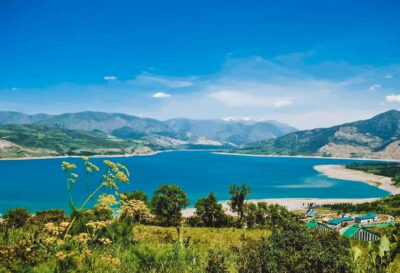
Best of Tashkent Mountains: Amirsoy, Chimgan & Charvak Trip
Read our review →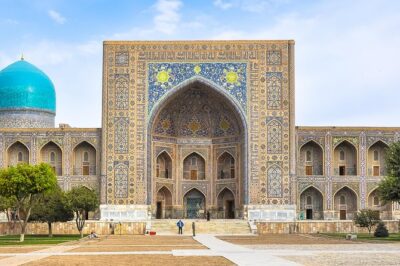
Samarkand One Day Tour – Departure From Tashkent
Read our review →

2 Days Tour to Bukhara and Samarkand from Tashkent by train
Read our review →
Browse the lists this tour appears in