
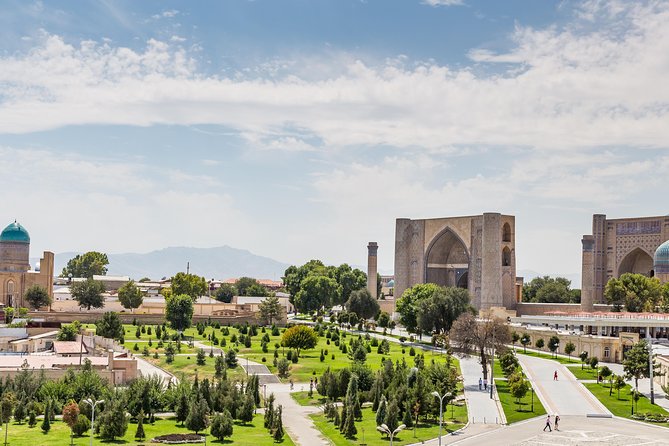
Reviewed · TASHKENT TOURS
Discover Uzbekistan – explore top destinations: Samarkand, Bukhara & Tashkent
Seeing Uzbekistan in 3 days is a bit like fast-walking through a museum of empires. You move from modern Tashkent monuments to the Timurid masterpieces of Samarkand, with Bukhara’s classic monuments in the middle. It is a tight route, but it is built around the high-speed train connection that makes the switch between cities feel doable.
I especially like that the tour bundles the practical stuff, like entrance tickets and included meals, so you do not spend your time hunting for cash desks or ticket lines. The other big plus is the small-group feel, with a maximum of 8 travelers. One thing to consider, though: the pace is fast and the itinerary is packed, and the tour depends on good weather, so you’ll want comfortable shoes and patience.
Key highlights worth your attention
- High-speed train route: Tashkent to Bukhara to Samarkand, then back to Tashkent, in economy class
- Included entry tickets at every major stop, from mausoleums to mosques
- Small group size (max 8) that helps you get more direct answers while you’re on the move
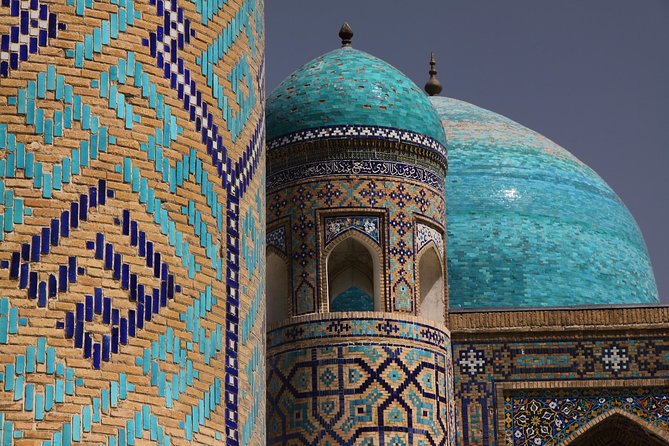
- Three built-in museum and architecture anchors: applied art in Tashkent, the Ark of Bukhara, and the Registan ensemble in Samarkand
- Meal plan included: 3 breakfasts and 3 lunches, with an air-conditioned vehicle for transfers
- Guiding that’s organized in advance, with named local support like Ibrohim and Izzatullo, plus guides such as Sevinc in Samarkand and Outilla on the route
Why this 3-day route feels efficient, not rushed
This tour works because it solves Uzbekistan’s biggest logistical problem for short trips: getting between the cities. The package includes round-trip train tickets on the high-speed service, and you also get an air-conditioned vehicle for day-to-day touring. That combination means less time figuring out transport and more time standing in front of the big sights.
I also like the structure: you start each day with a clear set of stops, and the visit windows are long enough to actually see things, not just pose for a photo. You are looking at domes, minarets, tiles, and courtyard-scale architecture. If you give your brain a rhythm, the sights stop feeling like a blur.
Still, there is a drawback to a multi-city sprint like this. You will be walking, moving between sites, and keeping up with set times. If your travel style is slow, with long breaks and lots of unscheduled wandering, this may feel like you’re always heading somewhere.
More of Tashkent worth pencilling in
- Best of Tashkent Mountains: Amirsoy, Chimgan & Charvak Trip
★ 4.8 · 567 reviews - Samarkand One Day Tour – Departure From Tashkent
★ 5.0 · 313 reviews - Samarkand One-Day Tour Departure from Tashkent
★ 4.7 · 171 reviews
Tashkent Day One: Amir Timur sights plus museums with a slower pace
Tashkent is a helpful “warm-up” city on this route. Even if you’re here for ancient architecture, day one grounds you in Uzbekistan’s modern identity, then eases you into Islamic design and cultural collections.
Amir Timur Museum and Amir Temur Square
You begin at the Amir Timur Museum, a modern domed space focused on the 14th-century ruler Tamerlane. Even if you do not read a lot of history text, you’ll likely appreciate the way the museum frames artifacts and portraits around a single figure. It gives you a reference point before the architecture starts shouting at full volume.
Right after that, Amir Temur Square puts you in front of a monumental equestrian statue and wide esplanades built for big public moments. The layout matters here. You can get a real sense of how the city celebrates power and memory in public space.
Mustakillik Square, war memorials, and the Courage Earthquake Memorial
Independence Square (Mustakillik Square) is your next stop, and it helps you understand Tashkent as a capital with its own narrative. Then comes Memorial Square, dedicated to soldiers who died during the Great World War.
The Courage Earthquake Memorial is the curveball that makes day one feel more human. Tashkent’s earthquake history is not an abstract footnote. Standing at a site like this, you get a sense of how cities can be shaped by natural events, and how remembrance becomes part of the urban landscape.
An easier afternoon once Tashkent is done:
- Tashkent: Amirsoy Resort, Chimgan Mountain and Charvak Lake
★ 4.8 · 170 reviews - Explore Amirsoy, Chimgan & Charvak – A Full-Day Mountain Tour
★ 5.0 · 158 reviews - Tashkent City Tour
★ 5.0 · 121 reviews - Tajikistan : Exclusive Seven Lakes Day Tour From Samarkand
★ 4.9 · 102 reviews
Minor Mosque and the Uzbekistan State Museum of Applied Art
You finish with a classic architectural contrast. The Minor Mosque is a white mosque known for Islamic architecture details. It is not just “pretty tiles and columns.” You get to practice looking slowly at form: symmetry, proportions, and how religious buildings shape the surrounding view.
Then you visit the Uzbekistan State Museum of Applied Art, often described as a top art museum in Tashkent. This is the stop where you can shift gears. If you want a break from outdoor walking, this museum time gives you a calmer pace. It’s also a smart counterweight to all the big public squares and monuments earlier in the day.
Bukhara Day Two: Lyabi-Hauz, the Kalyan Mosque, and why the Ark hits hard
Bukhara is the city that rewards slow looking. It’s also the city where small details can help everything click. On day two, you get a well-balanced mix of ensemble architecture, landmark mosques, madrasas, and fortress-scale heritage.
Lyabi-Khauz ensemble: a courtyard that organizes the whole town feel
You start at Lyabi House Hotel, but the real star is the Lyabi-Khauz ensemble, formed around the famous large courtyard setting. The complex includes monumental buildings like Kukeldash Madrasah and structures such as khanaka and Nodir Divan-begi.
What I like about starting here is that it sets the scene. Once you see how the courtyard functions as a social and architectural center, the rest of Bukhara starts to make sense. You can connect the dots between religious institutions, civic life, and how people used shared spaces.
Nodir Devonbegi Madrasah and the Kalyan Minaret and Poi Kalyan Mosque
Next, Nodir Divanbegi Madrasah sits around Lyabi-Hauz, and it is tied to the vizier Nadir, whose order it was constructed. A madrasah is often explained as education and religion, but here you also get a chance to notice how buildings can be both functional and ceremonial.
Then the route shifts to one of Bukhara’s most iconic landmark clusters: the Kalan Minaret and Poi Kalyan Mosque. The Kalyan Minaret is a major landmark of the Po-i-Kalyan mosque complex. The Poi Kalyan Mosque dates back to the 15th century and is known as one of Bukhara’s outstanding monuments.
If you’re trying to understand why these buildings matter, the key is scale. A minaret and a central mosque are designed to dominate the city’s skyline and create a visual hierarchy. Seeing them close up is a fast way to get your bearings.
Ulugbek Madrasah, Mir-i-Arab Madrasa, and the Ark of Bukhara
Ulugbek Madrasah comes next, dated to 1417 by an inscription on a bronze plate of the door. It’s the kind of detail that can make a stop more than a quick photo. It invites you to look at inscriptions and think about how dates, patronage, and craft were recorded.
Mir-i-Arab Madrasa is described as one of the most interesting monuments of Bukhara. Then you move to the Ark of Bukhara, a massive fortress. If the earlier stops felt like you were touring religious architecture, the Ark brings you into power and defense. A fortress is architecture with consequences. It tells you who controlled space and why the city mattered.
Bolo Hauz Mosque and Ismail Samani Mausoleum
Bolo Haouz Mosque, built in 1712, is a reminder that Bukhara’s story doesn’t stop with one dynasty. It’s a later piece that keeps the architecture evolving.
Finally, Ismail Samani Mausoleum is a world-famous architectural masterpiece. Mausoleums are often treated like “quiet stops,” but they also set a mood. Here you get a sense of the artistry of commemoration, and how craftsmanship carries meaning through generations.
Samarkand Day Three: Registan, Gur-i Amir, and the religious atlas of the city
Samarkand is where this trip becomes jaw-dropping. In just a day, you hit the Timurid core, then branch outward into major mosques and mausoleum complexes. This is also the day where your photos can turn into a real visual story, because the architecture keeps escalating.
Gur-i Amir Mausoleum complex
You start at Amir Temur Mausoleum, also known as Gur-i Amir complex. This site is described as a masterpiece of Islamic architecture from medieval East. It’s a perfect opening for Samarkand because it anchors the whole day to one of the defining rulers in the region’s memory.
Registan: the heart of the Timurid city
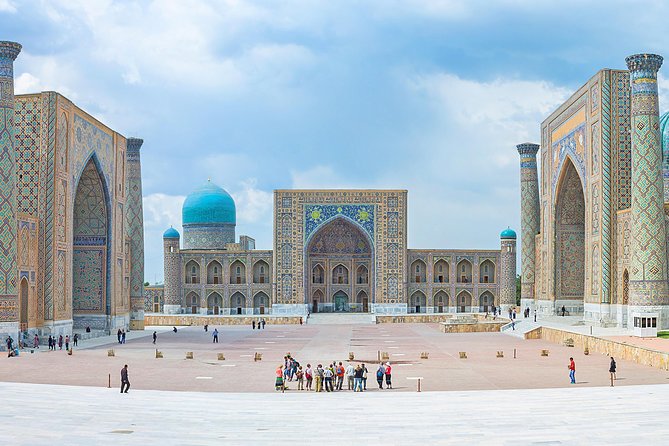
Registan is the big one. It’s described as the heart of ancient Samarkand of the Timurid dynasty. You’re standing in a central ceremonial space, and that makes it easier to understand why these buildings were built to face inward and outward at the same time.
You then visit the madrasas that frame the square. Ulugbek Madrasah is one of them, built on the Registan Square by order of Ulugbek, Tamerlane’s grandson, in 1417-1420. Another madrasah you see is Sher-Dor Madrasah, built later, in 1619-1636. Finally, Tillya Kori Madrasah is the final building in the Registan ensemble, built in 1660.
This set of stops matters because the Registan is not a single building. It is an architectural argument. The square tells you how power was displayed through education, religion, and craftsmanship, side by side.
Bibi Khanym Mosque and Shah-i-Zinda
Then you go to Bibi Khanym Mosque, once among the largest and most magnificent mosques in the Islamic world. If you love scale, this is where you see it. It’s also a chance to notice how mosque architecture can project prestige across the whole city.
After that, Shah-i-Zinda, also spelled Shakhi Zinda, takes you into a complex of mausoleums from the 14th and 15th centuries. This stop feels like walking through a timeline in stone. The complex is not just one tomb. It’s a series of commemorations that build a spiritual route.
Siyob Bozori: cap the day with a traditional bazaar
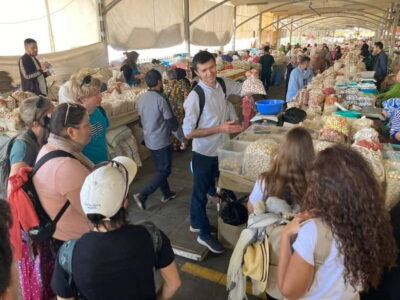
To end on something lively, you visit Siyob Bozori, described as the largest traditional bazaar in Samarkand. It’s an important contrast to the monumental heritage stops earlier. A bazaar is not “just shopping.” It is where you sense everyday life, the rhythm of vendors, and how the city feeds itself.
Trains, pickup, and the logistics that make or break a short trip
The tour includes pickup offered, plus an air-conditioned vehicle and entrance tickets. You also get a mobile ticket, and the group discount element suggests the operator is thinking in terms of shared cost for a small group.
The train part is the most important logistics win. You get economy class on the high-speed service for the full loop between Tashkent, Bukhara, and Samarkand. For a 3-day timeline, that matters. Without that, many people waste hours stitching together slower connections.
One more practical note: the tour is built for travelers with moderate physical fitness. That does not mean you need to be an athlete. It does mean expect walking between sites, steps and uneven surfaces in heritage areas, and time outdoors. If you’re used to “one museum a day,” adjust your expectations here.
Also, this tour caps at a maximum of 8 travelers. That small number can turn “group tour” into something more like guided shared sightseeing, especially when you want answers on what you’re seeing.
Price and real value: what you’re paying for at $999
At $999 per person for about 3 days, the value comes from what is bundled. This isn’t just a guide and a list of names. The package includes:
- Air-conditioned vehicle
- Entrance tickets
- Train tickets on the high-speed route (economy class)
- Breakfast and lunch each day for 3 days
If you price those separately, the math usually gets uncomfortable fast. High-speed train tickets and entrance fees can add up, and meals can quietly become your biggest daily spend when you’re on the go. So the money is buying convenience plus structure.
That said, price value depends on your priorities. If you want lots of unplanned free time, then you may feel like you’re paying for motion rather than rest. If you like a guided plan that hits major monuments efficiently, then this price can feel fair.
The human factor: guides, pacing, and how to get the best experience
This tour’s quality is often about the people running it. Named local support like Ibrohim and Izzatullo is part of the experience, and guides such as Sevinc in Samarkand and Outilla have been mentioned for how they handled the day. That matters because heritage sites can feel overwhelming without context.
The pacing is still the pacing. Even with good guiding, you will spend a lot of time moving. If you want to maximize the experience, do two simple things:
- Wear shoes you can walk in for hours.
- Bring a snack plan for the gaps you can’t see yet, because only breakfast and lunch are explicitly included.
If you’re the type who gets anxious when a day runs tight, ask your provider before you go how they handle weather changes, since the tour requires good weather.
Who should book this tour, and who might want a slower version
This tour is a strong fit if you want a focused heritage hit: Tashkent monuments, Bukhara’s iconic religious architecture, and Samarkand’s major Timurid landmarks, all in one short window. It also works well if you travel in a group mindset and like guided context that helps you connect the dots between sites.
It may be less ideal if you prefer:
- Plenty of free time to wander without a schedule
- A lighter walking load
- A travel rhythm where you linger for long periods at each stop
A moderate fitness level is part of the deal, and a fast schedule is built in. If that’s fine with you, you’ll likely enjoy how much you see without spending days on transport.
Should you book GOTOUZBEKISTAN’s Tashkent, Samarkand, and Bukhara package?
I would book it if you’re short on time and you want the big architecture hits, with trains, tickets, and key meals already handled. The small group size helps, and the route makes sense for first-timers who want to feel the scale of Uzbekistan’s heritage without turning the trip into logistics management.
I would think twice if you’re hoping for a slow, flexible experience. This is a packed 3-day run, and it depends on good weather. If you can accept that reality, this tour is one of the more practical ways to stitch together Tashkent, Bukhara, and Samarkand.
FAQ
How long is the tour?
The duration is approximately 3 days.
What cities are included in this experience?
You visit Tashkent, Bukhara, and Samarkand.
Is pickup included?
Pickup is offered.
Are entrance tickets included?
Yes, entrance tickets are included.
Are train tickets included, and what route do they cover?
Yes. Train tickets for the high-speed train (economy class) are included for Tashkent to Bukhara to Samarkand and then back to Tashkent.
What meals are included?
Breakfast is included for 3 days, and lunch is included for 3 days.
How big is the group?
The tour has a maximum of 8 travelers.
What is not included in the price?
Travel insurance and personal expenses are not included. Fees for trying on traditional clothes for photos are also not included.
Is free cancellation available?
Yes. You can cancel up to 24 hours in advance for a full refund.
Does the tour depend on weather?
Yes. The experience requires good weather, and if it is canceled due to poor weather, you are offered a different date or a full refund.
Latest reviews out of Tashkent
- Tashkent Mountain Tour Amirsoy with Transport★ 3.5 · 3 reviews
- Private Intercity Transfer Tashkent – Samarkand – Tashkent★ 3.5 · 3 reviews
- Amirsoy & Chimgan mountain tour from Tashkent★ 5.0 · 3 reviews
- Tashkent: 3-Day Horseback Riding Tour in Chimgan Mountains★ 4.4 · 3 reviews
- Private Tashkent City Tour★ 5.0 · 3 reviews
- Transfer Tashkent Airport / Railway Station – Hotel★ 3.5 · 3 reviews
- Heliocomplex “Institute of the Sun” – Remnants of USSR★ 5.0 · 3 reviews
- Tashkent One Day Tour★ 4.6 · 4 reviews
Tashkent Tours, compared.
Best of Tashkent Mountains: Amirsoy, Chimgan & Charvak Trip
Read our review →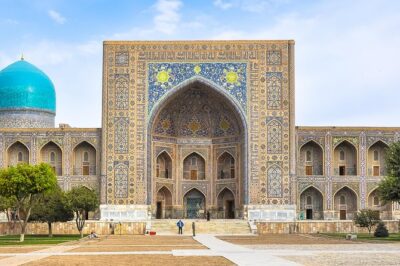
Samarkand One Day Tour – Departure From Tashkent
Read our review →
2 Days Tour to Bukhara and Samarkand from Tashkent by train
Read our review →
Browse the lists this tour appears in