
Reviewed · SAMARKAND TOURS
Samarkand: Walking Tour around Old City
What makes this Samarkand walking tour so interesting is that it turns the monuments into a connected story about power, faith, and art across the Timurid era. I like how the guide work is personal and specific, with English and Russian narration, and with guides such as Faridun and Frank referenced in recent bookings. You’ll also get a true small-group pace, so questions do not get shoved aside.
Two things I genuinely like about this experience are the built-in focus on symbolic details, like the Amir Temur statue layout and the astronomical ideas tied to Registan, and the way the route keeps shifting mood from grand squares to quiet, working mosques. You’ll spend time looking, but also understanding why the shapes, colors, and stories matter, not just where to stand for a photo.
One consideration: this is a 3.5-hour walking route through uneven outdoor areas, with mosque time that works best if you can keep things respectful and dress accordingly. If you are sensitive to stairs, hills, or long standing, plan around it.
Key highlights worth planning for
- Amir Temur equestrian statue as your orientation point, with context that sets the tone for the whole day
- Gur-e-Amir Mausoleum and its blue ribbed dome, mosaics, and the dramatic tomb stories
- Registan Square framed by three madrasahs, including the lions at Sher-Dor and the golden dome at Tilla-Kari
- Bibi-Khanum Mosque with its love story background and the famous large marble Qur’an stands
- Hazrat Khizr Mosque as a living site with panoramic views and a stop near Islam Karimov’s tomb
- Shah-i-Zinda necropolis, with 20+ decorated mausoleums and the quiet atmosphere of The Living King
Why this old-city walk feels different than a checklist
Samarkand is famous for eye-candy architecture, but the trick is learning how to see it. This tour gives you the connective tissue. Instead of treating each building like a separate postcard, you connect the dots between rulers, education, spirituality, and the people who built and maintained these spaces.
I especially like that the route starts with a clear anchor at the Amir Temur monument. It helps you get oriented fast, because from there the day is basically guided “walk and interpret.” You stop for photos, sure, but you are also learning what to notice before you reach each major site.
And the guide component matters. In recent experiences, the narration has been described as detailed, engaging, and patient, with plenty of room for questions. That is the difference between seeing a dome and understanding why it was made that way.
More City Tours in Samarkand
- Samarkand: Historical City Highlights Guided Walking Tour
★ 4.8 · 153 reviews - Private Samarkand City Tour With Transportation
★ 5.0 · 149 reviews - A City Tour Of Samarkand: The Pearl Of The East
★ 5.0 · 133 reviews
Price and time: what you are really paying for
At $26 per person for 3.5 hours, you are paying mostly for two things: a live guide and a timed route that hits major historical stops without wasting time guessing. Meals and transportation are not included, so you should think of this as a high-value “guided walking circuit,” not a full-day package.
The group size, limited to 10 participants, also changes the feel. In a small group, it is easier to hear explanations without fighting for position, and it is easier to ask questions when something grabs you. If you like structure but still want breathing room for photos, this format tends to work well.
The pacing is practical, not rushed. You get guided time at each site, plus short photo and look-around moments, especially at Registan Square and Shah-i-Zinda.
Starting at Amir Temur: getting your bearings in the first minutes
Your tour begins at the Amir Temur monument on University Boulevard. Before you even reach the first mausoleum, you get a big-picture framing: who Temur was, why he is treated as a national hero, and how his story connects to the Timurid Empire and Samarkand’s transformation into a center of science and architecture.
There is also a practical reason this starting point works: the statue and surrounding park give you a visual “map in your head.” You learn the symbolism of the monument layout, which makes later stops easier to place.
Tip I would follow: wear shoes you trust. The early walk is short, but you will be moving repeatedly for the rest of the route.
Gur-e-Amir Mausoleum: the blue dome and the darker stories
Then comes Gur-e-Amir, Amir Temur’s mausoleum. This is one of those places where the design does the talking. You get guided time to notice the blue ribbed dome, intricate mosaics, and that strong, spiritual atmosphere people feel as soon as they slow down.
The guide focuses on more than the architecture. You also hear the human drama: Temur’s death and burial in 1405, the legendary curse tied to the tomb, and what happened during the Soviet opening in 1941. Those stories are not just dramatic for drama’s sake. They explain why this site sits in people’s minds as both sacred and historically complicated.
And the mausoleum has layers. You also learn about the burial sites connected to Ulugh Beg, as well as Mirzo Temur’s sons and grandsons. That gives you a fuller sense of dynastic continuity, not just one man’s legend.
More Walking Tours in Samarkand
- Samarkand: Historical Monuments Guided Walking Tour
★ 4.8 · 446 reviews - Bukhara: Historical City Highlights Guided Walking Tour
★ 4.6 · 102 reviews - Samarkand One Day Tour: one day walking & group tour
★ 4.4 · 87 reviews - Tashkent: Historical City Highlights Guided Walking Tour
★ 4.8 · 71 reviews
Registan Square: where art, education, and astronomy meet
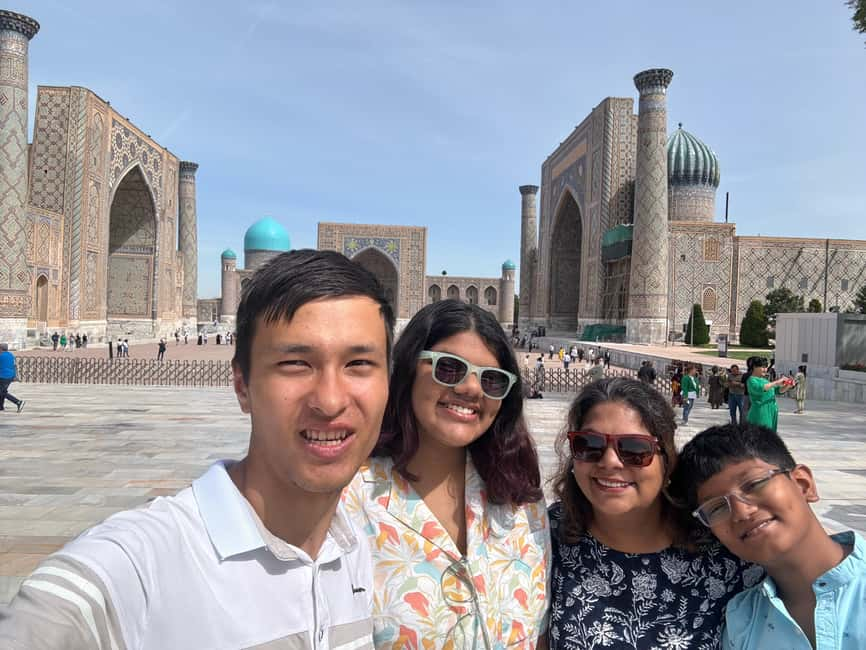
When you reach Registan Square, you are stepping into Samarkand’s “grand stage.” The square is framed by three major madrasahs, and the guide helps you see the logic behind the symmetry and decoration: Ulugh Beg, Sher-Dor, and Tilla-Kari.
This stop works because it is equal parts visual and interpretive. You are given the stories behind striking features, like the lions on Sher-Dor and the golden dome of Tilla-Kari. Then the guide connects it to why Registan mattered in public life and Islamic education, so it feels less like a museum set and more like a social center with a job.
One of the most memorable angles here is the astronomical significance tied to Ulugh Beg as both an astronomer and a ruler. You do not need an astronomy degree to appreciate this. The takeaway is that the same culture that valued religious learning also valued measurement, patterns, and the sky.
Practical note: this is where you are likely to want extra time for photos and for browsing. There is also time to explore inside, if you want to slow down and look at details up close.
Bibi-Khanum Mosque: big scale and a very human story
Next you visit Bibi-Khanum Mosque, built by Temur for his beloved wife. It gets described as grand and romantic for a reason. Even before you get deep into details, the size and intention of the architecture are hard to ignore.
The guide keeps the story grounded in emotion and politics. You hear the love story background and also the tale about a jealous architect, which gives the mosque a pulse beyond stone and tile. It is a reminder that art and architecture often come with real relationships and real tensions.
Inside, you get to see architectural marvels, including massive marble Qur’an stands. You also learn about the mosque’s fall and restoration in modern times. That matters because it reframes what you are looking at. You are not only seeing an old monument. You are seeing what survived, what was damaged, and what people worked to bring back.
If you enjoy design details, this stop is a good one to take your time. If you are rushing, you might miss the “feel” of the room.
Hazrat Khizr Mosque: a quieter, functioning stop with big views
Hazrat Khizr is one of the oldest functioning mosques in Samarkand, and it changes the mood of the day. Compared with the bigger showpiece monuments, this feels more immediate and lived-in.
You learn that the mosque is dedicated to the immortal saint Khizr, protector of travelers. That gives you a simple lens for understanding the atmosphere: this is a place connected to safe journeys and guidance, not just a monument to admire.
The stop also includes panoramic views over Shah-i-Zinda and ancient Samarkand. Those views are a nice reset before you go back into the necropolis zone, because they help you visualize how everything fits together.
One detail I appreciate from the route: you also see the tomb of Islam Karimov, the first president of Uzbekistan, located nearby. It adds modern historical layering without taking over the main focus.
Shah-i-Zinda: The Living King and its moving quiet
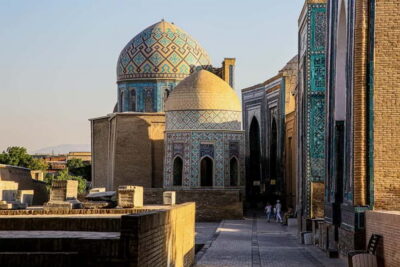
The tour finishes at Shah-i-Zinda, often called The Living King. This is not one building. It is a necropolis built between the 11th and 15th centuries, with over 20 richly decorated mausoleums.
The guide points out the scale and significance, including the tomb of Qusam ibn Abbas, described here as cousin of Prophet Muhammad. You also hear stories tied to Timurid princesses and artisans buried in the area. That storytelling approach helps Shah-i-Zinda feel like a community and a network, not just a collection of domes.
Look closely at the visual language: mesmerizing blue tiles, star-shaped domes, and that sense of timeless silence people notice the moment they start moving through the ensemble. It is a great ending because you get guided context, then you get a chunk of time for your own exploring and photos.
Best use of that free moment: slow down once. Walk in, pick one or two mausoleums to really look at, and then move on. Shah-i-Zinda is the kind of place where rushing makes it harder to feel what makes it special.
What to bring, what to wear, and how to handle mosque visits
This tour is straightforward, but mosque etiquette matters. Plan on respectful clothing. That usually means covering in a way that feels appropriate when you enter sacred spaces, and keeping it practical for walking.
Bring:
- Comfortable shoes (you will be on foot for most of the 3.5 hours)
- Comfortable clothes for walking in the elements
- Cash and a credit card (useful if you want to pick up souvenirs or anything available on-site)
Photography is allowed at most sites. Still, if you see rules at a particular entrance, follow them without arguing. It keeps the day smooth.
Also important: pets are not allowed, and drones are not allowed. Nudity is also not allowed.
Who this tour suits, and who should think twice
This walking tour fits best if you want an organized Old City route with live explanations and you are comfortable staying on your feet. You’ll get the most out of it if you like stories, symbolism, and asking questions.
It is also a good fit for people who prefer small groups, limited to 10 participants, and who want time for photos and a little exploration inside.
Think twice if:
- you are over 70 years old
- you are sensitive to altitude sickness
- you have diabetes (listed as not suitable)
- you are traveling with young kids, since children under 2 through under 11 are listed as not suitable
If you are unsure, choose comfort over pride. This route is meant to be enjoyed at an easy walking pace, not forced at a sprint.
Should you book this Samarkand walking tour?
Yes, if your goal is to understand Samarkand as a living timeline, not just a pile of impressive buildings. For $26 and a 3.5-hour guided format, you get multiple signature stops, plus story-driven context that makes the art and architecture easier to read.
Book it if you like:
- Timurid-era explanations tied to real places
- photo stops that come with guidance on what to look for
- a finish at Shah-i-Zinda where you can linger at your own speed
Skip or reconsider if you want minimal walking, or if mosque stops are a problem because of mobility or clothing constraints. Otherwise, this is a smart value way to spend half a day seeing Samarkand’s most important sights with a human guide who can answer the questions you actually have.
FAQ
How long is the Samarkand Old City walking tour?
The tour lasts about 3.5 hours.
How much does the tour cost?
The price is $26 per person.
Which historical sites are included?
You visit the Monument of Amir Temur, Gur-e-Amir Mausoleum, Registan Square, Bibi-Khanum Mosque, Hazrat Khizr Mosque, and the Shah-i-Zinda ensemble.
Do I get a live guide, and what languages are offered?
Yes. The tour includes a live guide available in English and Russian.
Is transportation or meals included?
No. Meals and transportation to and from the meeting point are not included.
Where do I meet the guide?
Meet at University Boulevard street by the Amir Temur monument. Cross the pedestrian with caution.
Is photography allowed?
Photography is allowed at most sites.
Are drones or pets allowed?
No. Drones and pets are not allowed.
Latest reviews out of Samarkand
- Explore Samarkand Guided Tour with Transfers★ 5.0 · 3 reviews
- Ancient and Modern tour in Samarkand with Transport★ 5.0 · 3 reviews
- Penjikent Day Trip From Samarkand★ 5.0 · 3 reviews
- Samarkand Capital of Amir Timur Private Tour with Transport★ 5.0 · 3 reviews
- Amankutan Trek One Day Tour From Samarkand★ 3.9 · 3 reviews
- Seven Lakes Panjakent: One-Day Adventure from Samarkand★ 5.0 · 3 reviews
- Samarkand: Private Guided Tour with a Local★ 5.0 · 4 reviews
- Samarkand City Tour★ 5.0 · 4 reviews
Samarkand Tours, compared.
Samarkand: Historical Monuments Guided Walking Tour
Read our review →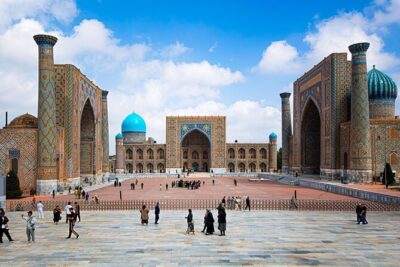
Private Samarkand City Tour With Transportation
Read our review →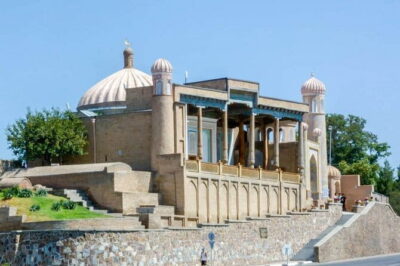
A City Tour Of Samarkand: The Pearl Of The East
Read our review →
Full Day Private Tour in Seven Lakes from Samarkand
Read our review →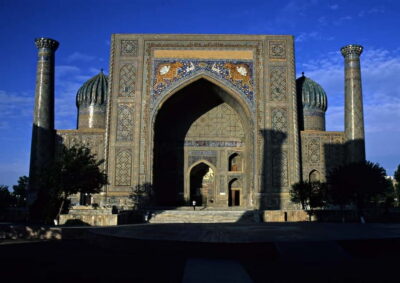
Samarkand One Day Tour: one day walking & group tour
Read our review →
Samarkand: Shahrisabz Day Trip with Optional Local Guide
Read our review →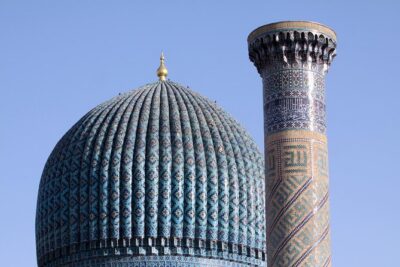
Browse the lists this tour appears in