
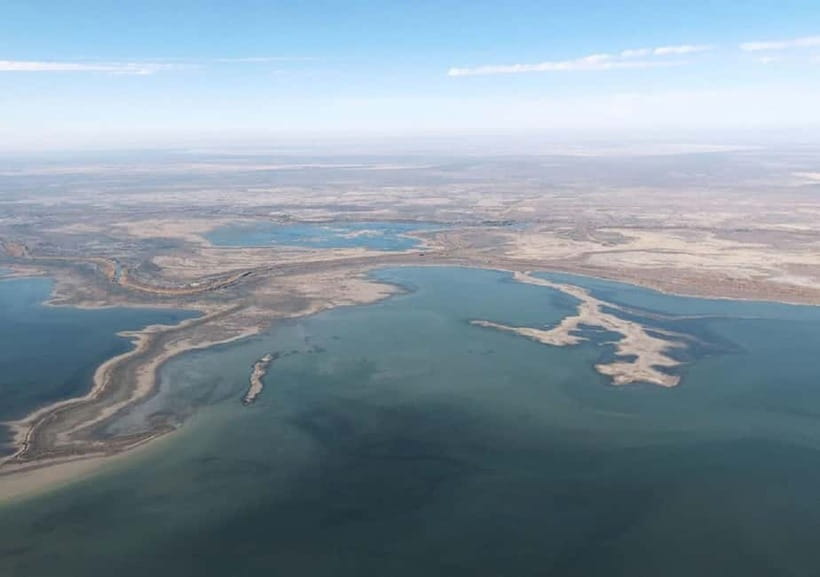
Reviewed · ARAL SEA TOURS
Aral Sea Tour from Nukus 1 night / 2 days
Few places make an environmental disaster feel this immediate. The Aral Sea is now mostly salt flats, so you can walk on the dried seabed and understand, in your own body, what people lost. I love the A/C 4×4 access to remote sites and the chance to see Muynak’s ship cemetery up close. The big drawback is the long, rough drive, so this is not for anyone with back or spine problems.
On this 1 night, 2 day trip from Nukus, you’ll bounce through Karakalpakstan’s dramatic stretches of desert, cemetery towns, and canyon-like plateaus, then sleep in a yurt camp under a dark sky. You’ll have an English or Russian speaking driver, plus hotel or airport pickup in Nukus, but you should budget extra for meals, the yurt night, and the Aral Sea museum ticket.
Key moments that make the Aral Sea feel real
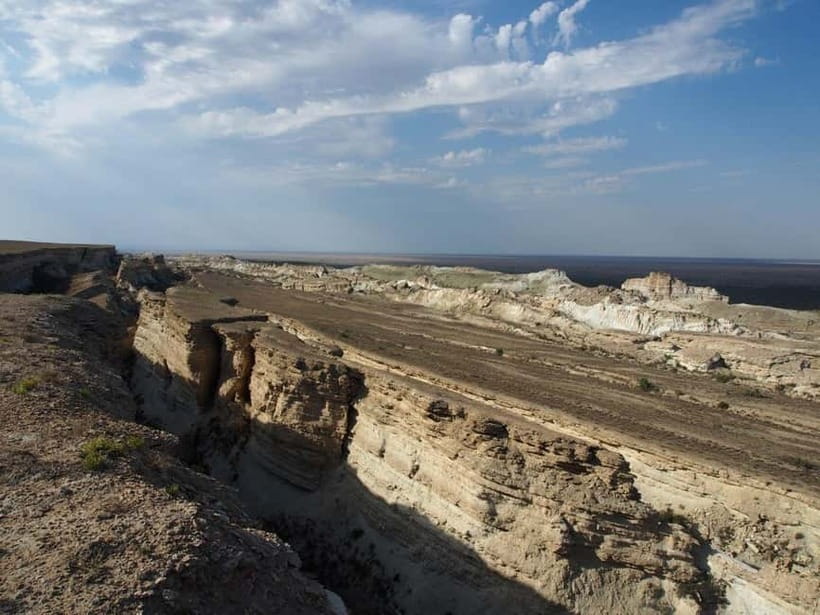
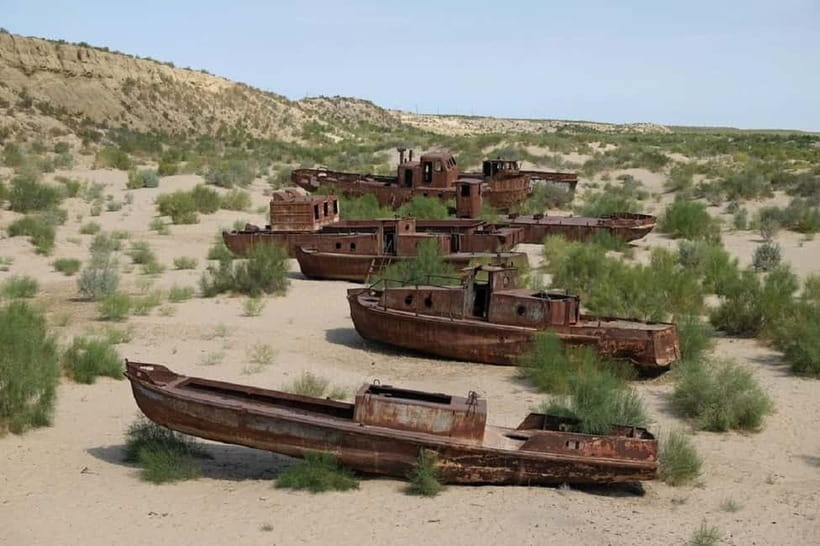
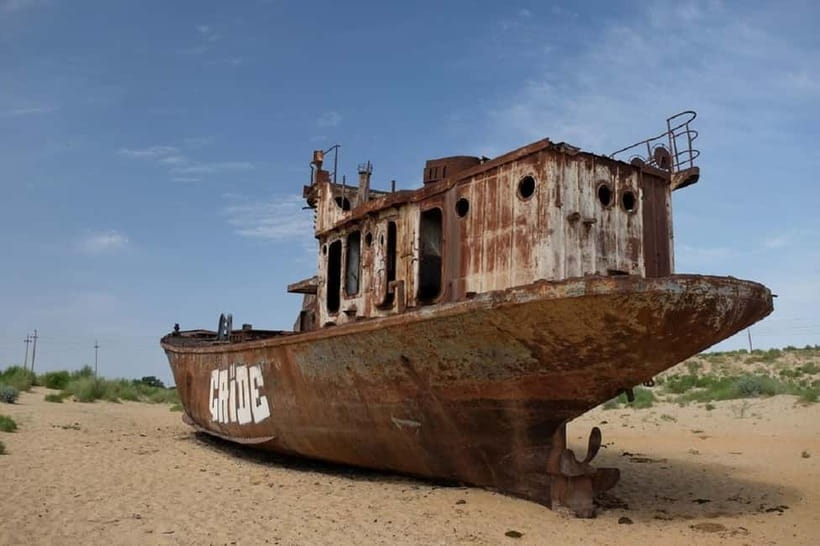
- Muynak ship cemetery: a haunting field of old vessels, plus an ecological museum stop
- Walking the dried seabed: you can touch, walk, and feel the salt-and-mud reality where water used to be
- Mizdakhan complex: mausoleums and pre-Islamic traditions still visible in the area
- Yurt camp evening: campfire time and a chance to look for the Milky Way in clear skies
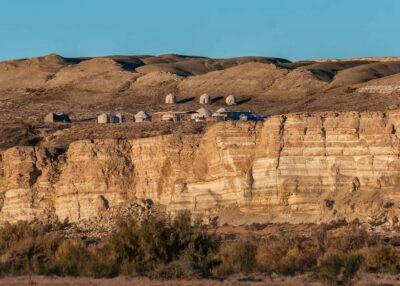
- Ustyurt Plateau views: white-toned canyon cuts and nomad cemeteries along the way
- Sudochie Lake bird stop: a migration waypoint with pink flamingos, white swans, and ducks
Aral Sea tragedy, explained by your own footsteps
The heart of this experience is simple: you are going to the former shoreline and seeing what remains. On paper, the Aral Sea’s shrinkage sounds like a case study. On the ground, it becomes dust, salt, and distance.
That’s why I like this tour format. You are not just stopping at one viewpoint. You travel through multiple zones of Karakalpakstan, ending day one at a yurt camp near the dried sea area, where you can relax and then step out for stars.
The tour also frames the trip as a lesson in consequences. You’ll move from older sacred sites to modern environmental collapse, and it all connects. If you like travel that makes you look at the world differently, this works.
Further trips to what is left of the Aral:
- Muynak Ship Cemetery Tour From Nukus
★ 4.3 · 32 reviews - Aral Sea One Day Trip from Nukus.
★ 4.0 · 3 reviews
Leaving Nukus: the 4×4 ride into Karakalpakstan’s harsh scale
You start with pickup in Nukus from your hotel, airport, or rail station. Then it is a long push into the desert, about 400 km, with stops along the way, and roughly 7 hours of driving on day one.
The vehicle is an A/C 4×4, which matters here. Roads can be chaotic and bumpy, and you’ll feel it. One of the best things about the trip is that it uses the right kind of transport for rough conditions, so you are not slogging in an unsuitable car.
Here’s the part to take seriously. The drive is reported as very bumpy. If you have any back or spine issues, take that warning seriously and think twice. Even if you are fine physically, bring a warm layer and plan for jostling, because the whole region feels like it was built for wide-open emptiness, not smooth rides.
Mizdakhan complex: mausoleums, cemetery vibes, and pre-Islamic traces
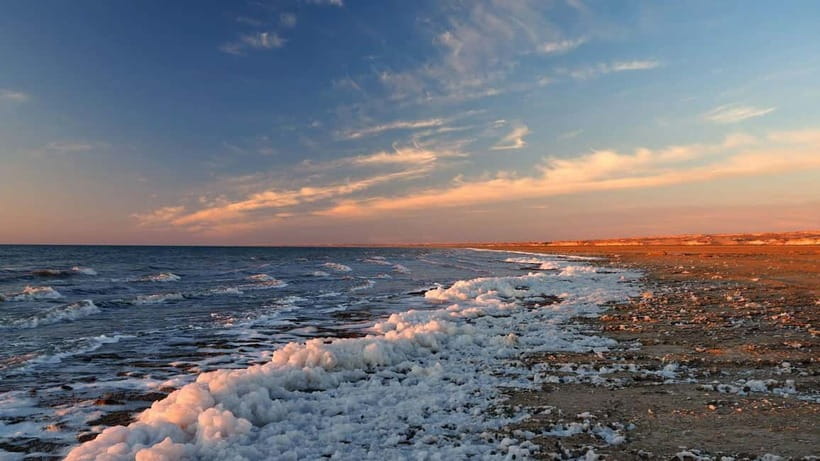
Day one adds a cultural stop before you get to the worst of the environmental story. You’ll pass through the Mizdakhan complex, often described as a city of deaths, known for the huge number of mausoleums in the area.
This isn’t a quick photo pull-in-and-out. The complex is also tied to older traditions, including pre-Islamic elements that you can still see here. That gives the area an extra layer. It’s not just “a cemetery.” It’s an extended place of memory.
Practically, this stop is a breather from travel time. You can walk around, stretch your legs, and get a feel for local history before you head toward the salt flats.
Kungrad and Muynak: breaks that keep the day realistic
On the way, the route includes Kungrad for a recommended lunch, then later another recommended lunch around Muynak. These meal breaks matter because the rest of the day is all distance, sun, and stops.
Kungrad is also a logistical buffer. You break the drive into pieces, so you arrive at the Aral Sea area with enough energy to actually enjoy the walking parts.
Then you reach Muynak, where the main stop is the ship cemetery and an Aral Sea Ecological museum visit. Muynak is one of the most famous ways to see the collapse, because the ships are so out of place. You can stand among them and realize how quickly a working seafront can turn into something impossible to use.
The museum stop is worth your time if you want a bit more context, especially since this tour already gives you the physical reality outside. It helps stitch the story together.
Uchsay village and the route across the seabed zone
After Muynak, the road continues through the Uchsay village area, and then you head toward the Aral Sea’s dried seabed zone. This is where the trip stops feeling like a normal sightseeing day.
You’ll travel along the dried part of the sea, and the experience is physical. You can see it, touch it, walk on it, and feel the disaster of the Aral Sea because there’s no water there.
That walking piece is the main reason this tour hits differently. You are not imagining shrinkage. You are seeing the surface people now live around and through.
A quick note on expectations: the ground and air can be harsh. Dust and salt are part of the deal, so wear protective shoes and use long trousers if you’ve got them. The tour also recommends sunglasses and a hat, which is smart advice for any time spent close to open salt and sky.
Ustyurt Plateau day one: white-toned canyon mood
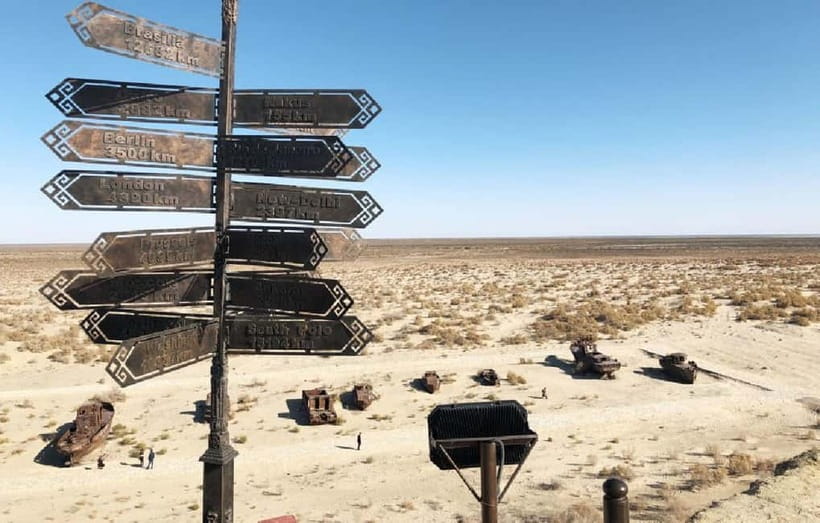
Between the dried seabed zone and the yurt camp, you pass by the Ustyurt Plateau. People often describe it as mysterious and hard to read from a distance, and you’ll see why.
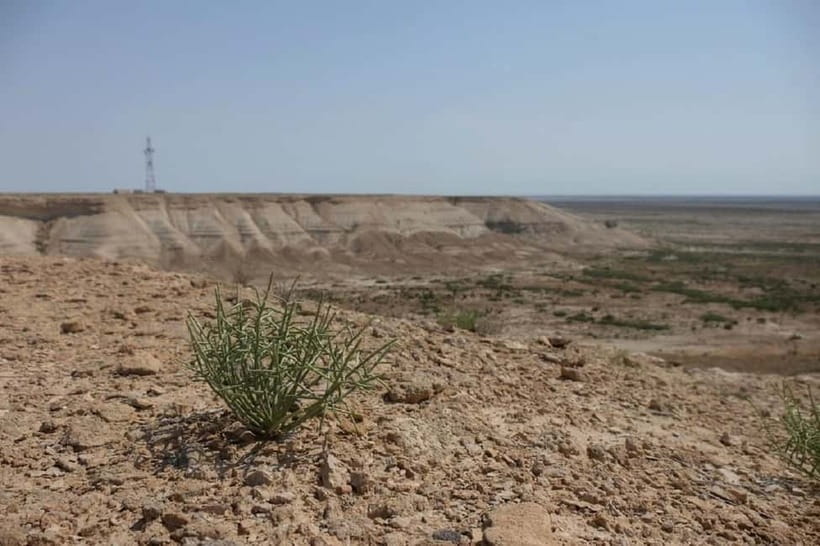
The highlight here is the canyon-like look, sometimes described as Grand Canyons with white shades. Think pale, chalky cuts in the earth, with the feeling of “how did this even form?” That visual contrast helps balance the day. You go from ship relics and salt flats to a broader, more geological kind of drama.
Also, along the way you’ll pass cemeteries of local nomads. You might not have time to explore deeply, but it adds texture. The plateau is not empty in the human sense. It’s part of lived landscapes and routes.
Yurt camp night: campfire, salt shower, and stars
Overnight is at a yurt camp, and yes, it costs extra, typically $25 per person for the night. That said, it’s one of the best ways to experience this region without rushing.
At the camp, you can enjoy the evening around a campfire. The sky is also a selling point. In clear skies, you can explore the Milky Way at night, and this is the kind of darkness that makes stars actually look like stars.
One very practical detail: a fresh shower is available at the camp to wash off sea salt and mud. That makes a big difference after time on the seabed. You’ll still feel “deserted” after, but you won’t go to bed with grime stuck to you for the next morning.
Connectivity is limited. There’s no mobile or internet connection, but there is a telephone for local communication in the car and at the camp, and there is electric power at the camp to charge devices. So bring what you need for offline comfort, but you won’t be totally cut off.
Day two caravanserai and plateau cuts on the way back
Day two starts with breakfast and then another long return drive to Nukus, about 400 km and roughly 8 hours, with an approximate arrival around 17:00.
The first notable stop is the Davlatgirey caravanserai, also known as Kurgancha kala. This is an abandoned trading caravanserai, the kind of place that makes you picture old routes moving goods and people across emptiness. Even if you are not a history nerd, it gives your day a “before engines” context.
After that, the route keeps bouncing along the Ustyurt Plateau again. You’ll see more of those white-toned canyon views, plus cemeteries of local nomads along the way. It’s like you get a second look at the region’s scale, and it also helps break up the drive back.
A recommended picnic lunch is planned around Kungrad on day two. Again, it’s a smart way to avoid arriving hungry at the end.
Sudochie Lake: migration birds, then a steady return to Nukus
One of the more nature-forward stops on day two is Sudochie Lake. It’s described as a key stop for migrating birds, including pink flamingos, white swans, ducks, and others.
So if you like birdwatching even casually, you’ll get a chance to see wildlife in a setting that otherwise looks lifeless.
The lake also has a human side. It’s noted as a favorite place for hunters, which means this stop is not just “pretty scenery.” It’s also part of local land use. You’ll likely just experience it as a viewing area, but it helps to know the lake has multiple layers of meaning.
From there, you head back to Kungrad and then Nukus. By the time you reach Nukus, you’ll probably feel like you’ve crossed two different worlds, the city gateway and the environmental aftermath zone.
Price and value: what $590 per group gets you
This tour is priced at $590 per group, up to 4 people. That sounds steep at first glance, and it is. But in remote Uzbekistan, the big costs are not entrance tickets. It’s the vehicle, driver time, distance, and getting permission and logistics lined up for places far from town.
Here’s what you get included:
- an A/C 4×4 vehicle
- all fees and taxes
- pickup from Nukus (hotel, airport, or rail station)
- a private group experience
Here’s what you should budget for because it is not included:
- 1 night in the yurt camp, typically $25 per person
- meals, listed as $50 for 4 meals total (1 breakfast, 2 lunches, 1 dinner)
- Aral Sea museum entry tickets, typically $5 per person
So the true cost depends on your group size and how you handle the extras. If you can split the base cost across four people, it becomes more manageable. If it is only one or two people, you’ll feel the cost more, especially once you add meals and the yurt night.
Also, consider what you want most: if you’re focused on the dried seabed walking and the yurt camp night, this package is tightly aimed at that. If you only want a quick look, you might find other options. But if your goal is to connect the full story across sites, this is the kind of trip that is hard to replicate on your own.
What to pack: warm nights, strong sun, and salty feet
Bring comfortable shoes because you’ll be walking on uneven, dusty ground around the dried seabed zone. If you have protective hiking boots or sturdy sport shoes, use them. Long trousers are recommended, and that also helps against grit.
Bring warm clothing even though this is desert country. The tour notes warm jackets can be needed in early spring and late autumn. The camp night and open sky can cool down quickly.
Bring sunglasses and a sun hat, because bright salt and sand reflect light hard. Sunscreen is a must.
Pack swimwear if you want to swim. The sea in this region is described as safe for swimming, so it’s a real option rather than a gimmick. Then plan to shower at camp afterward, because salt and mud are part of the experience.
One more smart habit: keep your devices charged where possible. There’s electric power at the camp, but mobile and internet signal are not reliable here, and you won’t have the usual “search and save” tools.
Rough roads reality check and comfort strategy
Let’s be blunt. This is a remote drive. Even with a 4×4, you are on rough tracks and bumpy road sections. The tour is not suitable for people with mobility impairments.
If you do go, take comfort seriously:
- dress in layers so you can handle sun and night chill
- wear supportive footwear so you stay stable on walking stops
- consider that the day is long and jostling is part of the deal, not an exception
If you are traveling with someone with back pain or a sensitive spine, this is where you need to decide. Skipping this trip can be the best comfort choice you make.
Who should book this Aral Sea tour from Nukus
This tour is best for you if:
- you want a structured 2-day trip into the Aral Sea aftermath, with real time on the dried seabed
- you enjoy offbeat destinations in Uzbekistan, like Muynak and Ustyurt Plateau
- you like the mix of nature and culture, mausoleums, caravanserai, and a camp night under stars
- you’re okay with an adventure vibe, not luxury pacing
It’s less suitable if:
- you have mobility impairments
- you have back or spine problems and want to avoid a bumpy long drive
- you only want the highlight in one afternoon, because the experience is built around the full journey
Also, this is a private group, with a driver speaking English or Russian. If language matters a lot to you, I’d make sure you know which language you’ll have before you set expectations.
Should you book this Aral Sea 1-night tour?
Book it if your priority is seeing the Aral Sea story from the inside, by walking on what’s left and sleeping close enough to look at the sky. The ship cemetery in Muynak plus the dried seabed stop make the biggest emotional impact, and the yurt camp night gives the whole thing a memorable rhythm.
Don’t book if comfort and smooth travel are your top needs. The roads are rough, the day is long, and the trip asks your body to handle heat, salt, and movement.
If you are traveling with up to 4 people, you’ll likely feel the value more strongly, since the base price is per group. Then budget for meals, the museum entry, and the yurt night, and you’ll be set.
FAQ
What is the drive distance and time from Nukus to the Aral Sea area?
It is about 400 km and roughly 7 hours of driving on day one, with stops along the way. Day two is about 400 km and roughly 8 hours back to Nukus.
How long is the Aral Sea tour overall?
The total duration is about 1.5 days, using 1 night in a yurt camp near the Aral Sea.
Is the yurt camp night included in the price?
No. The 1 night in the yurt camp is listed as extra, typically $25 per person.
Are meals included?
No. Meals are not included in the base price and are listed as $50 total for 4 meals during the tour (1 breakfast, 2 lunches, 1 dinner).
Do I need a museum ticket for the Aral Sea museum?
Yes. Entry tickets to the Aral Sea museum are listed as extra, typically $5 per person.
What is included in the tour price?
The tour includes an A/C 4×4 vehicle and all fees and taxes. Pickup is included from your hotel, airport, or rail station in Nukus.
What languages does the driver speak?
The driver is listed as English and Russian.
Is there mobile phone or internet connection?
No mobile or internet connection is available. There is a telephone for local communication in the car and at the camp, and there is electric power at the camp to charge devices.
Can I swim at the Aral Sea dried area?
The sea is described as safe for swimming, so swimwear can be a good idea if you want that option.
What should I bring, and what is not allowed in the vehicle?
Bring comfortable shoes, warm clothing, sunglasses, sun hat, swimwear, sunscreen, and comfortable clothes. Drinks and food are not allowed in the vehicle.
Is this tour suitable for people with mobility impairments?
No. The tour is not suitable for people with mobility impairments.
More Evening Experiences in Muynak
- Tashkent : Classic City Tour. (Day & Night Shift)
★ 4.8 · 52 reviews - Fergana – Golden Valley From Tashkent 1 night / 2 days
★ 4.5 · 41 reviews - Life As Nomads – Yurt Camp Tour with Night from Samarkand
★ 3.6 · 36 reviews - Yurt Camp Tour with Night from Bukhara
★ 3.8 · 35 reviews
More of Nukus & the Savitsky
- Daytrip From Khiva to Savitsky Museum & Mizdakhan & Chilpik
★ 4.9 · 13 reviews - Private Daytrip to Muynak and Nukus
★ 5.0 · 10 reviews - 2 Days Private Tour To Aral Sea from Nukus.
★ 5.0 · 4 reviews
Latest reviews out of Muynak
- Aral Sea One Day Trip from Nukus.★ 4.0 · 3 reviews
- Muynak Ship Cemetery Tour From Nukus★ 4.3 · 32 reviews
Aral Sea Tours, compared.
Daytrip from Khiva to Aral Sea Cemetery of Ships. All in one
Read our review →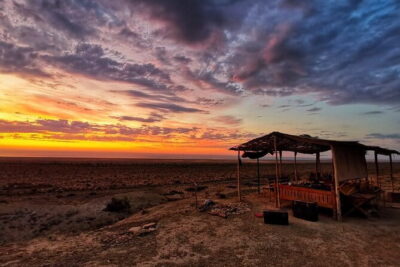
From Khiva To Aral Sea 2-Days One Night In Yurt Stay
Read our review →Daytrip From Khiva to Aral Sea Cemetery Of Ships . All In One
Read our review →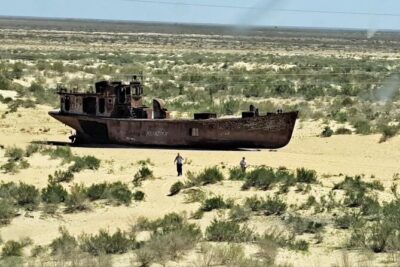
Browse the lists this tour appears in